16 inch hair measures 40.64 centimeters in a straight-line measurement. Its finished position on the body depends on where the hair is attached, the wearer's proportions, texture and haircut. A length label describes a product specification; it does not promise that every 16-inch piece will finish at the same shoulder, chest or back position.
For salons, hair brands and wholesale buyers, the useful question is whether that specification produces the intended finished style. The answer also involves attachment, end fullness, pack contents and blending. Ordering a longer product or more packs does not automatically correct a poorly defined length brief.
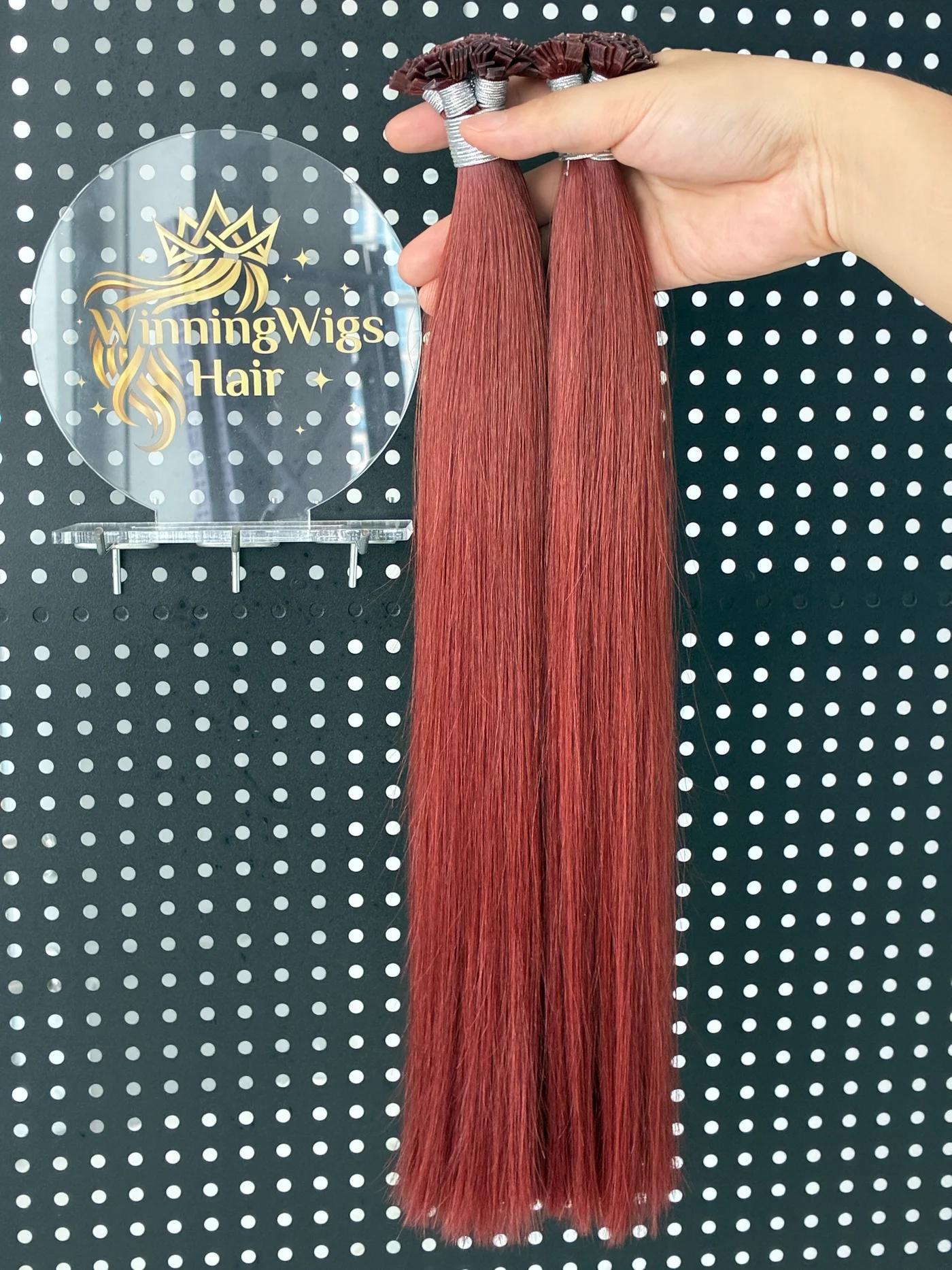
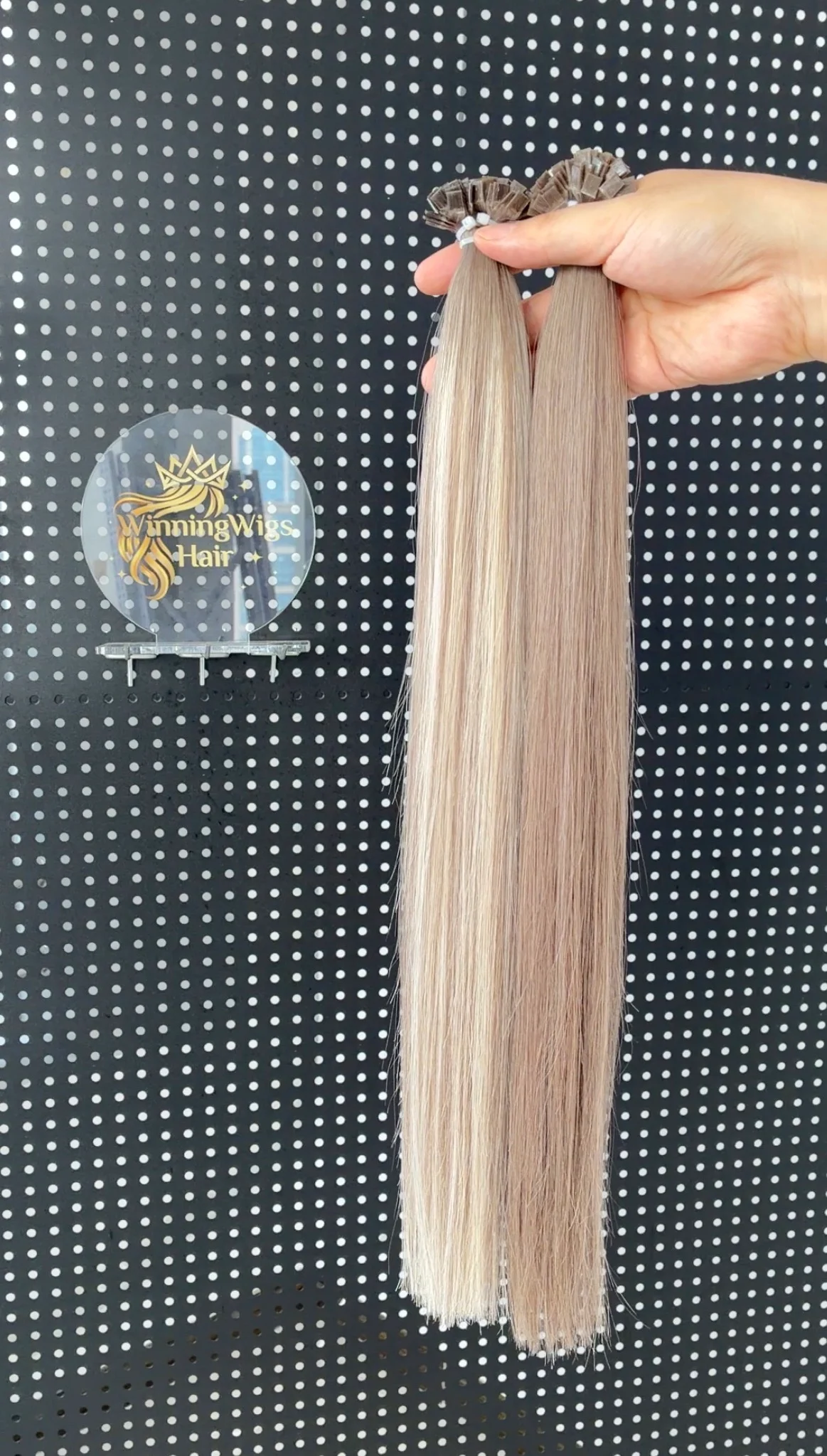
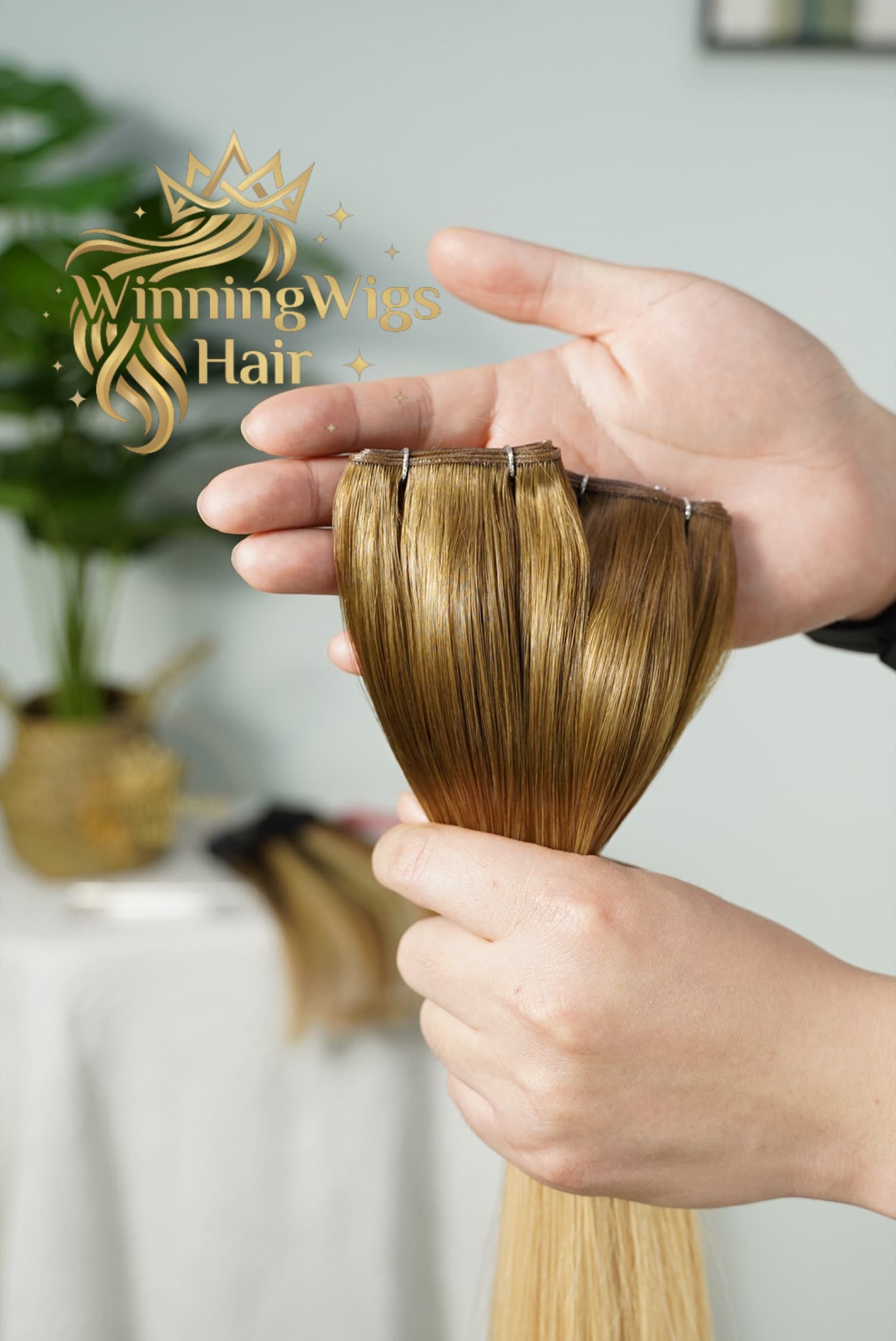
This guide explains measurement, straight versus textured appearance, 16 versus 18 or 20 inches, and the information to confirm before sampling. WinningWigs has identified the reddish-brown straight extension sample in the cover photograph as 16 inches and the ash-blonde comparison sample below as 18 inches. Additional product photographs illustrate construction and texture references. Start with the human hair extension range, then compare the selected method and its own order terms.
How long is 16 inch hair in centimeters?
16 inches equals 40.64 cm, using 2.54 cm per inch. For a consultation, approximately 40.6 cm is a convenient conversion; keep the agreed product measurement and tolerance in the purchasing specification.
| Nominal length | Centimeter equivalent | Buying comparison |
|---|---|---|
| 16 inches | 40.64 cm | Evaluate the intended blend and finished outline |
| 18 inches | 45.72 cm | Adds 5.08 cm of nominal length compared with 16 inches |
| 20 inches | 50.80 cm | Adds 10.16 cm of nominal length compared with 16 inches |
These are mathematical conversions, not a body-position chart. An 18-inch product does not necessarily create a finished hairstyle exactly two inches longer than another sample after different placement, layering or curling.
Before comparing two quotations, establish what each supplier measures. Ask where the measurement starts, which endpoint controls the length claim, whether texture is measured in its natural state or gently extended, and how any tolerance is recorded. A number without those conditions can conceal different products.
Where does 16-inch hair fall when worn?
Use the proposed attachment position
For extensions, assess the distance from the planned attachment row or strand position to the desired finished ends. Hair attached lower on the head can reach a different body position from the same nominal length placed higher. Different rows also contribute to the finished outline differently.
A practical consultation uses a tape measure or an identified sample at the proposed placement. Check the back and side views, then discuss the cutting allowance. This gives the stylist a better reference than a generic silhouette that assumes the same starting point for every method.
Donna Bella's 16-inch extension guide also discusses variation with client height and the role of shorter length options in salon services. That is useful context for consultation; its product range and wearer-position examples are not measurements or availability claims for WinningWigs products.
Separate a wig measurement from an extension measurement
For a wig, ask which cap location or hair section defines the listed length and how the finished cut is recorded. A layered wig can contain several lengths. The longest strand, crown section and front framing are different references, so do not assume one number describes all of them.
Compare the chosen human hair wig construction and its specific sample when the customer wants a complete hairstyle rather than added extension sections. Use the supplier's stated measuring convention for that wig. A topper adds another variable: its base coverage is measured separately from the hair length.
Why straight, wavy and curly hair look different at the same length
Straight-line length and natural vertical drop are different measurements. A wave or curl bends the strand, so its relaxed ends can sit higher than those of a straighter sample with a comparable extended length.
The amount varies with the curl pattern, styling, moisture and product. Avoid promising that every 16-inch curly product looks exactly like a particular shorter straight length. Review the actual pattern and confirm the supplier's measurement conditions.
For product application, keep two reference photographs: one showing the agreed length-measuring method and another showing the relaxed finished texture. Record whether the sample is dry, styled or freshly washed. Those details help explain why a finished look and an extended measurement differ without assuming the product is incorrect.
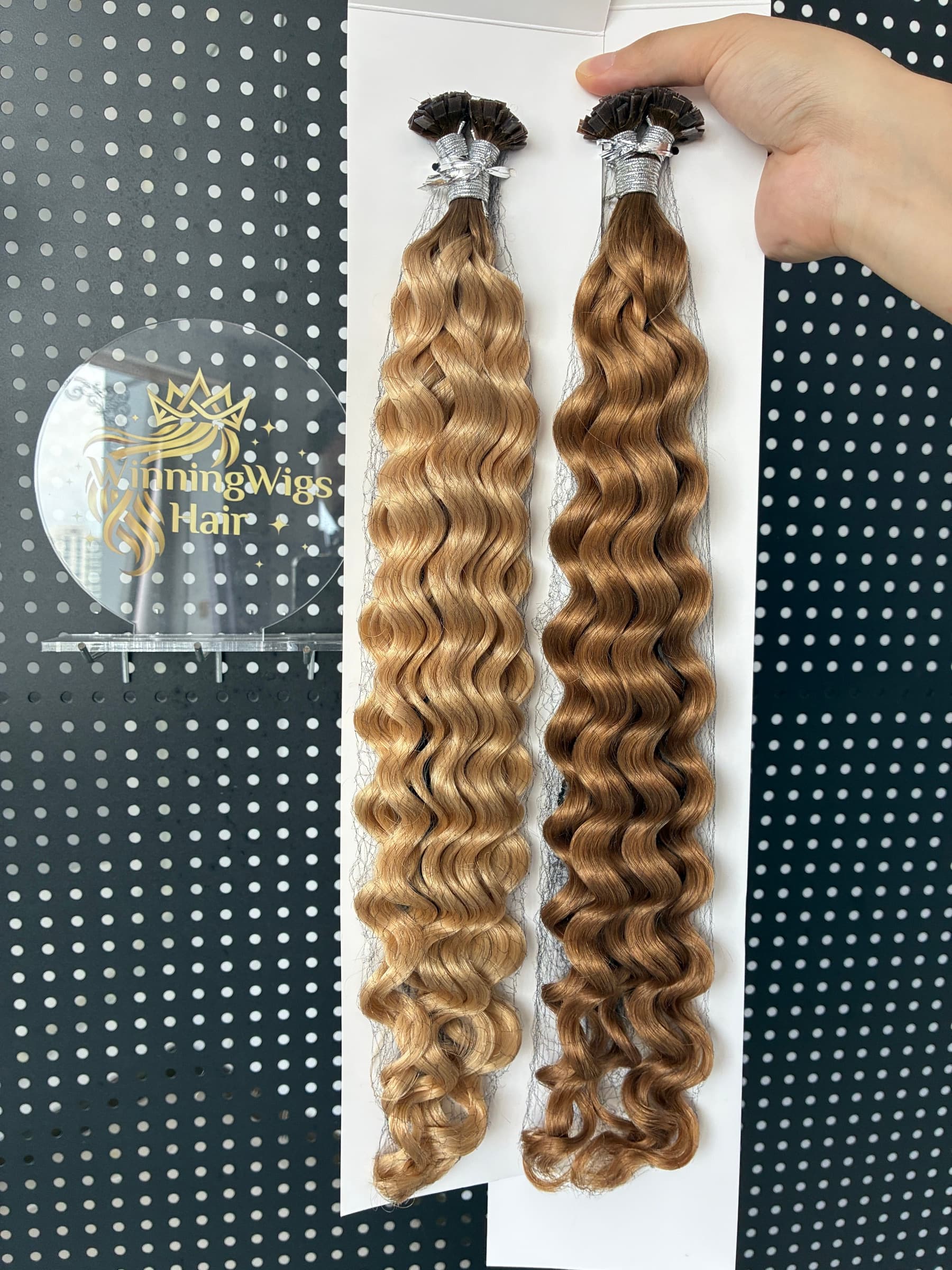
If the desired result includes waves, decide whether the target concerns the relaxed finish or the measured strand. Send that distinction with the order brief. A reference image of loose waves is incomplete if the supplier is only given a straight-hair length number.
Should you choose 16, 18 or 20 inches?
Start with the finished style and existing haircut
Choose the length that supports the proposed result after blending. Assess natural length, bluntness, layers, texture and the amount of hair that will remain visible. A short, dense perimeter and longer fine hair create different blending requirements even if both customers request 16-inch extensions.
16 inches can be worth sampling for a more moderate length change or a fullness-focused service. Whether it is sufficient depends on the actual placement and finish. It is not automatically the right choice for every short haircut or every first-time wearer.
Compare 18 or 20 inches when the intended ends, waves or cutting plan need more nominal length. Discuss the additional handling and styling requirements rather than describing longer hair as a universal upgrade. Extra length may still need cutting, and its effect depends on the complete product.
Product references confirmed at 16 and 18 inches
The reddish-brown straight extensions in the cover are the supplied 16-inch reference. The ash-blonde straight extensions below are the supplied 18-inch reference. WinningWigs confirmed the lengths for these two photographed samples.
The nominal difference is 2 inches, or 5.08 cm. These photographs were taken separately with different framing, colors and apparent scales, so their displayed heights should not be used to measure that difference. For a purchasing comparison, use the same measuring convention and confirm the chosen shade, attachment and pack specification.
Use a controlled comparison
Compare samples with the same method, shade, texture and stated pack configuration where possible. If one sample is straight and another is waved, or their end fullness differs substantially, length is not the only variable being judged.
A useful fitting example is a salon choosing between a 16-inch sample and an 18-inch sample for a layered finish. The team can position each sample at the intended attachment level, mark the proposed cut and compare the outline. This is a planning example, not a reported customer trial. Document the approved sample rather than selecting from the label alone.
Length, grams and end fullness are separate buying decisions
A 100 g pack is not a complete installation plan
Pack weight states a purchasing quantity. It does not establish how much hair a particular wearer needs. The professional assessment must consider existing hair, the desired change, attachment method and suitable placement.
The same labeled length can be supplied in different weft counts, strand counts or panel configurations. Confirm what the stated weight includes, the actual pack contents and whether the quoted price covers the same specification. MOQ can also represent stock for several clients or samples rather than one fitting.
Review the hair toward the ends
Look at the complete length and finished perimeter, not only a dense-looking attachment area. A sample with tapered ends can create a different outline from a fuller-ended sample of the same nominal length. Cutting allowance and the distribution of shorter hairs matter to the final comparison.
If double drawn hair or an end-fullness requirement is part of the brief, ask how it is defined and approved. The term alone does not identify a universal percentage, finished weight or amount of hair needed for a wearer. Retain the accepted physical reference for repeat orders.
Compare 16-inch options across extension methods
WinningWigs lists 16–30 inch ranges for the three extension formats below. Confirm the selected 16-inch shade, texture and stock or custom specification before ordering. The range listing does not mean every combination is ready for immediate dispatch.
| Product | Construction and typical pack | What to settle for the length brief |
|---|---|---|
| Genius Weft | Weft format; typically 100 g with 2, 4 or 5 wefts | Measurement start, section widths, end fullness and row plan |
| Invisible Tape-In | Tape-tab format; typically 100 g / 40 pieces, with custom configurations available | Tab reference, piece-counting convention, texture and active hair measurement |
| Flat Tip / K-tip configuration | Flat keratin bonds; typically 100 g / 100 strands, with custom specifications available | Bond reference, strand count, length measurement and professional fusion workflow |
Genius Weft
The Genius Weft product page provides the seam and pack references for a professional ring-and-thread installation discussion. Specify the required length together with the selected weft count and section requirements. Confirm cutting or edge-handling guidance for the sampled construction before planning rows.
Invisible Tape-In
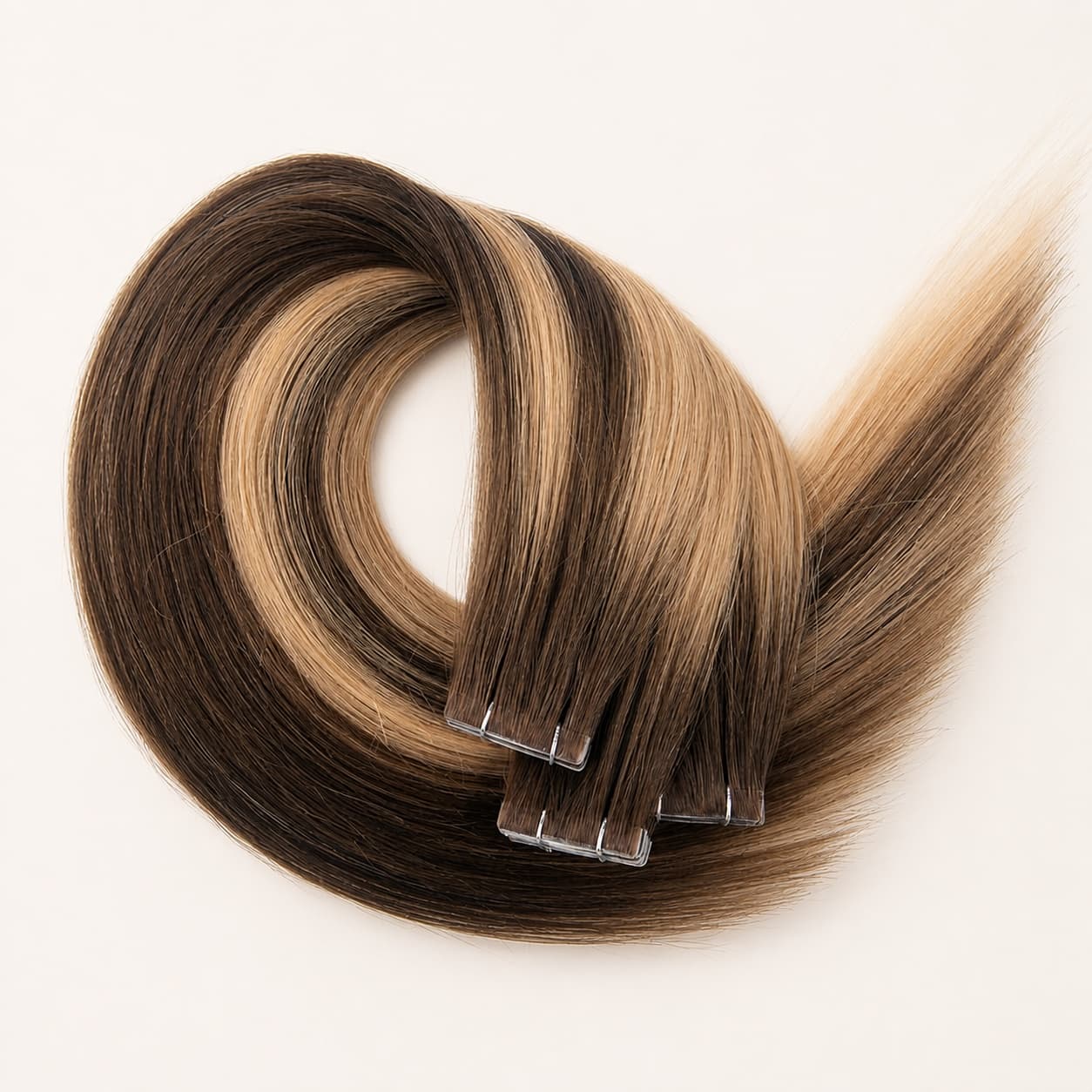
For Invisible Tape-In, compare the actual tab and counting convention. Clarify whether the quoted count refers to individual pieces or another configuration; do not infer the number of installed attachment units from a pack headline. Plan the selected 16-inch hair with the installer's placement and removal method.
Flat Tip with keratin bonds
WinningWigs' Flat Tip / K-tip product uses individual flat keratin bonds for professional heat-fusion services. The typical 100 g / 100-strand configuration gives an arithmetic average of approximately 1 g per strand. Confirm the supplied strand and bond specification; that average is not a fitting recommendation or a universal K-tip standard.
For a closer method comparison, use the K-tip buying guide. A shared 16-inch length does not make bonded strands, tape panels and wefts interchangeable.
Prepare a sample, fitting and inspection record
Write an unambiguous length specification
A sample brief should name the product, hair type, shade, texture, nominal length, measuring conditions, pack contents and intended finish. Ask the supplier to identify any measurement tolerance and how it is evaluated. Do not invent an acceptance tolerance from a photograph or assume all suppliers use the same convention.
During installation preparation, review the selected length at the intended attachment level before irreversible cutting or fitting. Confirm the blend, front framing and final outline with the professional installer. Follow the method's preparation, maintenance and removal guidance rather than treating a length guide as an installation manual.
Agree testing before making performance claims
For factory testing, agree the sample identification, care routine and observations to record. A useful review can compare hair handling, visible shedding, texture presentation and attachment condition before and after an agreed care cycle. Record the actual procedure and result instead of assigning an unverified wear life or claiming that every batch has identical outcomes.
At shipment inspection, match the product code, length label, measured reference, shade, texture, pack count and quantity to the approved order. Keep dated photographs connected to the relevant SKU and resolve deviations before dispatch. These are recommended checks; the product photographs in this guide do not demonstrate completed length or wash tests.
Confirm MOQ, dispatch and the complete quotation
For Genius Weft and Flat Tip, the standard MOQ is 100 g per color and length combination. Invisible Tape-In has separate minimums per color and length: 200 g for solid and piano colors, and 300 g for rooted colors. These terms describe purchasing minimums, not the amount needed for one head.
Selected ready-stock extensions may dispatch the same day or next business day, subject to availability. Custom extension dispatch is typically 5–13 working days from the order date. Confirm the actual 16-inch specification and schedule; international transit and customs time are separate.
Ask for the sample price, approved pack specification, quantity, packaging, dispatch plan and shipping arrangement together. For a salon range, the professional extension sourcing guide explains how to compare purchasing routes. Clear customer requirements make the quotation easier to assess and the reorder easier to identify.
FAQ
How long is 16 inch hair in cm?
16 inches is exactly 40.64 cm. Confirm the product's measuring start, endpoint, texture condition and agreed tolerance before comparing samples or quotations.
Does 16-inch hair always reach the same place on the body?
No. Attachment position, proportions, texture and the finished cut change where the ends sit. Assess an identified sample or tape measure at the proposed placement rather than relying on one universal body-position chart.
Do 16-inch extensions add 16 inches to natural hair?
No. The number describes the supplied extension length under the agreed measuring conditions. Its contribution to the finished hairstyle depends on where it is placed and how it blends with the existing cut. Measure from the planned attachment position and discuss the final trim.
Is 16-inch curly hair shorter than 16-inch straight hair?
Its relaxed appearance can be shorter because the strand bends into a curl. Compare the actual pattern and measurement conditions. Avoid assigning a fixed amount of shrinkage to every curly product.
Should a salon buy 16 or 18 inches?
Compare the intended finished ends, blending and cutting allowance. Eighteen inches adds 5.08 cm of nominal length, but the approved style and fitting plan should determine the purchase rather than the label alone.
How many grams of 16-inch hair are needed?
There is no universal amount for every wearer. Have the professional assess the existing hair, desired change and method. Pack weight and wholesale MOQ are separate from an installation recommendation.
Can I request a 16-inch wholesale sample?
Yes, discuss the selected method, hair, shade, texture, length measurement and pack requirement with WinningWigs. Confirm the applicable MOQ, sample price and availability for that specification before ordering.
Conclusion
16 inch hair is a 40.64 cm length reference. A useful buying decision connects that measurement with placement, texture, blending, end fullness and the attachment format. Approve the finished sample and retain the measuring convention so the next order can be compared on the same basis.
LET'S TALK ABOUT YOUR PROGRAM
Ready to turn product questions into a clearer brief?
Share your target customer, product category and requirements. Our team will help structure the next sample or quotation conversation.