
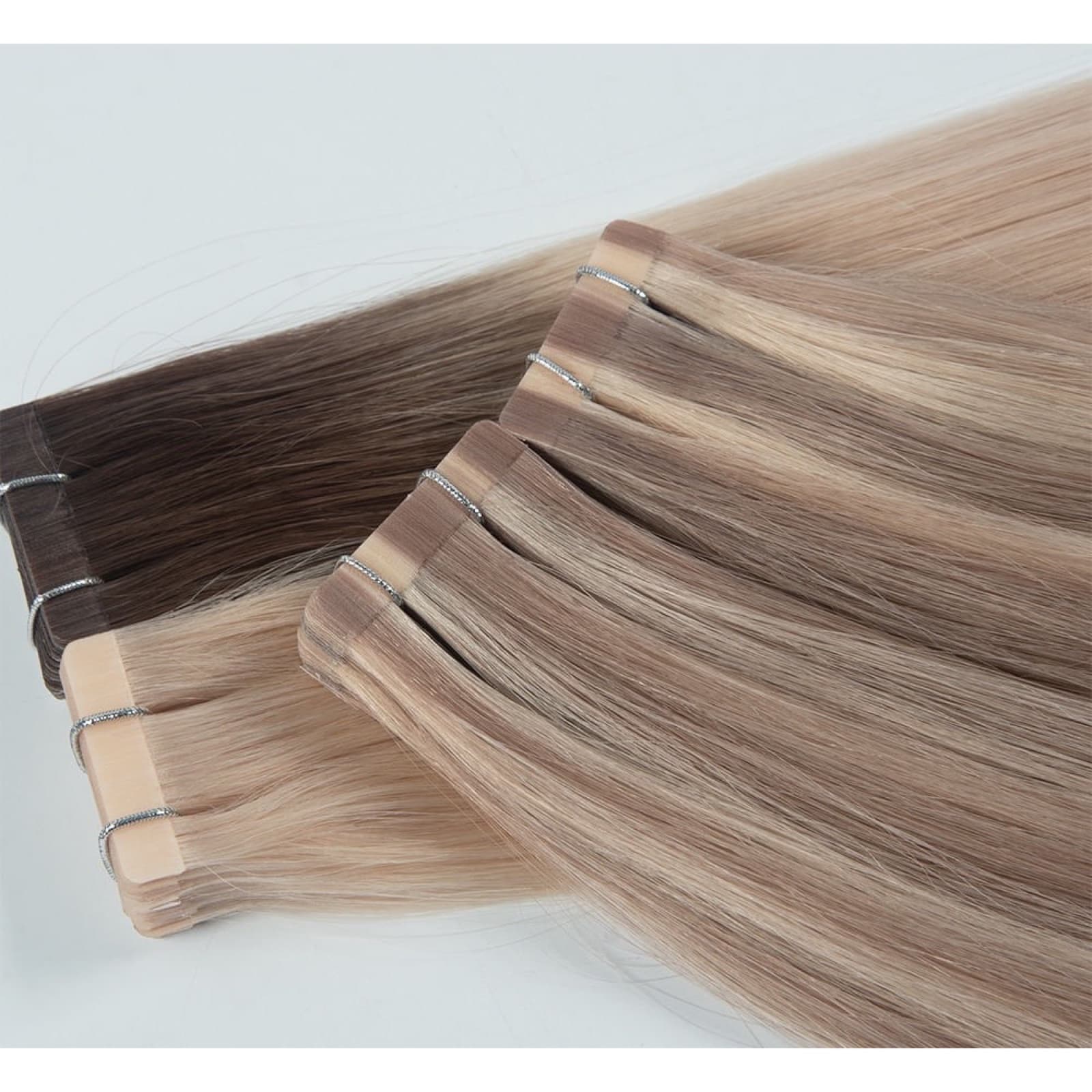
Introduction: affordability is a total decision, not a price badge
People searching for affordable tape-in hair extensions online are usually trying to balance a visible result with a sensible budget. Online price comparisons often hide factors that create the real cost of a tape-in program: what the pack includes, how much hair is needed for the intended result, whether shade and texture are appropriate, what installation preparation is required, and whether maintenance, removal and replacement materials have been considered.
The lowest listed price may not represent the lowest-cost solution. A pack may have a different configuration, length, weight, hair material, tape-tab construction or accessory scope than another product that appears similar in a photograph. A buyer can compare value only when the units being compared are clear. This matters for tape-ins because they are designed around an attachment system and an installation process, not just the appearance of loose hair.
This guide does not claim that any product is the cheapest or guarantee a price level. It explains how consumers, salons, retailers and purchasing teams can evaluate tape-in hair extensions online more carefully. The result should be a choice that is easier to budget, specify, apply and support after delivery.
Define the intended application before comparing offers
Start by naming the application. Is the goal temporary volume, added length, colour dimension, a salon service menu, a retail range or a private-label program? A buyer who wants subtle volume should not assume the same pack configuration suits a major length transformation. Natural hair, target length, desired density, installation plan and stylist’s approach all affect what is required.
For an individual wearer, note current length, approximate density, colour history, desired look and tolerance for maintenance appointments. For a professional buyer, add target market, intended price architecture, preferred texture, shade range, packaging, service protocol and reorder needs. This brief turns an open-ended “affordable” search into a comparison question: which defined product configuration meets the intended use case with the clearest scope?
Separate the product purchase from the installation decision. Tape-ins generally require careful sectioning, clean preparation and controlled placement. A qualified professional should determine whether the application is appropriate for the wearer. Remote sellers can give product information, but should not be expected to diagnose hair or scalp conditions from a photograph.
Compare the whole pack: length, quantity, tabs and product scope
Get a QuoteAn online listing needs more than a price and a styled model image. Look for item-level information that lets you compare like with like.
| Item to compare | Why it changes value | What to verify online |
|---|---|---|
| Pack configuration | A “set” may contain different numbers or sizes of pieces | Number of pieces, listed length, pack-level weight where supplied |
| Tape-tab construction | The attachment is part of the application | Clear close-up, tab dimensions if stated, replacement/removal guidance |
| Hair material and texture | Affects appearance, styling and care expectations | Material description, texture name and product-specific care notes |
| Colour reference | Screen images do not establish an exact match | Colour name/code, daylight imagery, colour-ring or matching process |
| Included and excluded items | Accessories or service steps may be separate | Product contents, tools, tape, removal products and stated exclusions |
| Delivery and terms | A low item price may not answer the full purchase question | Destination availability, dispatch information and published policy |
Do not invent a missing specification. If a page does not state pack contents or attachment details, ask before buying. A transparent supplier or retailer should identify the product reference, explain what is included and state what still needs to be selected.
For B2B purchasing, put the same fields in a side-by-side sourcing sheet. Compare sample reference, shade system, texture, length, pack configuration, packaging, labels, quotation terms and inspection expectations. A unit price cannot be compared fairly if the products are not defined at the same level.
Tape tabs and installation preparation: where value can be lost
Tape-in extensions are attached through paired adhesive tabs in a planned sectioning pattern. The final result depends on the product, natural hair, preparation, placement, maintenance and removal process. This is why a credible seller describes the system rather than suggesting tape-ins are a plug-and-play online purchase.
Installation preparation normally includes confirming the chosen product, following the professional’s advice about hair condition, working with clean and appropriately prepared sections, and preparing the tools and replacement materials required for the system. The exact process must follow product guidance and the installer’s professional practice. A buyer should not copy generic instructions where they conflict with a manufacturer’s directions or qualified stylist’s advice.
Ask practical questions when evaluating an online offer:
- Is the tape-tab construction shown clearly, or only the completed hairstyle?
- Does the description explain intended application and care boundaries?
- Is there product-specific guidance on removal, retaping or replacement?
- Can the seller identify pack contents and shade reference in writing?
- Are professional installation and maintenance included in the budget when they are appropriate?
These questions do not make a purchase difficult. They prevent false economies: choosing a product that does not fit the service plan, then paying more in corrections, extra packs or unused accessories.
Shade, texture and blending: manage the variables you can see
Online colour comparison has limits. Use unfiltered photographs in indirect natural daylight and compare against the mid-lengths and ends. Indoor lighting, phone screens, editing and a model’s styled hair change how images read. Ask whether the seller uses a colour code, colour ring, current product sample or photo-based guidance. Each gives a different level of evidence.
Texture deserves the same discipline. A “straight” or “wave” label tells only part of the story. Review product images, ask how the texture is presented after ordinary care, and discuss the intended styling result with the installer. A natural-looking blend depends on more than the extension product; cutting, placement, natural-hair condition and styling technique matter too.
For a professional range, retain a colour and texture reference alongside the SKU. When a customer reorders, the team should identify the original product rather than recreate the choice from memory. This also supports sample review or a shipment inspection. Inspection can verify agreed observable points against an approved reference; it cannot turn a broad shade name into a universal colour guarantee.
Cost planning for an online tape-in purchase
Get a QuoteThe correct budget is the total planned cost, not the price beside one listing. Depending on the situation, it may include extensions, matching support or samples, professional installation, maintenance appointments, removal or replacement materials, delivery and relevant local charges. Which items apply depends on provider, destination and service model, so request current stated terms rather than relying on a generic estimate.
Create a simple cost-planning list:
- Product reference and pack quantity needed for the agreed application.
- Shade and texture confirmation method, including whether a sample step is needed.
- Installation service, if a qualified professional will apply the product.
- Maintenance and removal expectations under product and service guidance.
- Delivery scope, timing assumptions and destination-specific responsibilities.
- Replacement or reorder plan if the product is part of an ongoing service.
For a salon owner, this turns product purchasing into a service calculation. For a retailer, it improves listing accuracy and reduces buyer confusion. For a distributor or private-label buyer, it becomes the basis of a quotation request and repeat-order specification. Affordability becomes credible when the scope is visible, not when a headline price is isolated.
How to evaluate online seller information and support
A reliable seller does not need extravagant promises. It should make it reasonably easy to identify the item, understand the application category, review care guidance, see the stated purchase terms and ask a pre-purchase question. Product support is part of value when buyers need help choosing a shade, confirming a pack, understanding a product image or planning a reorder.
Look for these indicators:
- Product images showing actual tape-tab construction as well as styled hair.
- Descriptions naming texture, length, colour reference and pack scope.
- Clear language about included items and items sourced separately.
- Care guidance that does not over-promise lifespan or outcome.
- A reachable contact channel for product and order questions.
- For trade conversations, a process for specification approval, sample review, production communication and agreed shipment inspection.
Be cautious when an offer relies on urgency, an unverifiable “best quality” claim, an exact-result promise from one image, or a price comparison without matching pack specifications. These are not proof of a poor product, but they mean a buyer has less evidence for an informed decision.
A review process for salons, retailers and import buyers
Business purchasers can adapt this consumer checklist into a controlled approval process. Start with customer requirements: intended application, texture, colour ladder, lengths, packaging, price position and aftercare plan. Request product details at the same level of granularity. Review samples against a written reference. Record what is approved and what is still variable.
If production follows, use a confirmation record that names construction, shade references, texture, length, pack count, labels and cartons. Agree in advance how factory testing, visible-condition checks or shipment inspection will be used for that program. Documentation should describe the actual scope, such as checking count, packaging or selected appearance references. It should not imply certification, clinical testing or any promise beyond the available evidence.
Finally, connect post-delivery feedback to the original specification. If a stylist reports that a shade, tab size or packaging element needs adjustment, update the record before the next order. This feedback loop is more authoritative than relying on memory or promotional language because it connects customer requirements to observable product decisions.
Use a pre-order checklist to avoid avoidable surprises
Before an online order, put every option into a single checklist. Record the seller and product URL, the selected shade reference, texture, length, listed pack contents, number of packs, installation plan, care guidance, delivery destination and the questions still awaiting an answer. This is simple, but it stops an attractive product image or temporary offer from replacing the real comparison work.
When the order arrives, compare observable elements with the reference before installation: the item identity, labels where provided, piece or pack count, visible tape-tab construction, texture direction, colour family and packaging condition. This is a receiving check, not a claim that visual review proves every performance outcome. If something needs clarification, preserve the product reference and communicate with the seller using specific information rather than a vague complaint. A clear record gives both sides a better chance to resolve an issue fairly.
For a salon or retail operation, add the customer’s intended application and the installer’s product notes to the order record. This allows the team to separate a product-specification question from an installation or styling variable. If feedback identifies a repeat issue, update the purchase brief before the next order. Do not silently change a shade reference, pack configuration or tape-tab option and assume that a future shipment will match an earlier product.
For imports and private-label orders, the same discipline supports a more credible commercial process. Sample approval should identify the product being approved; production confirmation should identify the agreed packaging and quantity; and any factory testing or shipment inspection should have a defined observable scope. This does not make a supply program risk-free. It makes the relevant requirements visible, reviewable and easier to communicate across purchasing, production, logistics and customer-service teams.
This is also the practical meaning of E-E-A-T for a shopping guide. Experience is represented by the receiving check and application feedback that a buyer can actually observe. Expertise is shown by separating tape-tab construction, pack scope, colour evidence and service preparation. Authority follows a repeatable evaluation method, and trust follows from declaring uncertainties instead of converting a price claim or styled image into a promise it cannot support.
FAQ
Does “affordable” mean tape-in extensions are low quality?
Not necessarily. “Affordable” is a budget term, not a technical specification. Compare the exact pack scope, material description, attachment construction, colour system, support and stated terms before deciding whether it represents value.
How can I compare tape-in prices fairly online?
Compare like with like: product reference, length, quantity, pack contents, texture, colour reference, attachment details and delivery scope. Request clarification before using price as the deciding factor if any element is unclear.
Can I install tape-in extensions myself?
Tape-in application involves preparation, sectioning and placement. Follow the product’s own guidance and seek qualified professional advice about suitability and installation rather than assuming every online product is appropriate for self-application.
What should I ask about tape-tab construction?
Ask to see the attachment clearly, confirm the pack configuration, and request product-specific information about installation, care, removal and replacement. Do not treat a styled image as evidence of the full system.
What should a wholesale tape-in specification include?
Include construction, material and texture description, colour references, lengths, pack configuration, tape-tab reference, packaging, labels, sample approval, quotation scope and agreed inspection points.
Conclusion
Affordable tape-in hair extensions online are best evaluated as a complete product-and-service decision. Compare the pack, attachment system, colour and texture evidence, installation preparation, care requirements and purchase terms. When the scope is visible, buyers can decide whether an offer fits their budget and application—not merely whether its headline price is lower than another listing.
LET'S TALK ABOUT YOUR PROGRAM
Ready to turn product questions into a clearer brief?
Share your target customer, product category and requirements. Our team will help structure the next sample or quotation conversation.