
Introduction: this is a faith question, not a product claim
The question “are hair extensions haram?” has a real search intent, but it does not have one universal product-page answer. Islamic rulings can differ according to school of thought, local scholarly guidance, the material used, the attachment method, the purpose of the product and the circumstances of the wearer.
For that reason, this article does not issue a religious ruling. WinningWigs is a hair-product supplier, not a religious authority. The purpose of this guide is to help a buyer identify the product facts that may matter to their own decision, prepare clear questions for a qualified scholar, and avoid purchasing a product whose material or application details are unclear.
If faith compliance is essential to your purchase, speak with a qualified scholar or trusted local religious authority who understands your circumstances and the applicable tradition. Bring the exact product information with you. A broad label such as “extensions” is usually not enough to answer a detailed faith question.
Why the answer can depend on product details
Hair extensions are not one uniform product category. They can be made from human hair, synthetic fibre or a blend. They can be attached with clips, tape tabs, a sewn weft, bonds, rings or another method. They can be worn temporarily for an event, integrated into a professional salon service, used for theatrical work or worn in a personal setting.
These distinctions matter because a scholar may ask questions that a product page does not answer directly. For example:
- What is the fibre or hair material?
- If human hair is involved, is its source known or disclosed?
- Is the product temporary, removable or more integrated with natural hair?
- Is the purpose cosmetic, professional, medical-adjacent or related to hair loss?
- Will the product be shown in a setting where disclosure or modesty considerations are relevant?
- Are there concerns about misrepresentation, sourcing or the way the product is described?
A thoughtful buyer does not need to settle these questions alone. The point is to gather accurate product facts before asking for guidance.
Start with material disclosure
Get a QuoteThe first practical question is what the product is made from. Suppliers should describe whether a product is human hair, synthetic fibre or a blend. If a seller cannot identify the material, the buyer does not have enough information for an informed faith-based or product-based decision.
For human hair products, a buyer may also want to ask about sourcing transparency. Suppliers should avoid vague language that implies a source they cannot confirm. “Human hair” describes a material category; it does not by itself answer every ethical or religious question a buyer may have.
For synthetic products, a buyer should still ask about fibre type, heat-styling limits, care requirements and intended application. A synthetic extension may answer one buyer’s material preference while creating different product-use considerations. The relevant answer should come from the buyer’s own qualified religious guidance, not from a supplier making a religious claim to close a sale.
Attachment method and product application
The next question is how the product is worn. Attachment methods influence comfort, maintenance, removal and, for some buyers, the questions they wish to ask a scholar.
Temporary clip-in products
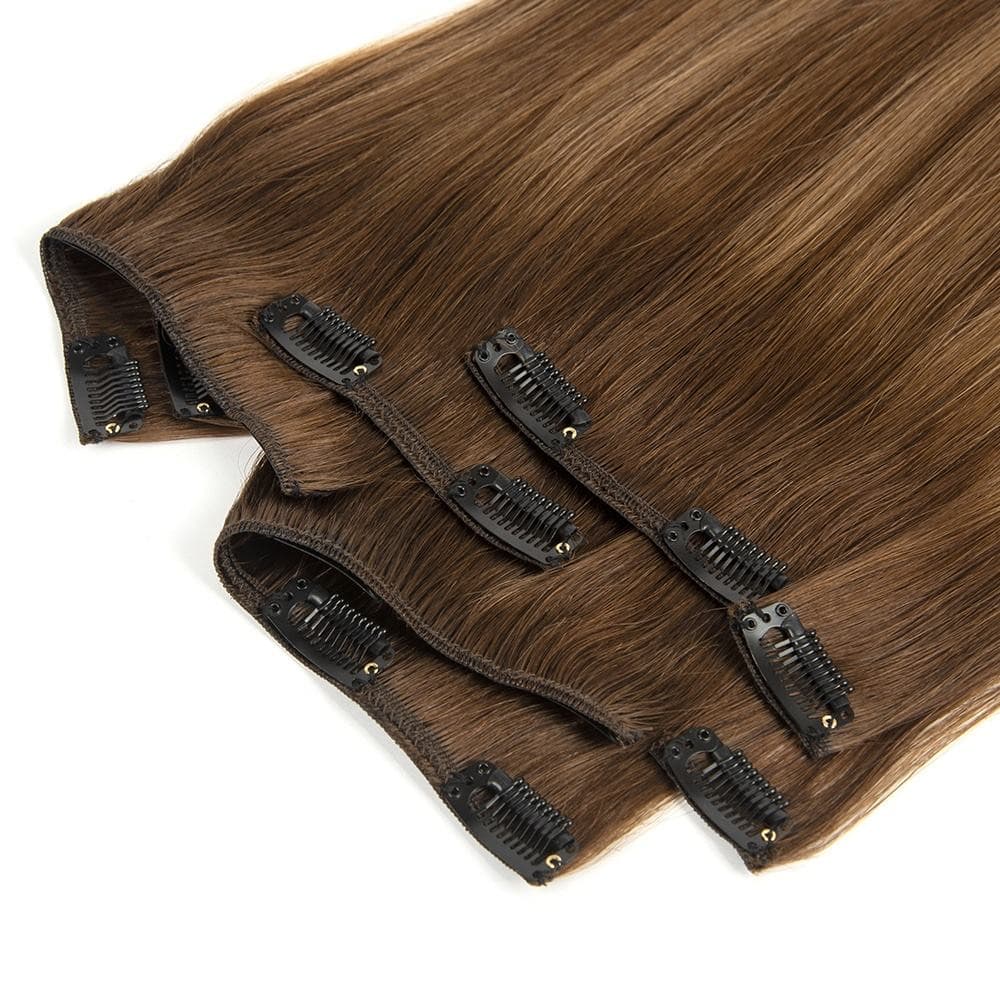
Clip-in extensions are generally designed to be put in and removed by the wearer. A buyer can ask about the exact clip construction, pack contents, length, texture and colour reference. For faith-related guidance, describe the product accurately as a removable extension system rather than assuming that all “temporary” products are treated identically.
Tape-in, weft and bonded products
Tape-in, weft and bonded methods are normally linked to a planned installation and removal process. Buyers should understand installation preparation, maintenance expectations and professional removal requirements before purchase. These facts may also be relevant when the buyer seeks religious guidance, because the product is being integrated into a styling routine rather than simply placed on and removed at will.
Wigs, toppers and hair systems
Wigs, toppers and hair systems have their own construction, fitting and disclosure questions. A topper may be selected for crown coverage; a wig may be used for a particular style, convenience or hair-loss-related concern. A qualified scholar can consider the buyer’s circumstances more accurately when the product type and intended use are clearly described.
The supplier’s role is to provide the product facts. It should not claim that one attachment method is halal or haram for every person.
Purpose, context and personal circumstances
The same product can be considered in different contexts. A buyer might be selecting extensions for a salon service, a wedding, a professional performance, modest personal wear, hair-loss coverage or a retail range. Religious guidance may consider the purpose and context alongside the material and attachment method.
For example, someone experiencing hair loss may have different practical concerns from someone choosing an occasional colour change. A salon owner sourcing products for clients needs to provide accurate material and construction details without imposing one religious interpretation on every customer. A retailer should be especially careful not to label a product “halal” unless it has a clear, verifiable basis and appropriate authority behind that statement.
Respectful communication matters. A supplier can say, “Here is the product material, construction and intended application,” while leaving the faith conclusion to the buyer and their qualified adviser.
A buyer checklist for a faith-informed consultation
Get a QuoteBefore speaking with a scholar, collect the information below. It helps the conversation move beyond a generic product name.
| Information to bring | Why it may matter |
|---|---|
| Product type | Clip-in, tape-in, weft, wig, topper or another construction may raise different practical questions. |
| Material | Human hair, synthetic fibre or blend should be clearly disclosed. |
| Source information | Share only what the supplier can actually confirm; do not infer sourcing claims. |
| Attachment method | Explain whether the product is removable, professionally installed or integrated into a styling routine. |
| Intended use | Describe the personal, salon, performance, hair-loss or retail context accurately. |
| Visibility and disclosure | Explain the setting in which the product will be worn if that is relevant to your guidance. |
| Care and removal | Describe how the product is maintained and removed. |
This checklist is not a substitute for religious advice. It is a way to make the question more specific and avoid receiving a decision based on incomplete product information.
How buyers can avoid misleading product claims
Faith-related product language deserves particular care. A supplier should not use religious terms as marketing shortcuts. Do not call a product “halal,” “Islamically approved” or “haram-free” unless there is an applicable, verifiable basis for that statement and the scope is clearly explained.
Buyers should also be cautious with unsupported social-media advice. A short video may present one interpretation as universal while omitting material, source, attachment or context. A better process is to keep the product description, supplier communication and religious consultation separate but connected.
For a B2B buyer, this means creating a product record that includes the material declaration, construction, colour and pack configuration. If the range needs a faith-sensitive description, ask the relevant authority to review the wording before publication. Do not ask a factory testing record or shipment inspection checklist to prove religious compliance; those tools can verify order-specific product details, not theological conclusions.
Product selection and installation preparation still matter
Even when the principal question is religious, buyers should not ignore practical product suitability. An extension method should be selected around the wearer’s natural hair, desired result, comfort and maintenance capacity. Product application that causes pain, excessive tension or scalp symptoms should be reviewed promptly with a qualified hair professional; persistent symptoms or hair loss merit medical advice.
Ask before ordering:
- What material and construction am I buying?
- What does one pack include?
- Who should install and remove it?
- What installation preparation is required?
- How should it be washed, brushed, stored and maintained?
- What product details can the supplier confirm in writing?
- Which questions remain for my own scholar or trusted adviser?
This approach is useful for individual buyers and for salons. It keeps faith, comfort, health and product specification from being blurred into one unsupported claim.
What a supplier can document for you
A responsible supplier can help with factual product information. Depending on the product and order, it may be able to identify material category, texture, colour reference, length, pack configuration, attachment construction, packaging and care information. For a professional order, it may also document the approved sample reference, product version and shipment-inspection scope.
Those documents can support an informed purchase or a faith consultation. They do not replace a religious ruling, medical assessment or individual fitting decision. This boundary is important for trust: a supplier should never use factory testing, shipment inspection or material documentation as a substitute for a scholar’s judgment.
Guidance for salons, retailers and private-label buyers
Businesses serving a diverse customer base should make product information easy to find without assuming every customer follows the same faith tradition or reaches the same conclusion. A respectful salon consultation can ask what product information the client needs, then provide factual answers about material, construction, length, texture, care and removal. It should not pressure the client to disclose personal beliefs or present a product as religiously approved without evidence.
Retailers should use precise terms. If a product is human hair, say so. If it is synthetic fibre or a blend, say so. If a source detail is unknown, do not imply otherwise. This is not only important for faith-sensitive buyers; it improves purchasing transparency for everyone. Product images, labels and support conversations should identify the actual item being discussed rather than relying on broad beauty language.
For private-label programs, a product brief can record the material declaration, colour reference, attachment construction, pack contents and packaging version. If the buyer wants faith-sensitive wording on the product or marketing materials, that wording should be reviewed by the buyer’s appropriate qualified authority before use. A factory can support product documentation; it should not silently become the authority for a theological claim.
Keep practical care and comfort separate from religious interpretation
Faith-related questions do not remove the practical requirements of hair extensions. A removable clip-in, tape-in service, weft installation or wig all need accurate care, storage, installation and removal information. A product should not cause persistent pain, excessive tension or scalp irritation simply because it is being evaluated through a religious lens. Those are separate concerns that deserve appropriate hair-professional or medical advice.
When building a customer-facing guide, keep the two types of information distinct. One section can state product facts: material, construction, intended use and care. A second can explain that religious interpretation belongs with a qualified scholar. This structure is more trustworthy than mixing health claims, religious claims and sales messages into one answer.
Create a product record before you purchase or reorder
A short product record makes future questions easier to answer. Keep the product name or SKU, material declaration, colour reference, texture, length, attachment method, pack configuration, supplier contact and care instructions. If a salon or buyer later needs to consult a scholar, compare options or prepare a repeat order, the discussion begins with facts rather than an uncertain product description.
For professional orders, the same record can connect the approved sample, product version and shipment-inspection scope. It remains a commercial and product-control tool. It should not be presented as proof of halal status, medical suitability or universal ethical sourcing unless those claims are separately verified and appropriately scoped.
A respectful way to ask for clarification
When speaking with a supplier, state the information you need without asking it to make a ruling. For example: “Please confirm whether this item is human hair, synthetic fibre or a blend; how it is attached; whether it is removable; what one pack includes; and what care and removal instructions apply.” This gives the supplier a factual request it can answer accurately.
When speaking with a scholar, state the product details and personal context as clearly as you are comfortable doing. You may also ask whether an alternative material or removable method would affect the guidance. The answer may still depend on your tradition and circumstances, but a precise product description creates a more meaningful consultation than the word “extensions” alone.
FAQ
Are hair extensions haram?
There is no single supplier-issued answer. Interpretations can differ according to religious tradition, material, attachment method, purpose and individual circumstances. Ask a qualified scholar and provide the exact product details.
Are human hair extensions different from synthetic extensions in this question?
They may raise different questions because the materials are different. A supplier should state the material accurately; a qualified scholar can advise how it applies in your circumstances.
Can a supplier certify that extensions are halal?
Not without a clear, applicable and verifiable basis. Product materials and order records can be documented, but a supplier should not make a religious certification claim without appropriate authority and scope.
What should I ask a supplier before consulting a scholar?
Ask for the material category, product construction, attachment method, intended care and removal process, and any sourcing information the supplier can genuinely confirm.
Does a faith-informed decision remove the need for installation planning?
No. Product suitability, comfort, tension, maintenance and scalp-health concerns remain practical considerations. Seek qualified professional or medical advice when appropriate.
Conclusion
The question “are hair extensions haram?” deserves a respectful, specific answer—not a generic sales claim. Start with accurate material, construction and application information. Then bring those details to a qualified scholar who can advise within your own tradition and circumstances. A supplier’s role is to provide transparent product facts, not to replace religious authority.
LET'S TALK ABOUT YOUR PROGRAM
Ready to turn product questions into a clearer brief?
Share your target customer, product category and requirements. Our team will help structure the next sample or quotation conversation.