
Introduction: “best” depends on the beginner’s actual use case
Searches for the “best brands for clip-in hair extensions for beginners” often lead to short lists, discount codes and dramatic before-and-after images. Those can be starting points, but they rarely answer the decisions that determine whether a first set will be manageable: the wearer’s starting length and density, the intended volume, the shade-matching method, the number of pieces in the set, clip placement and care after the first wear.
Clip-ins are commonly chosen because they do not require the same kind of salon installation appointment as many semi-permanent methods. That does not make them one-size-fits-all. A beginner should be able to understand what comes in the set, where clips sit, how the weight is distributed, how the colour reference was selected, and how the product should be removed and stored. A meaningful brand comparison therefore focuses less on a popularity claim and more on whether a company gives enough product information for a responsible first choice.
This article does not publish a universal brand ranking. It offers a repeatable framework for first-time consumers, salon teams and retailers evaluating clip-in hair extensions. The goal is to choose a product that matches the intended application and maintenance capacity, not a purchase based only on a photographed result.
Start with the result you want, not the set you see first
Define the job the extensions need to do before comparing brands. For some wearers, the goal is occasional volume for an event. For others, it is a fuller ponytail, temporary length, colour dimension or a styling option while natural hair grows. These uses require different amounts of hair, piece configurations and expectations about blending.
Write a short brief before browsing: current length, a rough description of density, the area where you want added volume or length, your preferred styling direction, and how often you expect to wear the set. If your hair is coloured, note recent colour work and take current daylight photographs. This is not a diagnosis. It is simply a better starting point for discussing product application.
Beginners should be cautious of claims that one set creates the same result for every person. The visible outcome varies with natural hair, cutting and blending, selected length, placement and styling. A responsible product page or consultation acknowledges those variables and points to the exact set being recommended.
What to compare when reviewing clip-in extension brands
Get a QuoteThe most useful comparison is a specification comparison. Look for brands that make these details accessible before checkout.
| Comparison point | Why it matters | What a clear listing should show |
|---|---|---|
| Hair material and texture | Affects feel, styling approach and care expectations | Material description, texture name and care guidance |
| Piece count and weft widths | Determines how a set can be distributed | Number of pieces, widths or placement diagram, included clips |
| Length and set-level quantity | Helps compare coverage rather than a headline | Length options and set-level weight or pack details where supplied |
| Colour system | Photos vary by device and lighting | Colour names/codes, daylight guidance, colour-ring or matching support |
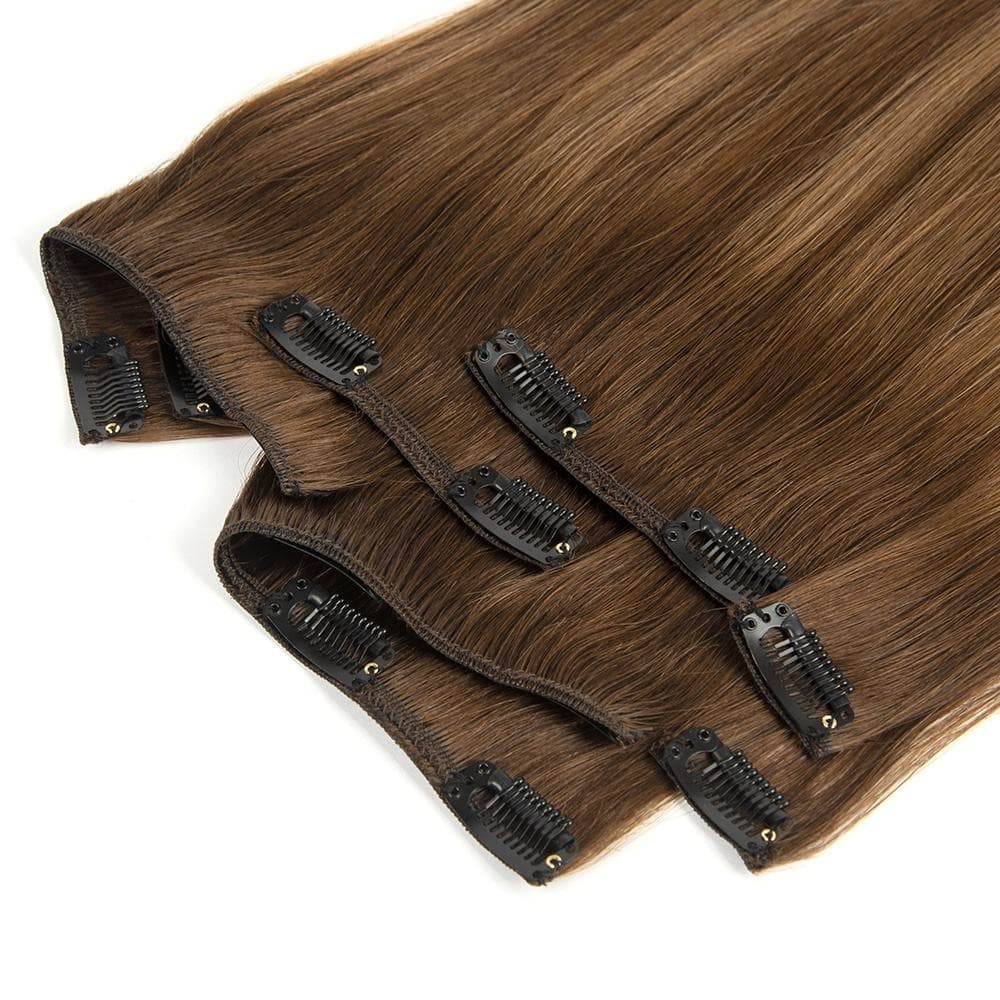
| Clip construction | Affects placement, security and comfort | Clear close-up image and application instructions |
| Care and terms | Important for a first purchase decision | Stated care rules, hygiene limits and published policy |
The information does not need to be hidden in technical jargon. A beginner needs plain language, accurate construction images and a way to ask questions before ordering. If a listing only says “luxury” or “professional quality,” request the item-specific details instead of treating broad adjectives as specifications. Buyers who need a concrete construction reference can review the Regular Clip-In product page before comparing pack and shade requirements.
Clip construction and placement: the practical learning curve
Clip-in sets usually use small pressure clips attached to wefts. The clips are intended to open, sit on a prepared section of natural hair, and close securely. A first-time wearer should practise slowly at home before an important event. Product instructions and qualified stylist guidance take priority over generic social-media techniques.
Placement is not merely about hiding clips. It is also about avoiding a result that feels unstable, looks bulky or causes discomfort. Work with clean, dry hair in a condition appropriate to the usual styling routine. Section the hair carefully, check placement from more than one angle and stop if the set feels too tight or uncomfortable. Do not use clip-ins to cover a concern that needs professional hair or scalp advice.
For a salon team or retail educator, installation preparation should be taught as a repeatable sequence: inspect the set before first use, identify each weft by width, prepare a stable section, apply one piece at a time, check symmetry and blending, then remove and store the set as instructed. This is more useful than a transformation promise because it gives a beginner a controllable process.
A simple first-wear practice session
- Lay out the set and confirm the piece count against the product description.
- Check that clips open and close as intended; do not force a damaged component.
- Work with a small number of pieces first to understand placement.
- Check the result under neutral light from the side and back.
- Remove the set carefully, then store it clean and dry according to the product guidance.
Practice does not replace professional advice. It helps a buyer discover whether the configuration, colour direction and daily effort match the reason for buying.
Shade matching: why the closest online image is not enough
Colour mismatch is a common reason a first extension purchase disappoints. Hair contains multiple tones, and screens vary. Compare extension colour to the mid-lengths and ends in daylight, not only to the root area or a filtered image. If a company offers matching help, ask whether the recommendation is based on a current photo, physical colour ring, sample or automated suggestion.
Provide photos in natural, indirect daylight with no beauty filter. Include back and side views. Mention whether hair is freshly coloured, highlighted, toned or naturally multi-dimensional. A useful response names the colour or colour family considered, explains uncertainty and suggests a sample or stylist confirmation when appropriate. It should not promise a perfect screen-based match.
Texture also needs honest comparison. A straight set may be styled into a photographed finish; a wavy set may appear different after washing or heat styling. Ask how texture is expected to present after ordinary care under the product’s own instructions. When comparing brands, put the same questions beside each listing so you are deciding from comparable information.
How much hair and how many pieces does a beginner need?
Get a QuoteThere is no universal answer. A longer length, larger change in volume, denser starting hair or more dramatic look may require a different configuration than subtle occasional volume. Instead of relying only on a claim such as “full head,” look for a set’s piece count, piece widths, available lengths and product-level weight information when the seller provides it.
For a retail or salon range, this becomes product planning. A narrow selection simplifies ordering but can leave common customer requirements unserved. A broad range creates choice but increases shade, length and inventory complexity. Begin with applications you can support well—such as occasional volume or event styling—then test whether the range has clear shade references, pack contents and reorder records before expanding.
If a supplier is involved, write requirements at set level: texture, length, shade reference, number of wefts, clip type, packaging and care card. During sample review, compare the shipment to the approved reference rather than a general description. For a future trade order, factory testing and shipment inspection should be planned as documented checkpoints appropriate to the product and agreement, not as generic reassurance.
Care, storage and product lifespan: request instructions, not predictions
Beginners often ask how long clip-in extensions will last. The honest answer depends on material, frequency of wear, heat exposure, washing, brushing, storage, handling and the product’s stated instructions. Treat a fixed lifespan promise with care if the conditions behind it are not explained.
Useful care guidance is specific: how to detangle before and after use; whether and how to wash; how to dry; which heat practices to avoid or limit; how to protect the clips; and how to store the set so it remains clean, dry and untangled. Care directions should match the exact material and texture sold. If the listing leaves those questions unanswered, factor the missing support into the comparison.
For retailers and salons, aftercare is part of customer service. Provide a clear care card, identify the product reference on the order, and set realistic boundaries. Extensions are an added-hair product; they are not a substitute for a professional diagnosis, a permanent colour solution or a guaranteed styling outcome.
A brand-comparison scorecard for first-time buyers
Use a small scorecard before purchasing. It prevents a single influencer image or offer headline from outweighing essential product information.
| Question | Strong evidence | Caution sign |
|---|---|---|
| Can I identify the exact set? | Clear name, texture, length, colour and pack contents | Only broad lifestyle images or vague labels |
| Can I understand placement? | Close-up clip images, layout diagram and instructions | No view of attachment construction |
| Can I check colour direction? | Colour code/ring, daylight guidance and stated limits | Guaranteed match from a screen image |
| Can I plan care? | Item-specific washing, styling and storage guidance | No care guidance before purchase |
| Can I contact the seller? | A route for product questions and stated terms | Pressure to buy without clarification |
This scorecard does not select a winner automatically. It makes priorities visible. Someone buying for one evening may value simple placement and responsive support. A salon buyer may value shade references, consistent pack configuration, training material and a documented repeat-order process.
What a responsible first-order process looks like
For a beginner, the first order should create learning, not unnecessary risk. Start with a clearly identified product rather than selecting by a styled image alone. Keep the order confirmation, product label or web reference, and the care guidance in one place. When the set arrives, inspect the packaging and piece count before wear. Compare the actual item with the ordered texture, length, colour direction and clip construction. If something is unclear, contact the seller before altering, washing or wearing the item in a way that changes the stated return or hygiene conditions.
On the first practice session, work slowly and avoid judging the result under one bathroom light. Check the placement from the back and sides under neutral light. Notice whether the set feels comfortable, whether the clips can be placed without strain, and whether the product supports the intended level of volume. These observations are more useful than asking whether the brand is “the best.” They give you a concrete basis for deciding whether to keep the configuration, ask a professional for blending advice or choose a different shade or length on a future order.
For salons and retailers, translate that same experience into a simple delivery and feedback process. Confirm the received product against the approved product reference, keep a record of the shade and pack configuration, and give staff or customers product-specific care information. If a buyer reports a problem, first identify the exact SKU, application context and handling history rather than treating every concern as a general brand issue. This is the beginning of a trustworthy product-support program: clear requirements, observable checks, accurate records and sensible next actions.
For wholesale or private-label programs, use the sample as the controlled point of reference. Factory testing, visible-condition review and shipment inspection should be scoped around agreed checkpoints, not used as a substitute for defining the product. A reliable sourcing conversation is specific about what is being reviewed, who records it and how an approved change is communicated before production or dispatch.
The same approach supports E-E-A-T content without inventing success stories. Experience is the controlled first-wear observation and the documented product feedback. Expertise is the explanation of construction, shade, placement and care variables. Authority comes from a transparent comparison process rather than an unverified ranking. Trust comes from making clear what an online image can show and what still needs a product-specific or professional check.
FAQ
Are clip-in hair extensions suitable for every beginner?
They can be a temporary option for many people, but suitability depends on natural hair, comfort, application technique and the product goal. Follow the product instructions and seek qualified professional guidance when unsure.
How do I choose a colour online?
Use recent daylight photos, compare against mid-lengths and ends, and ask what reference the seller uses. Treat online matching as a colour-direction aid unless a physical sample or colour-ring process confirms more.
What should a beginner look for in a clip-in set?
Look for clear pack contents, attachment close-ups, length and texture information, a shade system, care instructions and a route for pre-purchase questions.
Do more pieces always create a better result?
No. More pieces can mean more coverage or complexity, but the right configuration depends on the desired result, natural hair and correct placement. Select for application, not only a high piece count.
Can a retailer use one recommendation for every customer?
No. A retail guide can provide a starting point, but colour, length, desired volume and application confidence vary. Record the product reference and customer goal so advice and reorders can be discussed clearly.
Conclusion
The best beginner clip-in brand is not defined by a universal ranking. It is the one that helps the buyer understand the set and use it responsibly: defined pack contents, visible construction, realistic shade support, clear care guidance and accessible product communication. Compare specifications, practise a first application without time pressure, and choose a product whose maintenance and use case fit a real routine.
LET'S TALK ABOUT YOUR PROGRAM
Ready to turn product questions into a clearer brief?
Share your target customer, product category and requirements. Our team will help structure the next sample or quotation conversation.