
Choose a hair topper by identifying the area that needs coverage, measuring the proposed base, assessing suitable attachment points and matching the surrounding hair. Color and length matter, but they cannot compensate for a base that leaves the target area uncovered or places tension on unsuitable hair.
For salons, hair brands and hair-replacement studios, the same sequence creates a clearer sample brief. This guide explains how to compare human hair toppers for women, including mono, lace, silk, fishnet and bead-in options. It uses existing WinningWigs product photographs and catalog specifications. Fitting and inspection steps are recommended evaluation procedures; the photographs do not document completed wearer trials or measured durability tests.
Start with the human hair toppers collection, then narrow the product by coverage, construction and service method. A consultation should settle the practical requirements before a purchasing team commits to a larger range.
What is a hair topper, and when is it the right format?
A hair topper is a partial hairpiece designed to add coverage over a selected area of the top or crown while blending with existing hair. A full wig covers a larger portion of the head. Clip-in bangs primarily address fringe and face-framing requirements, although some designs include longer sides or a small top section.
Choose the format from the actual coverage map. A narrow parting concern and a broad crown requirement need different base footprints. A fringe photograph is not enough evidence that the piece will cover the crown, and a large topper is not automatically necessary for a temporary bangs style.
For a consultation range, keep these formats clearly labeled. Explain where each base sits, which hair remains visible and how the piece attaches. If the brief is limited to the forehead and sides, compare clip-in bangs separately rather than treating every clip-on hairpiece as the same product.
How to choose hair toppers for thinning hair
The key questions are where coverage is needed and whether the proposed attachment points have suitable anchoring hair. A topper can provide cosmetic coverage, but it does not treat the cause of thinning or establish that a particular attachment is appropriate.
Review the top, part, front and crown with a qualified fitter. Note the target area and the condition of the hair around the planned perimeter. A smaller base may place clips inside an unsuitable area; a larger base may change weight distribution, edge placement and blending. Size should follow the fitting assessment rather than a universal rule about adding a fixed margin.
Do not solve slipping by repeatedly tightening attachments or adding more clips without reassessment. The American Academy of Dermatology explains that repeated pulling can cause traction-related hair loss. Pain, stinging or persistent scalp irritation warrants prompt attention. Ongoing or unexplained hair loss should be evaluated by a qualified medical professional; product selection is a separate cosmetic decision.
For B2B customer requirements, record coverage and attachment as separate fields. “For thinning hair” describes a use case, not a complete product specification or a guarantee of suitability.
Measure the base separately from the hair length
Record width and front-to-back depth
Measure the intended base from side to side and front to back, with the direction and units written down. Distinguish the complete outer footprint from a smaller parting panel or front section. Also record where the front edge should sit relative to the wearer's existing hairline.
As a measurement example, a 5 by 6 inch footprint is approximately 12.7 by 15.2 centimeters. That conversion does not establish an available WinningWigs stock size or a recommended fit. A dimensioned sketch helps prevent width and depth from being reversed during a custom quotation.
Manufacturer specifications vary. Jon Renau's professional topper chart lists base dimensions, hair lengths and attachment details separately across its products. This illustrates the value of separate measurements; those product dimensions are not specifications for WinningWigs toppers.
Check the perimeter and attachment map
Ask for an underside photograph and identify each clip, reinforced edge or other attachment zone. The overall width alone will not show whether a clip falls on the intended anchor point. Mark left, right, front and back on the sample record so the fitter and supplier discuss the same orientation.
Hair length is measured separately and should include the supplier's measuring convention. Standard WinningWigs topper programs list 8–30 inch lengths, with availability confirmed for the chosen product. Fringe lengths are specified separately. Compare the finished cut and surrounding hair rather than expecting the longest listed measurement to describe every layer.
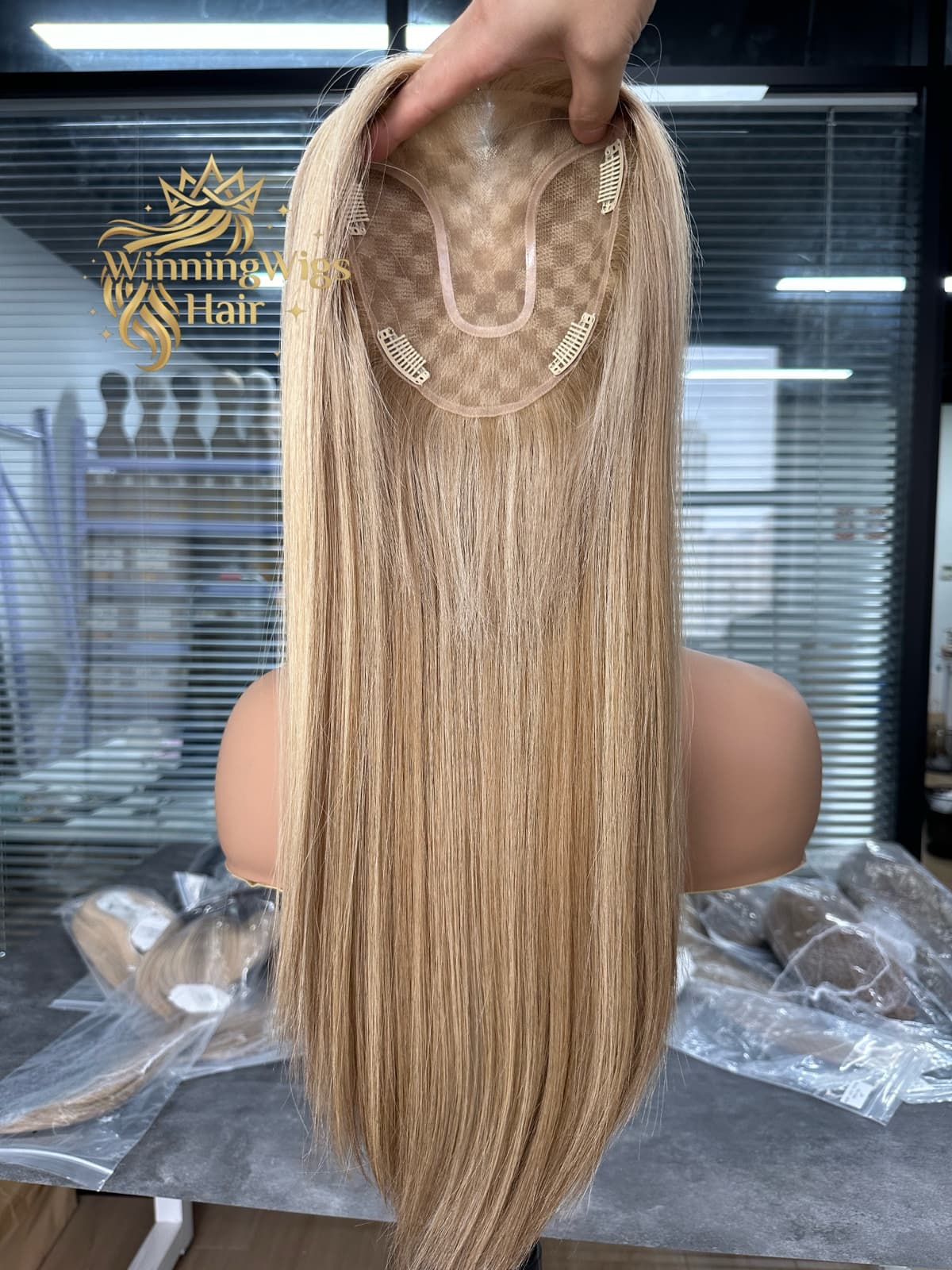
Compare mono, lace, silk and fishnet constructions
Base names are a starting point. They do not fully describe the perimeter, parting area, front edge, attachment or total thickness. Review the complete construction before comparing quotations.
| Product option | Visible construction reference | Selection questions |
|---|---|---|
| Mono Topper | Mono base with the selected perimeter and clips | What are the base dimensions, parting area and clip positions? |
| Lace Topper | Lace construction with product-specific front and perimeter | How will the front edge, base tone and visible part blend? |
| Silk Topper | Silk-base option with surrounding construction confirmed by product | How do the part appearance, edge profile and base tone look on the sample? |
| Fishnet Topper | Open mesh areas and a defined front panel | What are the panel dimensions, attachment plan and blending requirements? |
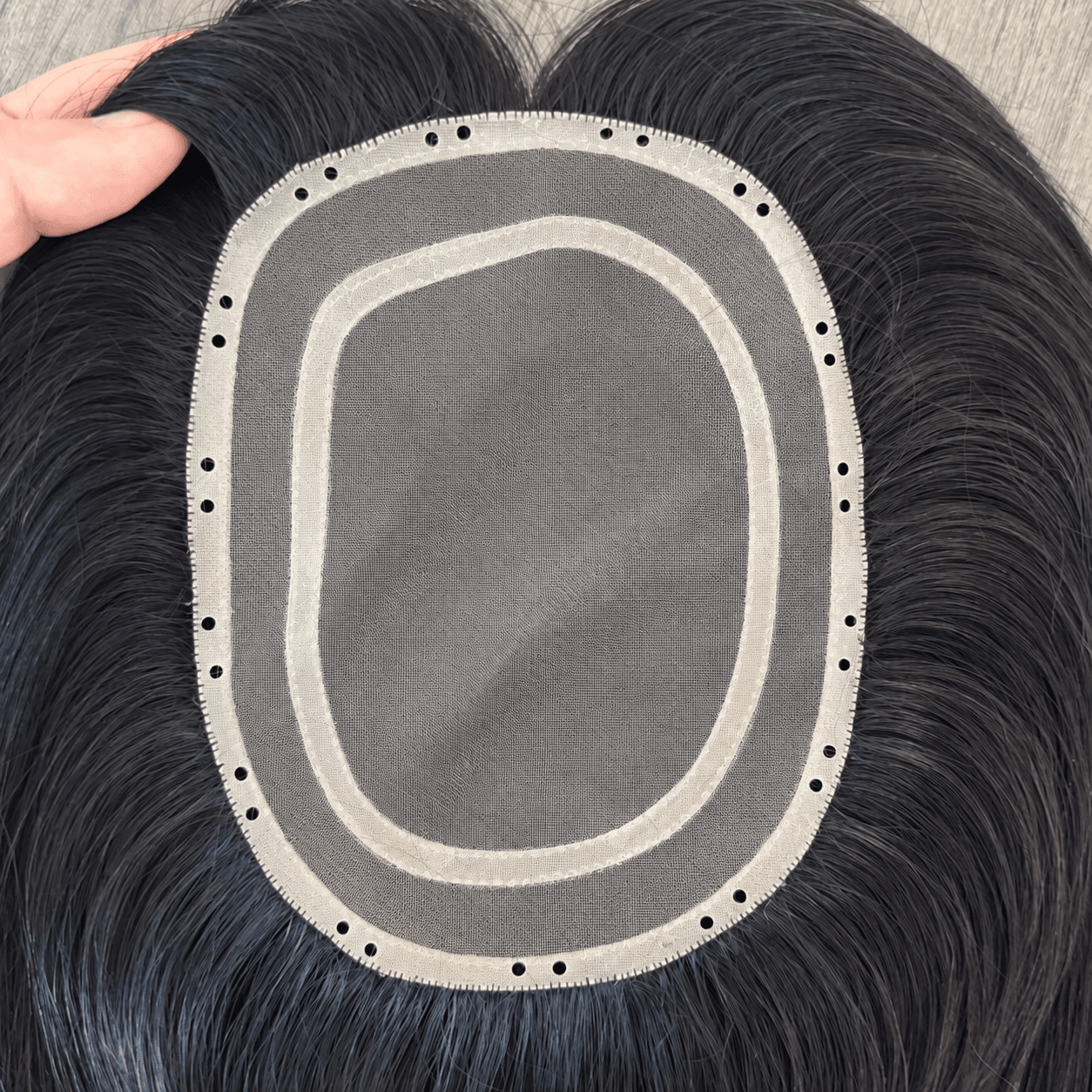
| Bead-In Mono Topper | Mono lace center, PU perimeter and round attachment holes | Is the professional crochet-and-bead workflow appropriate for the service? |
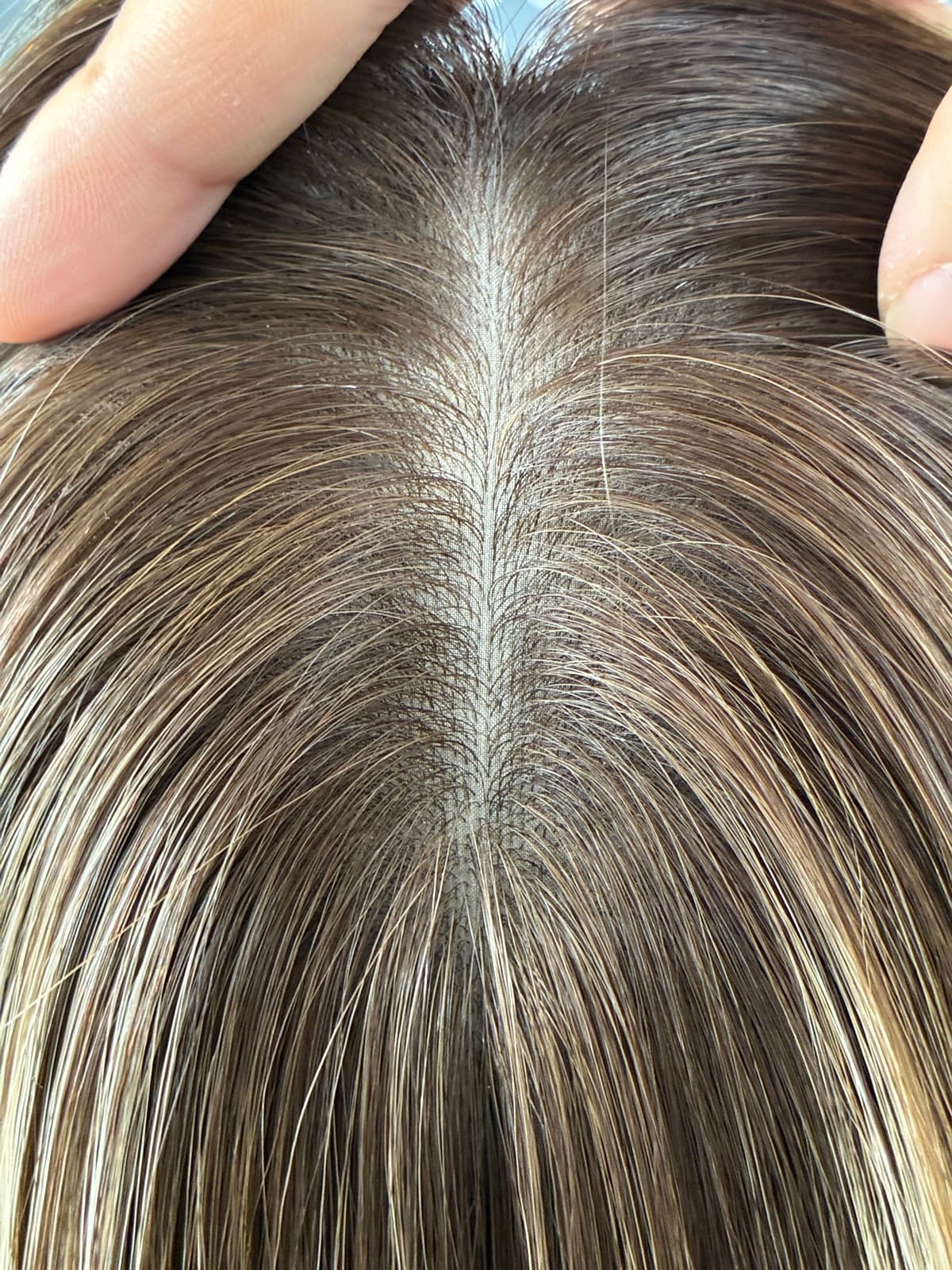
The Mono Topper is a useful starting reference for a mono-base brief. Compare the actual part and hair direction if a customer wants to change the parting. A photograph of one hairstyle does not establish unlimited parting flexibility.
For the Lace Topper, examine the front and surrounding construction, including any preparation the fitter must complete. The Silk Topper offers another base direction to review for the desired part appearance. Neither name guarantees that the edge or base tone will disappear on every wearer.
For the Fishnet Topper, request a clear view of the mesh and front panel. Confirm how existing hair will interact with the design during fitting. An open-looking structure in a photograph does not by itself establish measured breathability, comfort or suitability.
Choose an attachment method your service can support
Clip-in toppers
Clip-in designs use the specified clips to attach to suitable existing hair. Check access to each clip, the opening and closing action, the perimeter placement and whether surrounding hair conceals the connection during normal movement.
More clips do not automatically produce a better fit. The sample must be assessed as a whole, including its weight distribution and the anchoring hair. Do not prescribe aggressive backcombing or tightening as a universal answer to slipping. A fitter should review an unstable or uncomfortable attachment before continued use.
Bead-in construction
WinningWigs' Bead-In Mono Topper has a mono lace center, a PU perimeter and round holes intended for a professional crochet-and-bead workflow. It should not be described as a standard removable clip-in topper.
Ask who will perform installation, maintenance and removal, and what training or method guidance is required. Discuss the available anchoring hair and planned appointments with the professional. A salon offering this construction needs a service process as well as a purchasing specification.
Need help narrowing the construction? Send your topper requirements with the coverage sketch, attachment preference, shade, length, density reference, quantity and destination. We can discuss a sample and product-specific quotation for your salon or brand.
Match color, density and length as one finished look
Match the hair beside the connection
Compare the topper with the hair that remains visible around the base, not only the lighter ends of a long hairstyle. Describe depth, warmth or coolness, roots, highlights and grey distribution separately. A single shade name rarely captures a dimensional color.
Use a physical swatch or approved sample where possible. For photographic references, request front, side and top views in consistent lighting without filters. Screens and camera processing can alter perceived color. Supplier shade numbers are not universal equivalents, so identify which reference controls the order.
Evaluate density on the actual base
Density affects the finished outline, the visible part and how the topper blends with existing hair. A fuller piece may create a step where it meets finer surrounding lengths. A lighter-looking sample may not provide the intended appearance over a particular base.
WinningWigs standard topper specifications list 130%, 150%, 180% or custom density options, subject to the selected product. These are ordering references, not standardized cross-brand measurements or universal recommendations for thinning hair. Agree the desired distribution and approved sample rather than comparing percentages alone.
Discuss cutting allowance and face-framing requirements before ordering. The stylist may need to blend the piece into the intended hairstyle. Confirm hair type, finished color or texture processing, heat guidance and care instructions; a material label does not prove that a colored finished product has undergone no processing.
Prepare for fitting, care and sample evaluation
During installation preparation, confirm the front position, part, attachment map and intended cut before making irreversible changes. Review the piece from the front, sides, back and above. Check whether the edge remains covered when the wearer turns or changes the part within the approved style.
A practical fitting record can note visibility at the connection, access to attachments, movement, pulling and the wearer's feedback. Record what was actually observed and when. One satisfactory fitting does not establish that every wearer or construction will have the same result.
Agree washing, detangling, drying and styling instructions for the selected base and hair. Handle attachments gently and avoid pulling through the base while detangling. Ask the supplier which products and heat settings are appropriate rather than publishing one temperature for all toppers.
For factory testing, define the sample, care routine and observations in advance. A useful review could compare hair handling, visible shedding, base condition and color appearance before and after the agreed care cycle. Record the actual procedure and outcome. This guide does not claim a topper wash-test result or promise a fixed service life.
Build a B2B sample and order brief
A complete enquiry makes quotations easier to compare and helps prevent substitutions. Include:
- Product name, base material zones and a dimensioned coverage sketch.
- Attachment method, clip positions or perimeter-hole requirements.
- Hair type, length, texture, density reference and intended part.
- Shade or swatch, roots, highlights or grey blend where relevant.
- Quantity by specification, sample needs, packaging and destination.
- Required dispatch date and the approved reference for repeat orders.
WinningWigs topper MOQ starts at 1 piece. Selected standard topper stock may dispatch the same day or next business day, subject to availability. The Bead-In Mono Topper lists ready-stock dispatch in 1–2 days. Custom toppers typically dispatch in 3–4 weeks. Confirm the actual item and schedule before ordering; dispatch is separate from international transit and customs.
During shipment inspection, check the product reference, base, attachment layout, color, length, quantity and packaging against the approved order. Keep inspection photographs linked to the relevant SKU and resolve deviations before dispatch. For clinic procurement and opening-range planning, use the wholesale hair topper sourcing guide.
A practical opening-range example
Consider a salon comparing two samples for different consultation needs. One brief focuses on a narrow part area with a removable attachment; the other needs broader crown coverage and a professional attachment discussion. This is a planning example, not a reported customer result. Giving both samples the same color and hair length can help the team isolate differences in coverage and construction. Record each base footprint, attachment map and intended service separately. Do not combine them under one generic SKU simply because the hair looks similar in photographs.
FAQ
What is the best hair topper for thinning hair?
The appropriate topper matches the coverage area, suitable attachment points, surrounding hair and maintenance plan. There is no single best base or clip count for every wearer. Use a professional fitting assessment and a sample before making a broader purchasing decision.
Should a topper base be larger than the thinning area?
The base needs to provide the intended coverage while placing its attachments appropriately. A fitter should assess the perimeter and anchoring hair. Avoid choosing size from a fixed extra-margin rule or a photograph without measurements.
Can a hair topper damage existing hair?
Attachment tension and repeated pulling can be a concern. Suitability depends on the wearer's hair, piece and fitting method. Have pain, pulling or slipping reassessed promptly, and seek qualified medical advice for scalp symptoms or ongoing hair loss.
Is a silk topper better than a mono or lace topper?
Compare the actual part appearance, front, perimeter, dimensions, attachment and care requirements. The base label alone cannot rank the complete products. Evaluate the relevant samples against the same brief.
Are human hair toppers for women the same as wigs?
No. A topper adds partial coverage and blends with remaining hair; a full wig covers more of the head. If the surrounding hair cannot provide the planned blend or suitable attachment, discuss other formats with a professional.
Can salons order one custom sample?
WinningWigs topper MOQ is 1 piece, and custom samples can be discussed before a larger program. Confirm the hair, base, dimensions, attachment, price and dispatch timing in the quotation.
Conclusion
Choose a hair topper through a sequence: map coverage, measure the base, assess attachment, compare construction, then approve color, density and length on the finished sample. For thinning hair, keep cosmetic coverage and attachment suitability central to the consultation.
Compare the current human hair toppers for women, then request a topper sample or quotation. Send a clear specification so your salon, brand or distribution team can make a purchasing decision and retain a useful reference for future orders.
LET'S TALK ABOUT YOUR PROGRAM
Ready to turn product questions into a clearer brief?
Share your target customer, product category and requirements. Our team will help structure the next sample or quotation conversation.