
Introduction: choose for the job, not the logo
People searching for how to choose the right hair extension brand often find short lists, discount codes and dramatic photographs. Those may introduce options, but they do not establish whether a particular product fits the wearer’s natural hair, desired result, styling routine, colour needs or willingness to maintain a salon-installed method. They also do not tell a salon owner or retailer whether a brand provides a product program their team can identify, explain and reorder.
The right brand is therefore not a universal winner. It is a product and service match. A customer who wants removable volume for occasional wear has a different requirement from a client considering tape-ins or a professional buyer planning a weft collection. This guide gives a repeatable evaluation process rather than an unsupported ranking. It is for consumers, salon teams and B2B buyers, and it avoids claims that any construction is right for every person.
Define the intended product application
Start before browsing brand names. Write a short brief that answers the questions below.
| Question | Why it matters |
|---|---|
| Is the goal volume, length, colour dimension, coverage or an event look? | The goal affects the construction, quantity and service required. |
| Is it self-applied, salon-installed or a retail product program? | The buyer needs different support, installation preparation and aftercare. |
| What are the starting hair length, texture, colour and current condition? | These details guide product selection and a professional consultation. |
| How often will the wearer wash, heat-style, travel or attend maintenance? | A method must fit the actual routine. |
| What must be confirmed before purchase? | It creates a checklist for shade, pack scope, care, service and terms. |
For a consumer, this is a purchase brief. For a salon or retailer, it can become the intake form used in a consultation. It prevents the decision from being made solely from a single image or a generic promise of “full volume.”
Compare construction before marketing language
Get a QuoteOne brand may be a credible option for a particular product family without being a fit for another. First identify the construction and its use case.
Clip-ins: evaluate the set as a self-application product
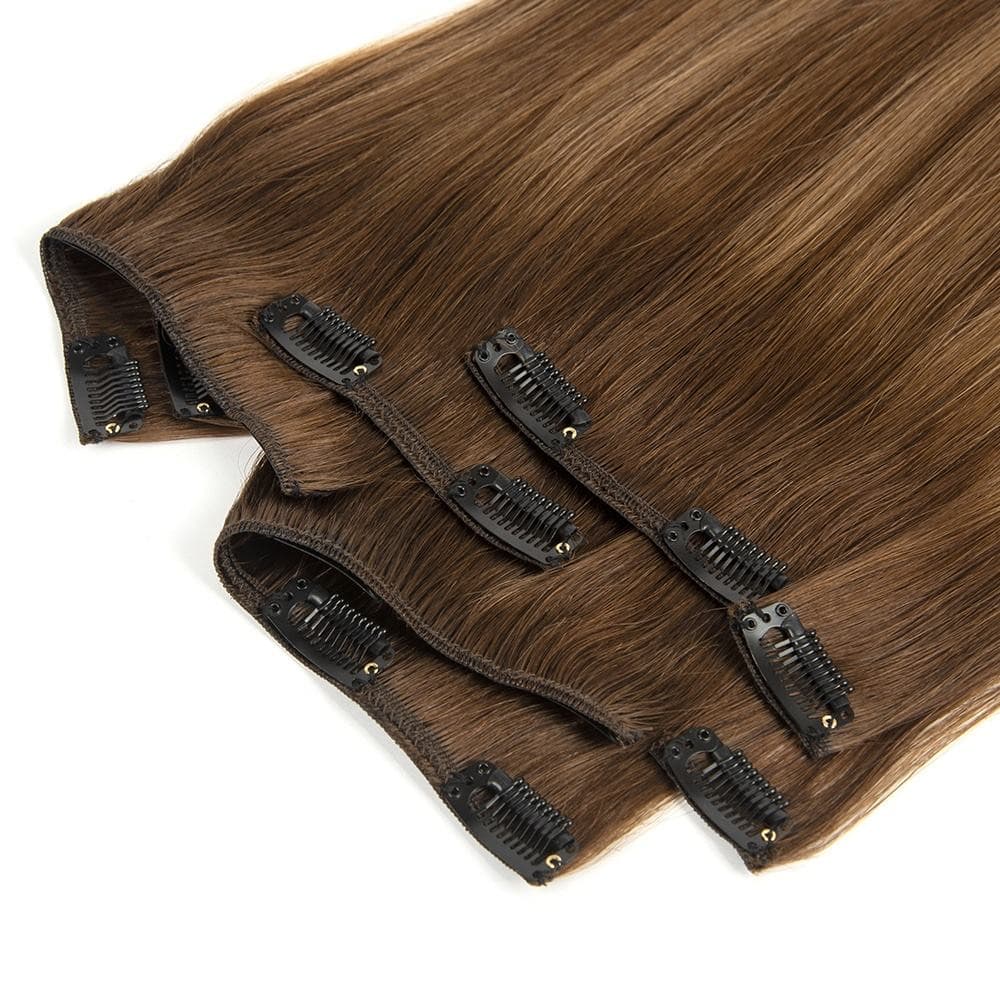
Clip-ins are commonly used for removable volume or length. Compare the piece count, widths, clip placement, seam profile, stated length, texture, shade information and care instructions. A new wearer should also consider whether they can practise placement without time pressure. Clear pack contents are more useful than an undefined claim of a “complete” set.
Tape-ins: evaluate the product and service plan together
A tape-in comparison should include tab profile, attachment instructions, the stated hair options, shade approach and the salon’s removal and reapplication policy. The product purchase is not automatically a professional service. Ask what is supplied in the pack, who performs installation and removal, and what is included in the later maintenance appointment.
Wefts: compare the seam against the intended installation method
Genius, hand-tied and machine wefts have different seam characteristics. Compare the construction, hair amount, pack configuration, shade/texture availability and the foundation a qualified stylist intends to use. A trustworthy brand does not promise that every weft suits every natural-hair condition or every installation technique.
Bonds and links: require method-specific professional information
For individual bonds or link-based systems, a consultation should explain placement, comfort checks, maintenance and removal. A claim such as “damage-free” is not enough evidence. Suitability depends on the wearer, the amount of added hair, tension, placement, care and timely adjustment. Discomfort or a scalp concern should be discussed with an appropriately qualified professional rather than ignored for the sake of a product choice.
Check the information a brand makes available
A reliable brand makes essential buying information available before checkout or sample approval. Not every production detail must be public, but a buyer should be able to obtain a clear, consistent answer.
Product identification and pack scope
The product page, salon consultation or buyer quotation should identify the collection and construction, stated hair type, texture, available lengths, shade system, pack contents and attachment components. “Premium,” “luxury” and “salon quality” are marketing descriptions, not specifications. Ask what the term means for the exact product being considered.
Shade and texture support
Colour mismatch causes preventable disappointment. Look for usable shade photographs, a stated way to ask for matching support, notes about screen variation and a clear process before ordering. For a professional program, retain an approved shade reference, photograph or sample with the product record. Texture should describe the received product without promising identical behaviour after the wearer’s washing, heat styling or chemical services.
Care, service and problem handling
For self-applied products, look for practical care and placement guidance plus understandable return or exchange terms. For salon-installed extensions, clarify who installs, maintains and removes the product, and separate the hair purchase from local service charges. A transparent provider tells the buyer what is included, what is conditional and where to ask for help.
Use a consultation or sample as evidence
Online imagery cannot replace a review where the product will be used. Consumers can request shade support and ask a professional why a method is being recommended. They should describe their goal, current colour services, daily routine and comfort concerns honestly. If the recommendation changes after an assessment, ask for the reason and an updated scope before proceeding.
For salon and retail teams, review a sample against a written customer requirement: method, texture, length, colour direction, pack count, packaging and client-facing information. Record what was observed rather than turning one sample into a promise of every future result. A small pilot assortment can show whether staff can identify the product, explain its limits and reorder it consistently.
For B2B buyers, factory testing, sample review and shipment inspection can verify the agreed reference, visible construction, shade grouping and packing details. They are quality-control steps, not proof that every installation or wearer result will be identical. A sound shipment inspection links finished goods to the approved sample and records any exception before dispatch.
Ask the same questions of every candidate brand
Get a Quote- Which construction suits the stated application, and why?
- What is included in this set, pack or service scope?
- How do I confirm colour, texture and length before purchase or sample approval?
- Who handles installation preparation, installation, maintenance and removal where relevant?
- What care guidance applies to this construction?
- What is the process if the shade, product or comfort is unsuitable?
- What are the stated return, exchange, adjustment or service terms?
- For a professional program, how is the approved product identified and reordered?
Specific answers are more meaningful than a broad reputation claim. The provider does not need to promise perfection. It should be able to explain its product, decision path and boundaries.
Compare full value, not the initial price alone
The lowest priced set may lack the shade support, product information or care guidance needed for the planned use. A higher price is not evidence of better fit either. Compare the exact scope.
| Area | What to compare |
|---|---|
| Product | Construction, hair amount, pack contents, lengths, texture and shade plan |
| Purchase confidence | Photographs, samples, consultation access and written information |
| Service | Installation, blending, maintenance and removal where applicable |
| Care | Method-specific instructions and realistic routine requirements |
| Issue handling | Contact route, stated terms and documented process |
| Repeatability | Product identifiers, approved samples and reorder records |
Do not turn this into a generic scorecard unless the facts are comparable. A salon client may value professional fitting support more than a wider online shade range. A retailer may prioritise a consistent pack specification and communication process. Weight the criteria according to the brief defined at the beginning.
Warning signs that deserve more questions
Undefined product language is one reason to pause. If a listing uses “best,” “100% premium” or “salon quality” but cannot identify construction, contents or care expectations, ask for the details that would enable a comparison. Lack of an accessible shade, installation or care process is another concern, especially for first-time wearers.
Also distinguish the extension product from the professional service. A product order may not include installation, and a salon quote may not include hair, colour work, removal or future maintenance unless it says so. For private-label or wholesale orders, lack of a product code, approved sample reference, specification and packaging version makes a later reorder unnecessarily risky.
Turn brand research into a low-risk first purchase
The first purchase should answer a useful question, rather than attempt to prove that a brand is permanently right or wrong. Consumers can use a consultation or a carefully chosen first set to confirm shade, construction and whether the care routine is realistic. A salon or retailer can use a controlled sample or pilot assortment to test product clarity, staff training needs and order accuracy before extending the range.
Keep the comparison record
Save the product link or code, the date reviewed, the relevant shade reference, selected length, construction, pack contents and the questions that were answered. If the product was installed professionally, retain the written service scope and the aftercare instructions supplied by the provider. This record is not a warranty, but it gives the buyer a factual reference if they later need to compare another option, request a reorder or raise a specific question.
For a business, the record should also identify the target customer segment and intended application. A range developed for quick salon volume services may not be the right range for a retailer selling occasional-wear clip-ins. Separating the two avoids misleading product language and helps staff make a suitable recommendation.
Check that product claims can be explained
Before using a brand claim in a product page, sales conversation or private-label brief, ask whether it can be explained in ordinary terms. A claim about construction should point to the construction. A claim about shade range should identify the available reference. A claim about customer suitability should name the application and its limits. If a phrase cannot be tied to a product fact, it should not be the deciding reason for a purchase.
This practice is helpful for AI search and for ordinary buyer trust. Clear statements such as “this pack contains a specified construction and length” are easier to understand and verify than vague superlatives. It also gives a customer-service team a dependable starting point if a buyer later asks what was ordered.
Plan the handoff from product selection to service
For salon-installed extensions, a strong brand selection is only the first stage. The client needs a consultation with the person who will assess the natural hair, confirm the method, perform installation preparation and explain maintenance. The product brand should not be used to bypass that service conversation. A salon should be candid if it does not install a method, cannot provide shade support or cannot take responsibility for a product supplied from an unknown source.
For a product retailer, the equivalent handoff is customer education. The buyer should know whether the product is intended for self-application, which information is needed for colour matching, how to access care instructions and when to seek professional help. Clear boundaries are more valuable than promising a single product will solve every extension need.
Review what the first order actually taught
After the first purchase or pilot, capture observations without inventing a conclusion. Did the product identifier match the approved brief? Was the shade-selection process clear? Did the pack contents make sense to the user? Were the care instructions accessible? For a supplier relationship, did the shipment inspection align with the documented reference and was any exception recorded before dispatch? These are answerable questions. Claims about universal longevity, customer satisfaction or performance require broader evidence and should not be inferred from one order.
Build a reliable brand-choice process for a business
A consumer choice is personal; a salon or retail program must also be teachable and repeatable. Start with a focused product family and target client instead of launching every construction, shade and length. Decide which product facts staff need for a consultation and which must appear in product information.
Next, conduct a documented sample review. Match the sample to the written specification, test the product-identification and order-record process, and decide how exceptions will be handled. Customer requirements should improve the next brief. Sample approval does not validate every future order; it creates the reference for subsequent production and shipment inspection.
Finally, make the inquiry path useful. It should collect target customer, intended application, construction, quantity, shade/length needs, packaging requirements and timing. This lets buyer and supplier discuss a sample or quotation from shared facts rather than assumptions.
FAQ
What is the most important factor when choosing a hair extension brand?
Start with the intended application. Construction, pack scope, shade plan, care requirement and service support are more useful criteria than a generic brand reputation.
Is a more expensive brand automatically better?
No. Price does not prove fit, hair amount, product transparency or included service. Compare the stated scope and whether it meets the brief.
Should I choose a brand before seeing a stylist?
Research can narrow the options, but a salon-installed method should be discussed with the professional who will assess, install and maintain it. Ask which product line they use and what the complete service scope includes.
How can retailers avoid unsupported brand claims?
Use product specifications, samples, pack records, care information, supplier communication and documented customer requirements. Avoid universal rankings, unverified durability claims and promises of identical results.
What should a buyer keep after sample approval?
Keep the product code, sample reference, construction, hair/texture/colour/length details, pack configuration, packaging version, approved photographs and exception notes. These records support clearer repeat orders.
Conclusion: the best choice is the clearest fit
Choosing the right hair extension brand means matching a defined need to a product and service system that can be understood. Compare construction and product data, use consultations or samples as evidence, and confirm colour, care, service scope and future support. For a professional buyer, this turns a product selection into a repeatable program instead of a one-time gamble.
LET'S TALK ABOUT YOUR PROGRAM
Ready to turn product questions into a clearer brief?
Share your target customer, product category and requirements. Our team will help structure the next sample or quotation conversation.