
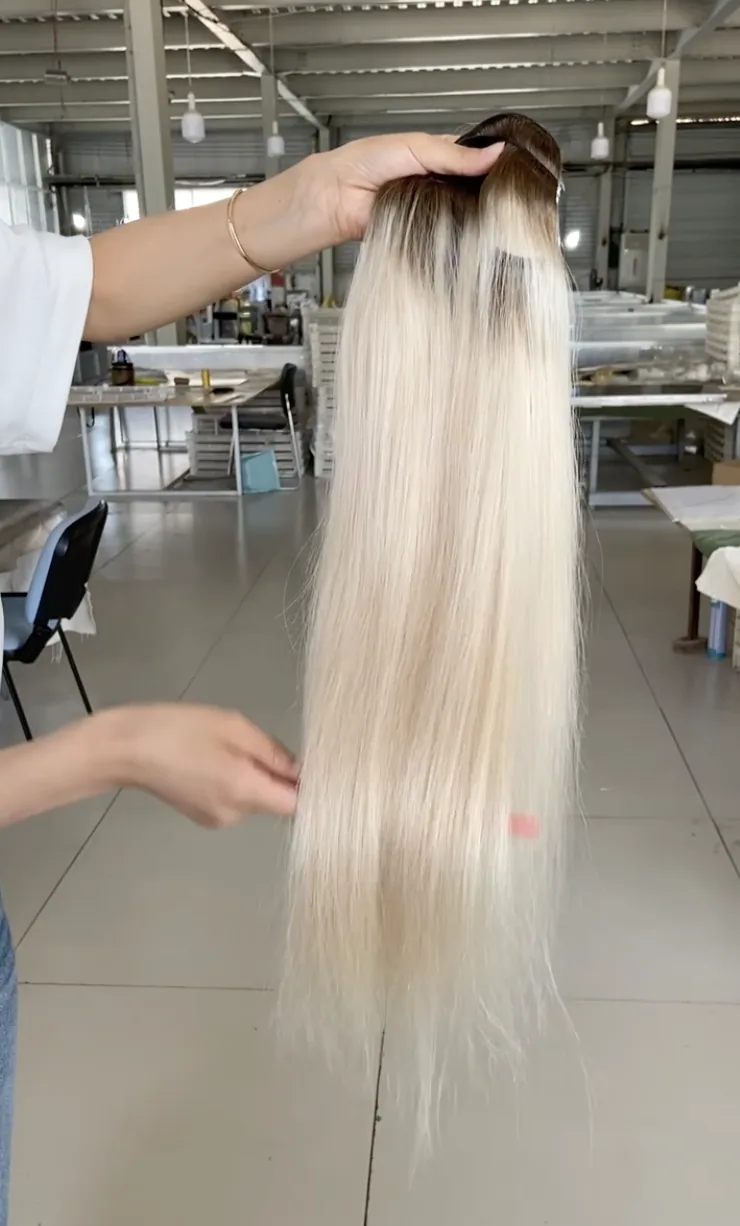
Introduction: a sample is a decision record, not just a product preview
For a professional buyer, a human hair sample is not simply a preview of a future order. It is the reference point connecting customer requirements, supplier communication, product approval, production planning and future repeat orders. A sample can look attractive in a photograph and still leave important questions unanswered: was its colour compared with an identifiable reference, is the texture being assessed in its received condition or after styling, and does the construction match the intended product application?
The practical answer is to evaluate every sample against a written brief and keep a record of what was actually observed. This does not require laboratory equipment or invented pass/fail numbers. It requires a repeatable process: identify the item, preserve its received condition, compare it under consistent conditions, record observations, and decide whether to approve, revise, resample or discuss the next step.
This guide is written for hair-extension brands, wig brands, salons, distributors and hair-replacement professionals. It does not promise universal lifespan, zero shedding, no tangling or permanent colour retention. Instead, it explains how a buyer can create evidence that is useful for product selection, supplier comparison and production approval.
Why a written sample evaluation matters
Samples are often reviewed by several people: a founder, buyer, product developer, stylist, quality manager or distributor. If the outcome is only “we liked it,” important information can disappear before a quotation, production order or reorder is prepared. One person may remember that the hair felt smooth; another may remember a concern about tone, packaging or attachment construction. Neither recollection is enough to control a future version of the product.
A written evaluation makes the decision traceable. It shows which product was checked, which reference was used, which conditions were observed and which details require follow-up. It also helps keep a discussion factual. A buyer can say, “The mid-length tone appears warmer than the approved colour reference under the same inspection light,” rather than “the colour is wrong.” The first statement gives a supplier something specific to review.
For a private-label program, this record becomes part of the product-development file. For a salon or distributor, it supports a more reliable product range and staff handoff. For a buyer comparing suppliers, it makes each proposal easier to compare on scope rather than on broad quality language.
Step 1: identify the sample before evaluating the hair
Get a QuoteStart with product identity. A sample cannot serve as an approval reference if its product family, colour, construction or source cannot be traced later.
Record the following fields before opening a discussion about performance:
- Buyer or company name and supplier name
- Product or sample ID
- Product family: extension, wig, topper or hair system
- Intended customer application or service model
- Texture or curl reference
- Colour name, colour ring reference or approved physical swatch
- Length and stated unit
- Attachment, weft, cap or base construction
- Pack configuration and packaging version, where relevant
- Order date, received date, evaluator and inspection date
- Comparison reference: written brief, approved sample, colour ring or earlier product version
If one of these fields is unknown, write “needs clarification.” Do not create a reference from a general product name, a social-media image or a memory of a previous discussion. A rooted blonde tape-in product, for example, needs a different reference from a straight dark weft even when both came from the same supplier.
Step 2: review the product in its received condition
The first review should take place before washing, recolouring, trimming, conditioning or restyling the product. This preserves a starting point for any later comparison. Photograph the item under consistent lighting and note whether it was received dry, damp, styled or in original packaging.
For extensions, take images of the root area, mid-lengths, ends and the relevant attachment construction. For wigs and toppers, record the overall hair presentation and visible cap, base, lace, hairline or fixing components that were included in the brief. Also document packaging condition and product labels where available.
Then review visible presentation. Look for hair direction, texture distribution, obvious tangling, signs of dryness, visible short hairs, colour distribution and construction details. This is an observation stage, not a diagnosis. A visible short hair is a fact; its cause may require further review. A dry-looking end is an observation; it does not prove a long-term product outcome.
Step 3: compare colour with a stable reference
Colour is one of the most important sample checks because it affects both end-customer expectations and repeat-order control. Compare the sample with a physical colour ring, approved swatch or retained approved sample whenever possible. A phone image can be useful evidence, but screens, camera settings and ambient light make it a weak substitute for an identifiable physical reference.
Use a consistent inspection condition. Record the light source or inspection station if the buyer and supplier have one. For solid colours, compare the overall tone from roots to ends. For rooted, highlighted, balayage or piano-colour products, record the root direction, dominant tone, lighter tone and transition effect separately.
Good documentation distinguishes an observation from an overstatement. “The root direction appears aligned with reference X; the lighter tone requires a second comparison” is more useful than “perfect colour.” It makes the next action clear without pretending that a photograph can remove all uncertainty.
Step 4: assess smoothness, dryness, tangling and visible shedding
Get a QuoteUse a clean, suitable comb or brush and keep the method consistent for comparable samples. Record the product condition before combing. Start from the ends and work upward without excessive force. If the comb meets resistance, note where it happened and whether detangling was required.
Useful observations include:
- Whether hair moved smoothly through the comb
- Whether resistance appeared at roots, mid-lengths or ends
- Whether visible shedding occurred during the review
- Whether shed strands appeared long or short
- Whether dryness was concentrated in one area
- Whether the texture changed after gentle combing
Do not introduce an unverified allowable-shedding figure or call a sample “tangle-free” based on one inspection. If a test was not performed, mark it as not tested. The goal is to create a record that another evaluator can understand and repeat, not to make a promotional claim.
Step 5: use product-specific checks
Hair-extension checks
The attachment construction should be evaluated together with the intended product application. Depending on the product, review the visible condition of a weft seam, tape tab, keratin bond, flat tip, clip, loop or other attachment system. Confirm that it visibly matches the approved product brief.
A visual check can show whether construction appears consistent with the reference. It cannot by itself prove adhesive durability, tensile performance or installation longevity. If the buyer has not performed a defined functional test, state that clearly. For tape-in products, discuss installation preparation, tab reference and aftercare requirements with the intended professional user. For wefts, connect the sample to the planned sewing, bead, ring or other installation method.
Wig and topper checks
For wigs and toppers, review hair presentation and visible cap construction separately. Confirm the agreed cap type, lace or hairline details, parting direction, density direction, fixing components and packaging presentation where these points are part of the brief.
Do not use a desk inspection to promise individual comfort, scalp suitability or wearer outcome. Those questions require fitting and customer-use feedback. The purpose of the sample review is to confirm the product reference and identify any point that needs refinement before an order is approved.
Step 6: record wash observations without overstating the result
Washing can be an optional comparison step when it is relevant to the buyer’s product application. It should not be treated as a universal test unless the procedure is defined and repeatable.
Before washing, photograph the sample in consistent light and record the product ID, wash number, products used, water temperature if known, wash duration, detangling method, drying method and any heat styling. Once dry, review the same observable points again: smoothness, tangling, dryness, texture presentation, visible shedding and colour appearance.
WinningWigs currently retains one recorded sample photograph after five washes. In the image, the hair appears visually smooth and glossy, with no obvious change in its overall tone visible in that recorded photograph. This is a limited observation for one sample, not a performance claim for every product. The product identification, batch, wash products, temperature, drying method and before-wash comparison still need to be documented before the observation could support a more detailed comparison.
This is an important trust principle. A sample-specific observation can be useful evidence when its limits are stated. It should not become a claim that all hair will remain unchanged after five washes or under every customer-care condition.
Step 7: decide what happens next
At the end of the review, select one clear status. Avoid allowing a sample to move from “looks good” to bulk-production approval without a documented decision.
| Decision | Appropriate use |
|---|---|
| Approved as reviewed | The sample matches the documented reference closely enough to support the next production or reorder discussion. |
| Approved with documented changes | The sample is acceptable, but the required changes are specific and form a new version. |
| Revision and resample required | The product needs changes that should be physically reviewed again before approval. |
| Supplier discussion required | The observation, reference or possible cause remains unclear and needs more evidence. |
Record the decision, evaluator, date, product version, open questions and next owner. If colour, construction, length, texture or packaging changes materially, create a new version rather than assuming that it is the same approved sample.
Step 8: send suppliers evidence they can act on
The most productive feedback includes product identity, context and a requested next step. Send the product or sample ID, order reference, photographs or short video, comparison reference, inspection condition and a description of what was observed. State when the issue appeared and what you would like reviewed.
For example: “Sample A was compared with approved colour ring reference B under the same inspection light. The mid-length appears warmer than the reference. Please review whether the difference relates to the colour formula, sample identification or comparison condition.” This gives the supplier an actionable question.
Avoid framing the first message as a conclusion when evidence is incomplete. If a supplier needs a returned sample, preserve the item’s condition and agree which question the return is intended to answer. That is more useful than trying to settle a complex issue from one image.
Build a sample file that supports repeat orders
The value of the evaluation increases after approval. Keep the written brief, sample images, colour reference, construction notes, packaging version and final decision together. A buyer should be able to locate the approved version without searching old messages or asking one individual to recall the details.
If a later order changes a colour, texture, attachment, cap construction or package detail, log it as a new version. This does not create unnecessary administration; it prevents a revised product from being described as a routine repeat order. For a team sourcing multiple categories, use one naming method across extensions, wigs and toppers so purchasing, sales and product teams can identify the same reference.
The sample file also improves quotation comparisons. Send the same defined brief to each supplier and ask each to identify which elements are confirmed, sample-dependent, unavailable or excluded. Price can then be assessed in the context of a comparable product scope rather than a broad quality claim.
Use the same process when comparing suppliers
Supplier comparison is most useful when every candidate receives the same brief and is evaluated under the same conditions. A buyer may compare visible hair presentation, product identification, responsiveness to questions, packaging clarity and the ability to explain open points. The point is not to reward the longest sales message. It is to understand which supplier can work from a defined product reference.
Keep the comparison balanced. One sample may require a follow-up question, while another may require a revised colour reference or different construction. Record each request and response. If a supplier says a detail cannot be confirmed, that can be valuable information for the purchasing decision. It is better to identify a limitation before a bulk quotation than after production begins.
For a high-value collection, ask each supplier to return the evaluation file with its own notes: confirmed specification, sample-dependent point, unavailable request, recommended alternative and proposed next step. This creates a practical procurement record without asking any supplier to make guarantees beyond the evidence available.
FAQ
Can a photo replace a physical sample evaluation?
No. Photos are helpful records, but lighting, screens and styling affect appearance. Use an identifiable physical reference where possible.
Should every buyer wash every sample?
No. Washing is an optional observation step. If it is used, record the conditions so the result can be interpreted responsibly.
Can one sample prove that a bulk order will be identical?
No. A sample is an approval reference. Production communication, specification control and shipment inspection remain necessary.
Should visible shedding be assigned to the supplier immediately?
Not without evidence. Record the observation, product condition, handling history and relevant images first. The cause may require further review.
What is the most important sample record?
The product identity linked to the approved reference. Without it, later production or quality discussions are difficult to trace.
Conclusion
A strong human hair sample evaluation process does not rely on broad claims such as “premium quality.” It links the sample to a written brief, records what can be observed and keeps assumptions separate from evidence. This gives buyers a better basis for supplier comparison, product selection and production approval—and gives suppliers clearer customer requirements to act on.
LET'S TALK ABOUT YOUR PROGRAM
Ready to turn product questions into a clearer brief?
Share your target customer, product category and requirements. Our team will help structure the next sample or quotation conversation.