Introduction
The best clip in hair extensions for thin hair are the ones that add the desired fullness while staying concealed, stable and comfortable in the wearer's own hair. Start by comparing a low-profile base, manageable weight, suitable weft widths and a realistic length. A thicker set or a higher gram count does not automatically make a better choice.
For someone with enough healthy hair to cover the attachments, a PU clip-in construction is worth evaluating when seam visibility is the main concern. A regular sewn clip-in can also work when its seam, clips and hair quantity suit the available coverage. Neither construction guarantees suitability for fragile hair or an actively thinning scalp.
This guide explains how to choose between them, what to ask before buying and how salons or retailers can evaluate a fine-hair range. It uses WinningWigs product specifications and construction photographs, alongside dermatology guidance on tension. It does not present a comparative wear trial or claim one set works for everyone.
First, separate fine hair from low-density hair
Fine hair describes the diameter of individual strands; low density describes how much hair covers an area. You can have fine strands with substantial coverage, or coarser strands with a sparse crown. That difference changes both attachment visibility and product selection.
Check where you want the improvement. Thin-looking ends may need modest fullness through the lengths. A widening part or exposed crown presents a coverage question that ordinary extension wefts do not necessarily solve. Clips still need suitable natural hair beneath them, plus enough hair above to conceal the base.
If thinning is new, progressing or accompanied by scalp symptoms, seek a dermatologist's assessment before selecting attachments. The American Academy of Dermatology's guidance on pulling hairstyles explains that repeated tension can cause traction alopecia. A lightweight label does not establish that a product is appropriate for existing hair loss.
PU clip-ins vs regular clip-ins: what should you compare?
PU clip-ins: evaluate the base and the clips together
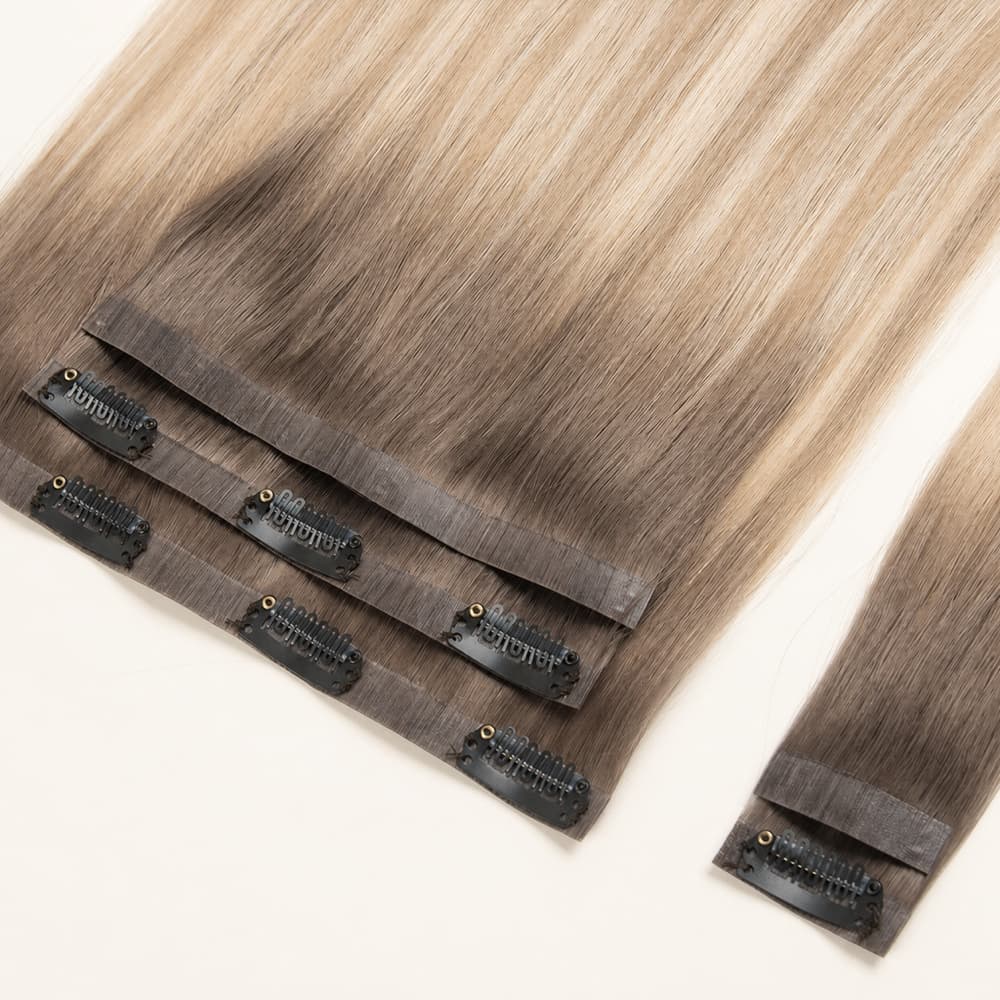
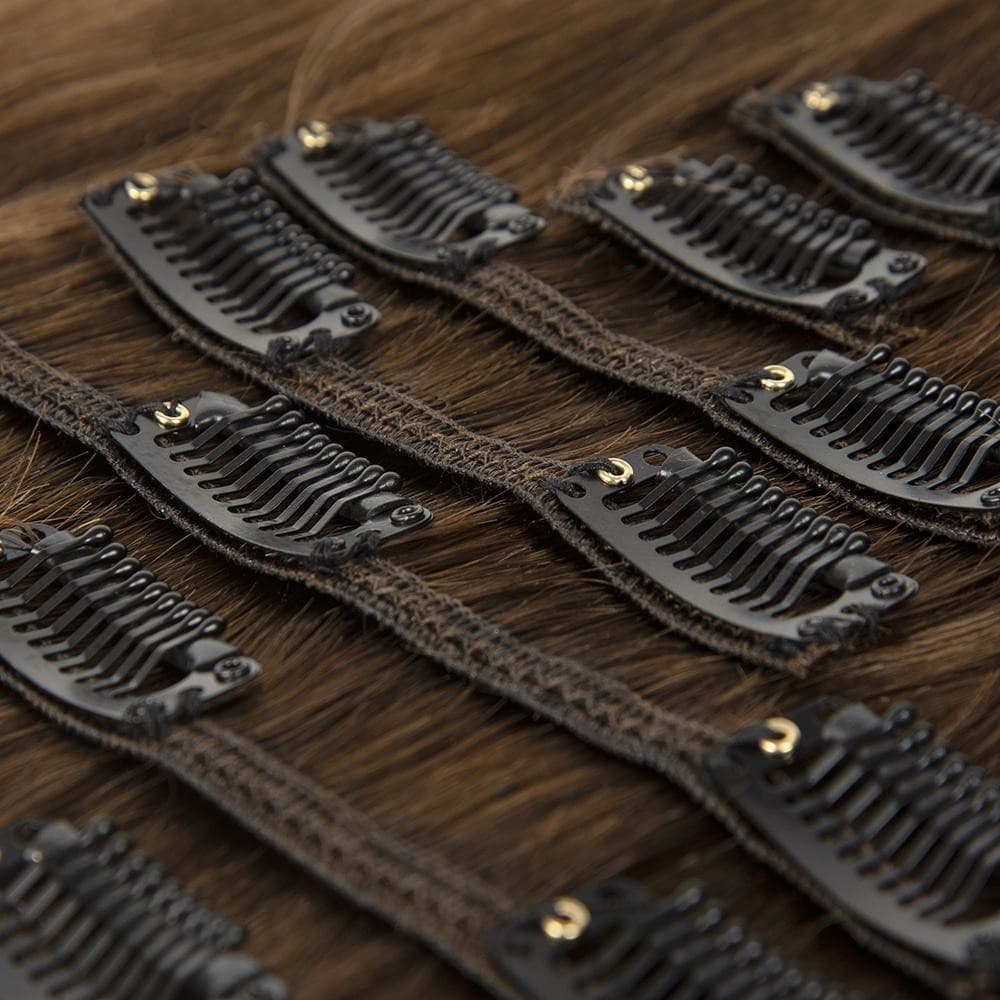
PU means polyurethane. WinningWigs' PU Clip-In extensions use a polyurethane attachment base with pressure clips. The product photographs show a smooth backing edge rather than a conventional visible sewn seam. This makes them a useful starting point when the attachment outline is a buying concern.
However, a flat-looking base is only part of the assessment. The clip, base color, weft width and quantity of hair attached all affect the result. Ask for an underside photograph and a sample. Check whether the backing lies comfortably against the head and remains covered when the wearer moves or changes the part.
Regular clip-ins: check the sewn attachment in context
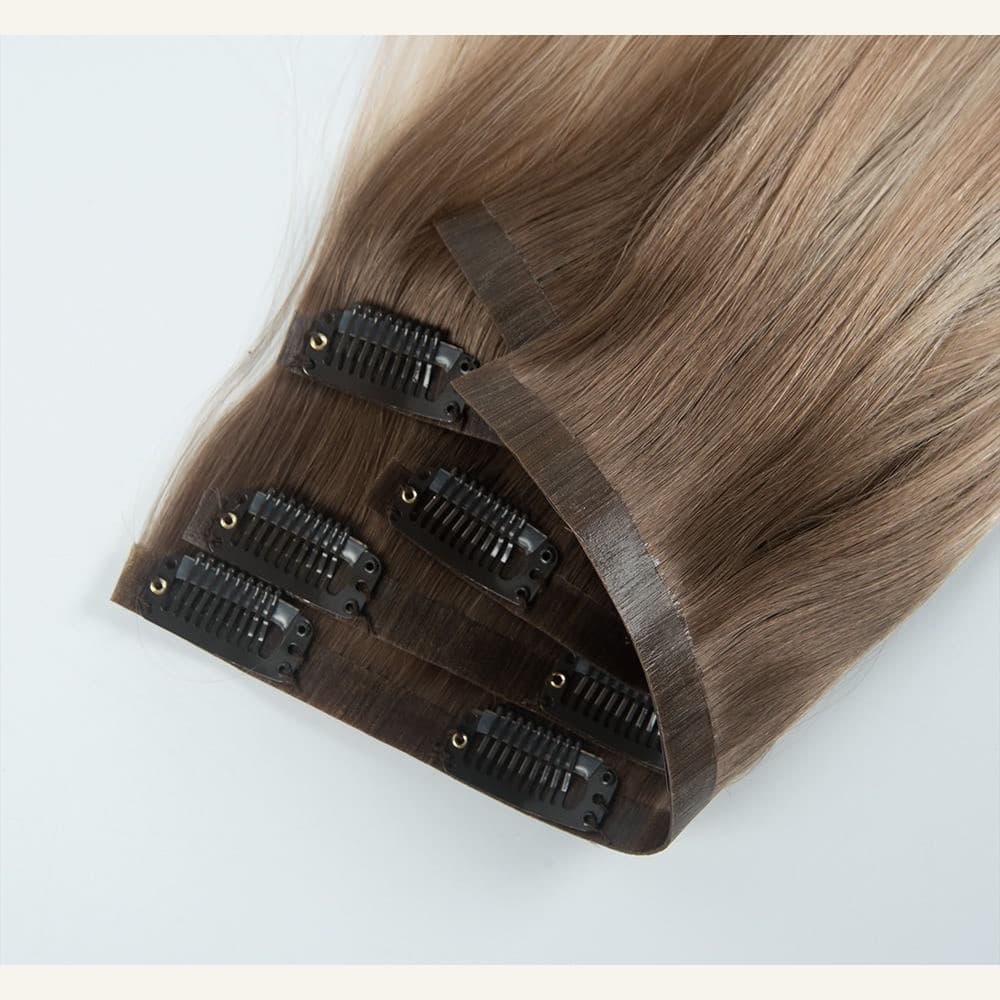
WinningWigs' Regular Clip-In extensions have a sewn weft construction with pressure clips. Assess the actual seam rather than rejecting or approving the category by name. A suitable configuration may be useful for occasional volume when the wearer's hair conceals it without stacking multiple rows.
There is no supplied measurement proving that every PU weft is lighter or thinner than every regular weft. Compare samples at the same length, shade and intended hair quantity. A photograph shows construction; it cannot measure comfort, grip or long-term durability.
| Buying concern | PU clip-in evaluation | Regular clip-in evaluation |
|---|---|---|
| Visible attachment line | Check backing edge, color and clip outline | Check seam thickness, color and clip outline |
| Limited room for rows | Review individual weft widths and flexibility | Review individual weft widths and seam bulk |
| Slipping or pulling | Assess clip function and fitted placement | Assess clip function and fitted placement |
| Sample approval | Confirm underside, weight basis and configuration | Confirm underside, weight basis and configuration |
How many grams do thin-haired wearers need?
There is no universal gram target that makes clip-ins suitable for every person with thin hair. Full-set weight, individual-piece weight, length and where the pieces sit all matter. Ask whether a quoted weight refers to hair only or includes the backing and clips, especially when comparing different suppliers.
For a volume-first result, begin a fitting with the smallest useful combination of pieces and assess it before adding more. This is a fitting approach, not a prescription to place a particular number of grams on fragile hair. The wearer must have adequate coverage and attachment support at each location.
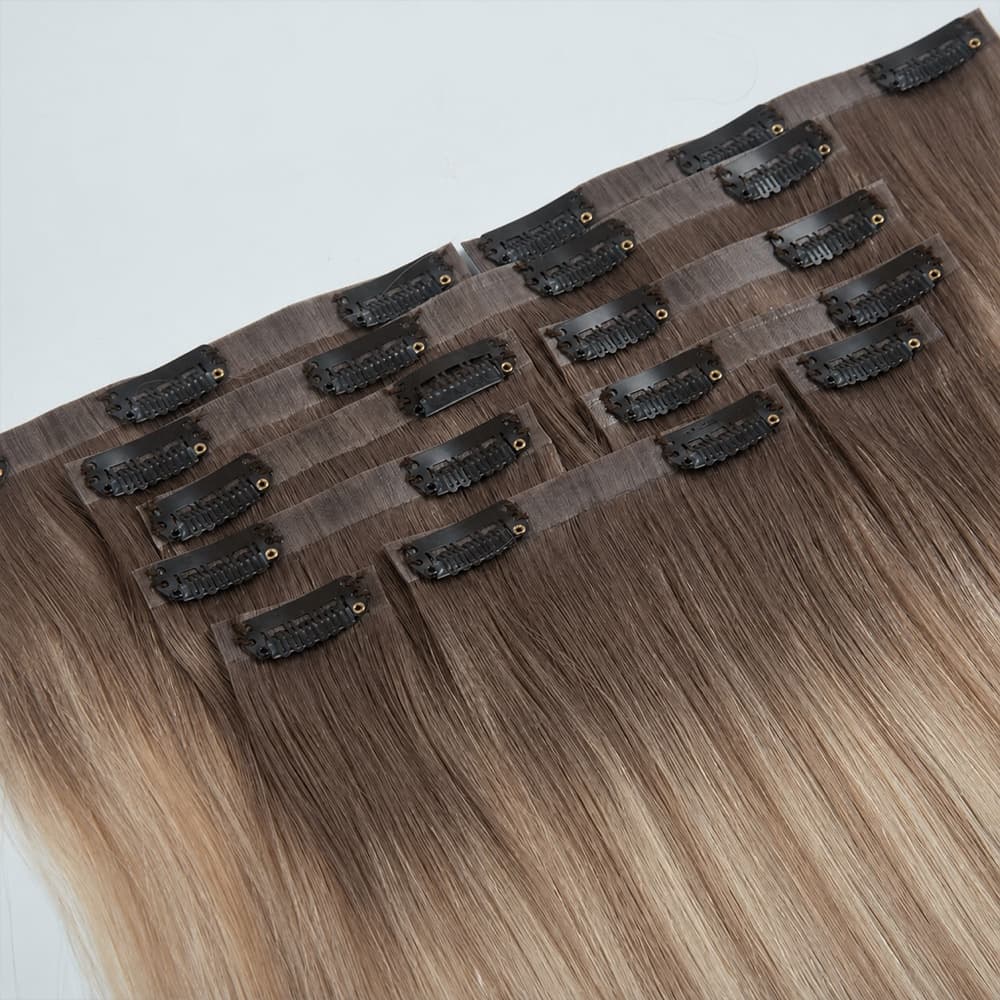
WinningWigs currently lists typical 100 g extension packs, custom specifications and a minimum order of 100 g per color and length combination. That is a procurement unit. It does not mean every wearer should install 100 g, or that a 100 g pack contains a fixed number of clip-in pieces. Confirm the weft count, widths, clip count and weight definition in the quotation.
A useful comparison keeps length constant. At the same total hair weight, a longer set spreads that quantity through more length; it may not provide the same visual fullness at the ends. Conversely, adding weight to compensate for extra length also adds an attachment load that needs assessment.
Choose length and density for the starting haircut
Adding fullness near the existing ends is a different task from creating a large increase in length. A modest change is often easier to assess because the natural hair does not have to blend across such a dramatic transition. A blunt short cut, sparse ends and very long extensions can leave a visible step even when the color is close.
WinningWigs' extension range lists lengths of 16–30 inches. Those catalog options describe what can be sourced; the longest option is not automatically a suitable starting point for fine hair. Confirm the chosen length, how it will be measured and whether professional trimming or blending is needed.
Ask to see the full hair length as well as the attachment. Strong root fullness with very tapered ends may fail a buyer who wants an even-looking perimeter. Equally, an extremely full set can overwhelm a subtle volume brief. State the desired result in plain language and compare the sample against it before approving a larger order.
Match shade, texture and the hairstyle you actually wear
Compare extension color with the natural mid-lengths and ends in indirect daylight. A root-only match can leave the added hair visibly different through the finished style. For highlighted or balayage hair, consider the distribution of lighter and darker strands, not just a single shade name.
WinningWigs lists solid, piano/highlight, balayage and custom shades. Use those as specification options and confirm the actual reference with a sample or color ring where available. A screen image remains a guide rather than an exact color guarantee.
Evaluate texture after the agreed care routine, too. Hair photographed straight or curled may have been styled for the image. If the wearer regularly air-dries their own waves, ask how the extension texture is expected to behave after washing. Also check the intended parting and usual loose or tied style: an attachment hidden with hair down may show when the sides are pulled back.
Match the product to the application
For occasional fullness, prioritize a configuration that blends without using every piece. A trial before an event gives time to identify shade, placement or trimming needs. Do not make an important occasion the first fitting.
For bridal or formal styling, share the planned hairstyle with the stylist before buying. Clip locations must work with the final shape, accessories and visible sections. A loose wave, half-up style and updo can require different placement plans.
For a salon or private-label range, define the customer requirements before naming a set “for thin hair.” Record the intended hair coverage, fullness goal, configuration and instructions. Where crown coverage is the main need, discuss a properly fitted women's hair topper instead of assuming more extension rows will solve the problem. A topper also needs a suitable attachment assessment.
Installation preparation: check coverage before adding pieces
A practical first fitting should establish whether the selected set works with the wearer's hair, rather than attempt to reproduce a display photograph at any cost. Follow the exact product instructions and seek a qualified stylist's help when placement is uncertain.
- Lay out the pieces and identify the weft widths. Check for damaged clips, rough edges or loose attachment points before application.
- Prepare clean, dry, gently detangled natural hair. Keep the extension pieces untangled so application does not add unnecessary pulling.
- Select a section with adequate natural hair to support and conceal the piece. Avoid relying on sparse hairline areas to hold an unsuitable configuration.
- Apply one piece at a time according to its instructions. Check the side and back views before adding another row.
- Move the head normally and check the intended hairstyle. If a clip pulls, hurts or repeatedly slips, remove it and reassess the configuration.
- Open clips fully before removal, support the natural hair and release each piece gently. Remove temporary clip-ins before sleep and before washing the natural hair.
The AAD's extension-care advice specifically recommends removing clip-ins before washing natural hair and addressing painful or overly tight styling. Comfort is an essential check, though the absence of pain does not prove an attachment is appropriate for compromised hair.
Troubleshoot the result before buying a heavier set
| What you notice | What to review first |
|---|---|
| A ridge shows through the hair | Base and clip outline, row placement, available covering hair and stacked pieces |
| Clips slide during movement | Clip condition, section choice, product buildup and configuration; seek fitting help rather than tightening repeatedly |
| Ends look disconnected | Length difference, shade distribution, texture and professional blending |
| The result looks too full | Number of pieces used and their distribution; reassess the original volume goal |
| Pressure or scalp discomfort develops | Remove the affected pieces; stop use and seek appropriate advice if symptoms persist |
Avoid aggressive backcombing or repeatedly moving a heavy piece into the same weak area to make it stay. A fitting failure can mean the set or attachment method does not suit the wearer. It is not automatically evidence that more pieces, stronger grip or another purchase will solve the issue.
Compare value beyond the price of the set
Request like-for-like quotations before deciding that one set is better value. Match the construction, material specification, length, shade and supplied quantity, then confirm the piece layout. A lower headline price can describe a different configuration rather than a saving on the same product.
Include the practical costs of achieving the finished look. A wearer may need shade consultation or professional blending. A salon or retailer may need sample evaluation, care cards, packaging and staff guidance. For a trade shipment, confirm freight and applicable destination charges separately from the product quote.
Before a first purchase, read the seller's current return and hygiene conditions. Ask when a set becomes ineligible for return and whether a shade sample is available. Keep labels and order references until the specification has been checked. These details matter when buying online because photographs cannot establish fit or an exact color match, and an altered set may be treated differently under the published policy.
Sample checks for salons, retailers and wholesale buyers
Use a written approval sheet so “lightweight” and “natural-looking” become observable requirements. Identify the product, base type, material specification, shade, length, piece widths, clip count and weight basis. WinningWigs offers Virgin Hair or Remy Hair specifications; confirm the selected option in writing rather than inferring processing history from shine or softness.
During sample review, inspect the underside and edges, open and close the clips, check their attachment and compare the received layout with the quotation. If care evaluation is included, follow the supplied instructions, document the products and conditions, and assess handling, tangling and attachment condition afterward. Keep an unaltered reference where practical.
For factory testing, agree the checkpoints and reporting method before requesting an assurance. Suitable requests include pack-weight verification, clip-function review, configuration checks and a documented care sample. These are proposed checks, not a claim that this article reports completed laboratory or wear testing.
Shipment inspection should compare the batch with the approved sample and order sheet, including shade labels, lengths, pack quantities, construction and packaging. Agree how discrepancies are reported. For custom orders, WinningWigs currently states typical dispatch of 5–13 working days from the order date; confirm the specific order schedule and shipping time separately.
FAQ
What type of clip-in extensions is best for thin hair?
Start by evaluating a low-profile construction, manageable piece weights and widths that fit the available coverage. PU clip-ins are worth comparing when seam visibility is a concern, while regular sewn clip-ins may also suit the wearer. A sample and fitting are more useful than a universal category ranking.
Are seamless clip-ins always lighter than regular clip-ins?
No. “Seamless” describes a construction or appearance claim, not a standardized weight. Ask for actual piece or set weights, the measurement basis and an underside view. Compare equivalent lengths and configurations before deciding.
Is 100 g enough for thin hair?
It may supply enough hair for some volume goals, but it is not a universal fitting recommendation. Starting length, coverage, desired fullness and piece distribution change the requirement. WinningWigs' typical 100 g pack and MOQ describe supply terms; confirm the actual configuration before buying.
Can clip-ins cover a thinning crown?
Ordinary clip-in wefts mainly add hair through the lengths and need natural hair to conceal their attachments. An exposed crown may require a different coverage product and professional assessment. New or progressing thinning should be evaluated before attaching additional hair.
Can I wear clip-ins every day or sleep in them?
Do not treat temporary clip-ins as permanent attachments. Remove them before sleep, follow the product instructions and give natural hair breaks from repeated attachment. Daily use requires particular attention to the condition of the hair and scalp; ongoing discomfort or thinning needs professional advice.
How can I choose a fine-hair set online?
Request underside images, piece widths, clip count, weight definition and shade support. Share your current length, the coverage available and the intended result. Check sample availability and applicable return or hygiene terms before altering or wearing the product. Our beginner clip-in comparison guide covers additional first-purchase questions.
Conclusion
Choose clip-ins for thin hair by matching construction, quantity and placement to the wearer. Start with the desired fullness and available natural-hair coverage, compare PU and regular samples, and confirm length, shade and pack contents. A discreet result depends on the complete fitting, not one material name or gram count. For professional buyers, preserve the approved configuration and care instructions so future orders can be evaluated against the same reference.
LET'S TALK ABOUT YOUR PROGRAM
Ready to turn product questions into a clearer brief?
Share your target customer, product category and requirements. Our team will help structure the next sample or quotation conversation.