
Introduction
To find curly hair extensions near you, shortlist local salons that show extension work on hair similar to yours, confirm which attachment methods they install, and book a curl-matching consultation before buying. Check the actual texture, finished length, shade and maintenance plan together. A nearby address is convenient, but it cannot establish whether the hair or service will fit your curls.
The search can mean three different things: somewhere to buy hair, a stylist to install it, or a supplier for a salon's curly range. Identify which you need before paying a deposit. The business selling the hair may not be the business responsible for fitting or maintaining it.
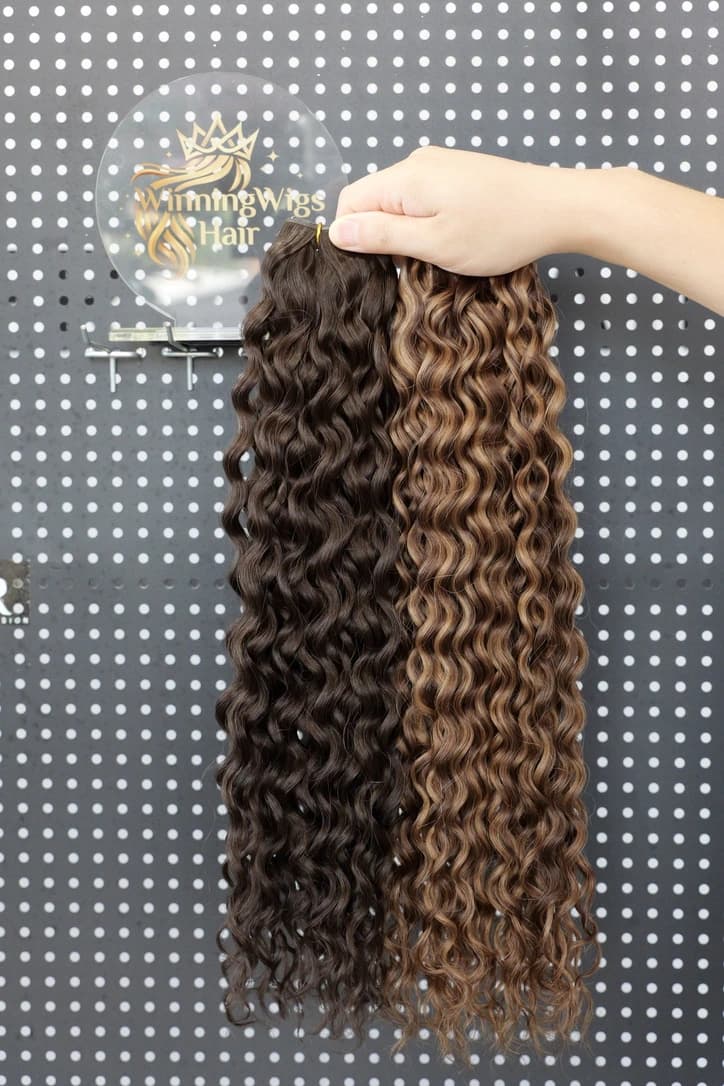
WinningWigs supplies human hair products to professional and trade buyers from Qingdao, China. This is a product-selection and sourcing guide, not a directory of nearby salons or a local appointment service. The supplied photographs show product texture and color references; they do not document client results or completed wash testing.
Where should you look for curly extensions locally?
Build a shortlist around the service you need
Search maps and local listings using your city or neighborhood with phrases such as “curly hair extension salon,” “curly clip-in consultation” or the attachment method you are considering. Visit the provider's current service page rather than assuming every hair salon stocks curls or fits outside products.
Look for a named installer, work on comparable curl patterns and a clear consultation route. Ask whether the photographs show extensions or only natural-hair cutting and styling. Both skills can be useful, but one does not prove experience with the other.
Read recent reviews for comments about matching, communication and follow-up. Check the appointment location and which stylist performs the service. Where professional licensing applies, verify the relevant credential with the local issuing authority. A branded training course and a local professional license answer different questions.
Separate the seller, installer and supplier
| Buying route | Useful for | Confirm before paying |
|---|---|---|
| Local extension salon | Consultation, fitting, blending and follow-up | Installer, accepted hair products, method, care and removal |
| Local beauty retailer | Viewing available texture and color in person | Actual stock, attachment format, sample policy and return conditions |
| Online retailer | Comparing sets and specifications remotely | Texture evidence, pack contents, shade support and shipping terms |
| Professional supplier | Salon stock, custom specifications and repeat orders | Samples, MOQ, production schedule and shipment documentation |
Ask whether the item is physically available, ordered after consultation or made to specification. Do not confuse a consultation slot with guaranteed product availability. Our salon-vetting guide provides a broader checklist for evaluating the installer.
Match curl behavior, not just a texture name
Compare the hair in the state you normally wear it
Terms such as loose wave, deep wave and curly are useful starting descriptions, but suppliers may use them differently. A curl label or type number cannot establish a complete match. Compare curl size, shape, clumping, density and how the ends sit beside your own hair.
Bring unfiltered daylight photos of your usual wash-and-dry result, including the back and sides. Explain whether you normally air-dry, diffuse, stretch or occasionally straighten your hair. Matching extensions only to a heat-styled appointment finish may leave you with a different blend at home.
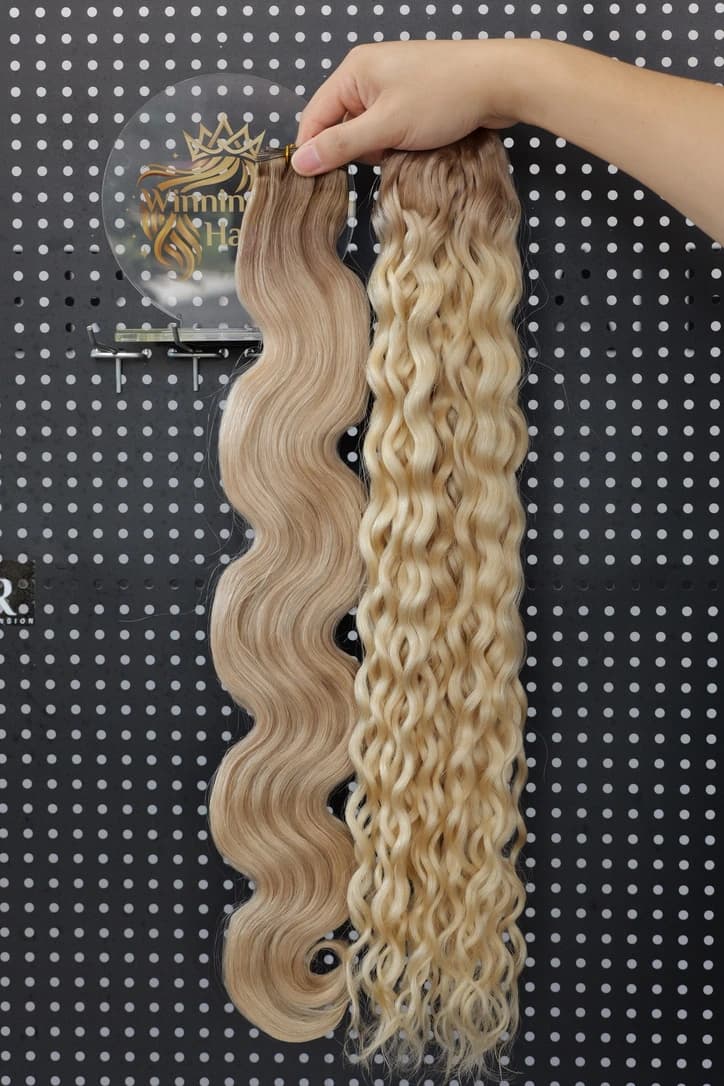
The blonde comparison below illustrates why shape matters: broad waves and smaller, more frequent bends create different visual textures. It does not establish a processing method, measured curl category or how either sample will behave after washing.
Ask for an agreed wash-and-dry reference
Request photographs or a sample showing the hair after the supplier's recommended care routine. Record whether the hair was air-dried, diffused or styled with tools and products. A styled display photograph should not be presented as proof that the same pattern returns after every wash.
Also ask whether the texture is naturally occurring or created through processing, what care it needs and which alterations are supported. “Human hair” alone does not answer those questions. If evidence is unavailable, keep the uncertainty in the purchase decision rather than assuming a permanent curl result.
Choose finished length, color and quantity together
Curly hair can look shorter when resting than when gently extended for measurement. Ask how the seller measures length and request a relaxed-length reference for the exact texture. Two samples with the same stated length may sit differently if their curl shapes differ. There is no reliable universal shrinkage percentage for every product and wearer.
Use a physical shade reference where practical, and compare mid-lengths and ends in indirect daylight. Highlight placement matters as well as the overall shade. A lighter curl can look more prominent against darker hair, so approve the color distribution through the full length rather than only at the top.
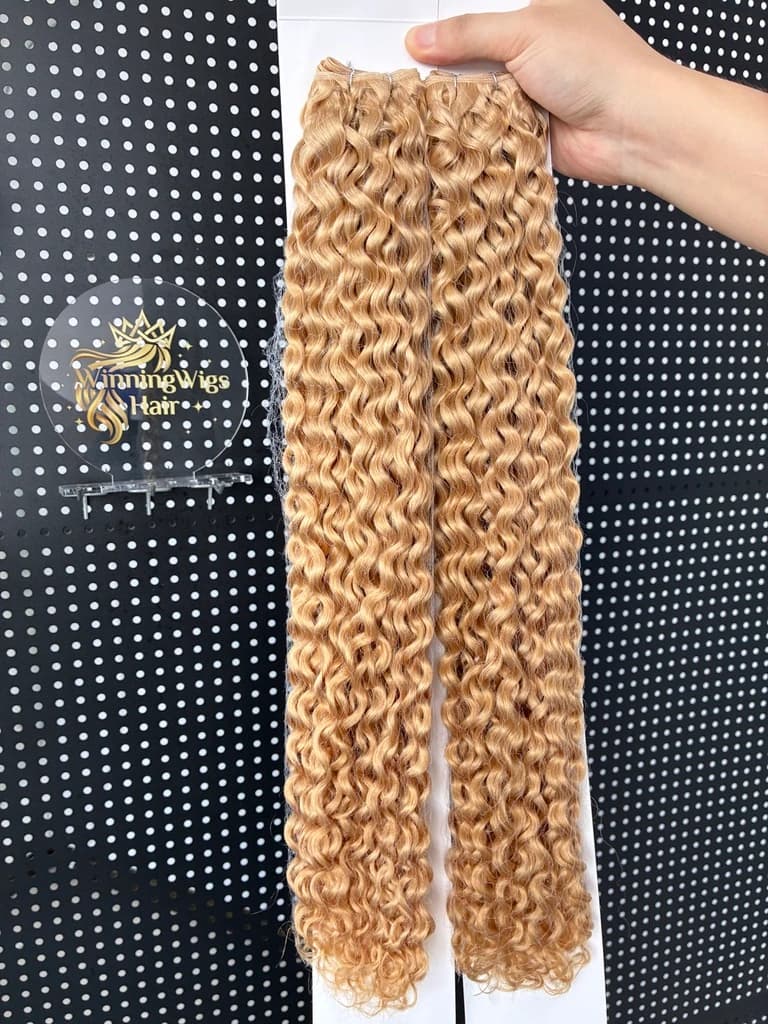
For quantity, distinguish the supplied pack from what the stylist plans to fit. Starting density, haircut, desired fullness and attachment placement all change the requirement. A heavier pack is not automatically a better blend. Request an explanation of the proposed amount, including whether the quoted weight covers hair alone or the complete attachment pieces.
Which extension method should you discuss with the stylist?
The curl pattern and attachment format are separate choices. A texture you like may not be available in every method, and a method the salon prefers may not suit your natural hair or maintenance routine. Confirm the exact combination before buying.
| Format | Product application discussion | Follow-up question |
|---|---|---|
| Temporary clip-ins | Suitable support and coverage for the pieces, plus blending | How do I fit, remove and store this set? |
| Wefts on a professional foundation | Construction, row planning, distribution and access for care | Who checks the foundation and performs adjustments? |
| Tape-in formats | Tab placement, curl blending and compatible care products | How are tabs maintained and professionally removed? |
| Individual tipped or ring-attached pieces | Exact attachment system, sectioning and fitting requirements | Who handles maintenance, detachment and any supported reuse? |
WinningWigs' Nano Ring page includes a curly blonde product reference. Its Flat Tip range illustrates a different attachment construction. These are starting points for specification discussions, not confirmation that every shade and curl combination is available from stock or suitable for a particular client.
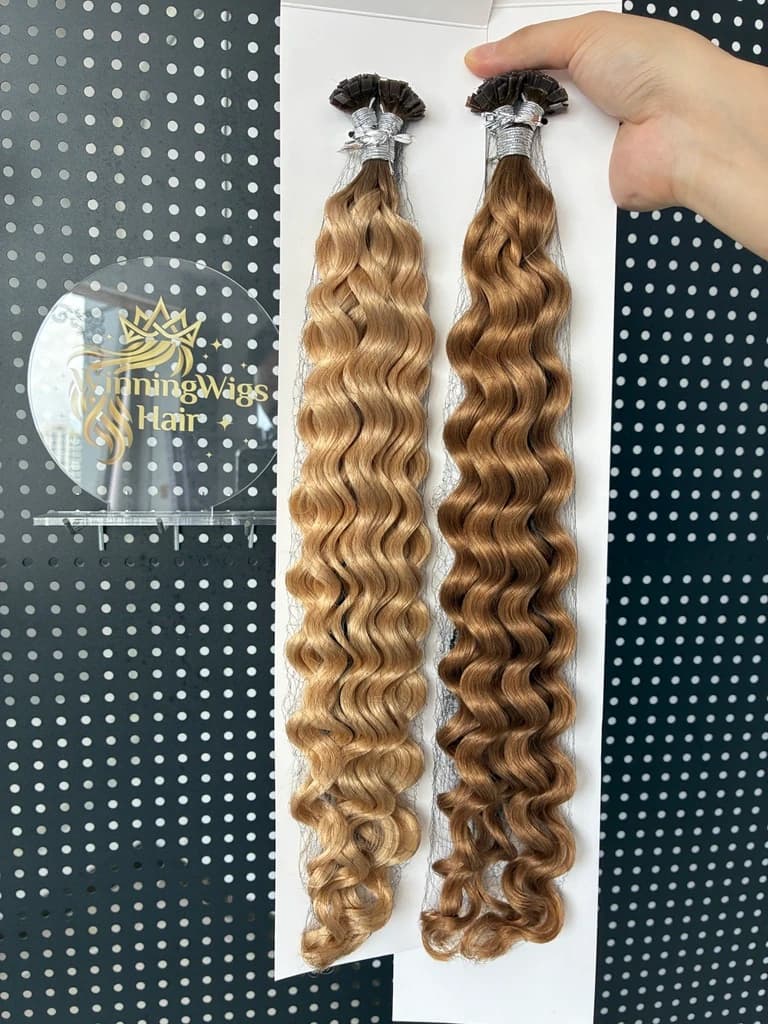
A stylist should assess the natural hair before recommending a load or placement plan. No attachment format is universally damage-free. The American Academy of Dermatology's extension guidance recommends professional application and warns that pain or excessive tightness requires attention. Ongoing scalp symptoms or unexplained thinning need appropriate medical assessment.
Compare the full quote before booking
Ask the salon to separate the hair price from consultation, installation, cutting, color work, styling, maintenance and removal. A quote for fitting may exclude the finished curl styling. Confirm who supplies the hair and what happens if the approved texture or shade is unavailable.
Real service menus can separate these stages. For example, Austin Curls' published curly-extension menu distinguishes consultation, clip-in installation and a service that includes styling. This illustrates why scope needs checking; it is not a recommendation of that salon or evidence of a relationship with WinningWigs.
Avoid comparing headline prices for different amounts of hair or different services. Request a written product reference, quantity, method and included work. Then add travel, follow-up visits and replacement or removal costs where relevant. A nearby salon may be easier to revisit, but distance should be weighed alongside matching and support.
Check deposit, cancellation and product-return conditions before a special order. Ask whether hair can be returned after opening, washing, cutting or installation, and who handles a product concern versus a service concern. Do not assume the salon will fit independently purchased hair: some providers accept only identified systems they can support.
Make the consultation and installation preparation practical
Bring a short brief rather than a single inspiration image. State your current length, usual texture, desired change, color history, daily styling and availability for return visits. Mention swimming, frequent exercise or regular travel so the stylist can discuss realistic care requirements.
Use these questions to keep the conversation specific:
- Which texture sample are we matching to my everyday hair, and under what drying conditions?
- What finished length and amount of added hair are you recommending, and why?
- Which attachment method will you personally install, maintain and remove?
- What should I do before the appointment, including washing, products and any color services?
- Which costs and follow-up visits are included, and what remains unconfirmed?
Follow the selected system's installation preparation instructions. Do not assume every attachment requires the same cleanser or preparation process. Confirm the received hair, shade and quantity before cutting or fitting. Ask how the product should feel during application and how to report a slipped attachment or discomfort.
Before leaving, review the blend from the back and sides in ordinary light, learn the attachment-aware care steps and obtain written follow-up instructions. A useful handover explains what you can manage at home and what needs the installer.
If the curls do not blend as expected
Start by identifying what differs. A mismatch in color, curl shape, finished length and attachment placement needs different action. Take clear photographs in the same light and explain whether the hair has been washed or styled since fitting. Keep the product label and tell the provider which products and drying method you used.
| What you notice | What to review with the provider |
|---|---|
| A strong line between natural hair and extensions | Curl shape, length difference, quantity and professional blending |
| Added hair sits lower after washing | Drying conditions and the agreed relaxed-length reference |
| One section looks brighter than the rest | Shade distribution and whether the original match used comparable lighting |
| Tangling develops near attachments | Access for detangling, maintenance needs and the method-specific care routine |
Do not immediately cut, recolor or chemically change a disappointing set. Ask the seller and installer who should assess it first and how an alteration affects their support or return conditions. If the concern is tension or pain, stop treating it as a styling mismatch and contact the installer promptly.
For salons: approve curl samples before expanding stock
A curly range needs a repeatable reference. Document customer requirements as a combination of texture, attachment, material, shade, length, supplied quantity and care expectations. Keep the approved sample and specification together so a reorder does not rely on a general description such as “the same curl.”
For factory testing, agree the actual checks and reporting method. A practical sample review can compare the dry pattern, an agreed wash-and-dry result, detangling behavior, attachment condition and visible handling changes. Record the care products, drying method and observations. These are proposed evaluation steps, not a claim that the photographs in this article show completed testing.
Shipment inspection should check the received color references, lengths, quantities, attachment construction and packaging against the order and approved sample. Where curl appearance varies, review the agreed texture reference before approving substitutes. Record discrepancies before altering or distributing the goods.
WinningWigs lists Virgin Hair or Remy Hair specifications, lengths of 16–30 inches and texture specified for the program. Most extension formats start at 100 g per color and length combination; Invisible Tape-In has separate minimums. Confirm the exact curly specification and MOQ in the quotation. Custom dispatch is typically 5–13 working days from the order date, with shipping time confirmed separately. These are supply terms, not promised local availability.
Plan care around both the curls and the attachment
Ask for instructions covering detangling, washing, conditioning, drying, sleeping and the products permitted near attachment points. Natural curls and processed extension hair may need different handling. A routine that defines the lengths well still needs to be compatible with the installed system.
The AAD's curly-hair care guidance recommends gentle detangling in sections and describes conditioning and suitable detangling tools for natural curly hair. Use that as general natural-hair guidance, then follow the extension manufacturer's method-specific directions. Do not assume every oil or conditioner is approved around bonds, rings or adhesive tabs.
Remove temporary clip-ins before sleep and before washing your natural hair. For professionally attached formats, confirm how to keep attachment areas accessible, how they should be dried and when the installer needs to review them. Do not use a generic maintenance interval for every system.
If the pattern looks different after care, record the routine and contact the supplier or installer before adding more heat or chemicals. A clear product reference and care history make the issue easier to assess than an isolated photograph.
FAQ
How do I find a stylist who works with my curl pattern?
Search locally with your texture and intended method, then ask for extension examples on similar natural hair. Confirm the named installer and request a consultation with a physical sample or clearly documented texture reference. A portfolio of curly haircuts alone does not confirm extension experience.
Should I buy curly extensions before choosing a salon?
Usually, confirm the installer and accepted product first if you want professional attachment. Some salons decline outside hair or require an assessment. Buying after the method and texture are agreed can prevent an incompatible purchase. Temporary sets also benefit from matching and fitting guidance.
Will curly human hair extensions keep the same pattern after washing?
The answer depends on the supplied hair, processing and care. Request an agreed wash-and-dry reference and ask what change is expected. A product photograph or human-hair label does not guarantee identical curl appearance after every wash.
How many grams of curly extensions will I need?
There is no universal amount. Starting density, haircut, desired length and volume, and attachment method all matter. Ask the stylist to explain the proposed fitted quantity and distinguish it from the supplier's pack size or minimum order.
Are curly extensions suitable for fine or thinning hair?
Suitability needs an individual assessment of support, coverage and hair condition. Curls do not make an attachment automatically lighter or safer. New thinning, persistent discomfort or scalp irritation should be assessed before additional hair is fitted.
Can WinningWigs book curly extension installation near me?
No. WinningWigs handles professional product sourcing and supply enquiries. Choose and verify a local installer separately. Salon and brand buyers can send a texture reference and attachment requirements for a sample and quotation discussion.
Conclusion
Choose curly hair extensions by matching the provider, texture and attachment to your actual routine. Start with a local consultation, compare the hair in a documented care state, confirm the relaxed length and full service quote, and plan maintenance before installation. For salons and brands, use an approved sample and written specification to connect the customer's intended result with repeatable product sourcing.
LET'S TALK ABOUT YOUR PROGRAM
Ready to turn product questions into a clearer brief?
Share your target customer, product category and requirements. Our team will help structure the next sample or quotation conversation.