
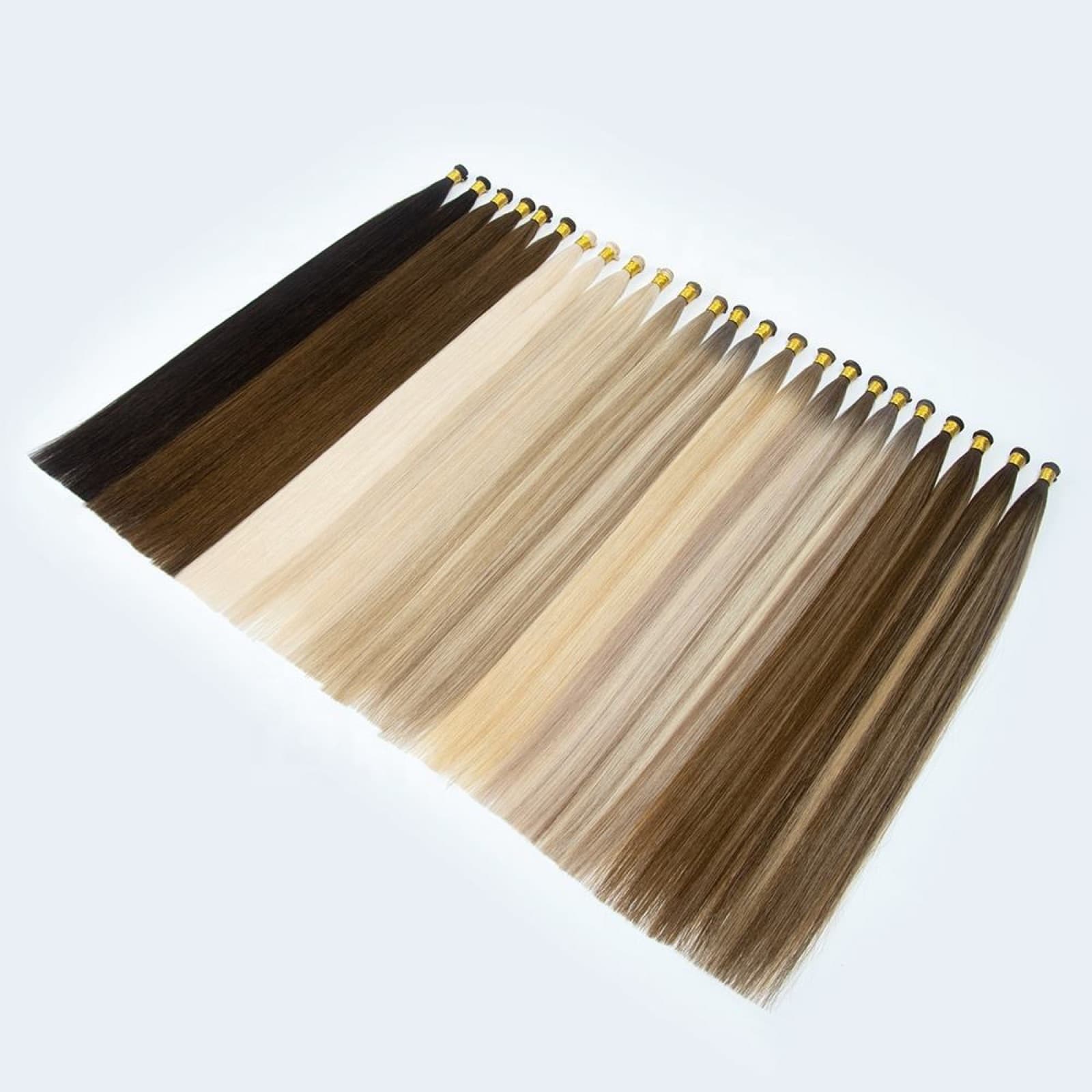
Introduction: start with a local shortlist, then verify the installer
Where can you find a reputable salon for hair extension application? Start with local search results, recommendations from people whose hair and desired result resemble yours, and portfolios of stylists who regularly apply the method you are considering. Then verify the individual installer, not just the salon name. Ask for a consultation, a written product and service plan, an itemised quote, and a clear route for maintenance and removal. A high rating or attractive photograph alone cannot establish that a particular method is suitable for your hair.
This is a decision guide, not a salon directory or endorsement. WinningWigs supplies hair products for professional and trade buyers; it does not book local appointments. A salon should explain how it will assess your hair, select the product, apply it and support you afterward.
If you have scalp pain, active irritation, unexplained shedding or visible thinning, ask an appropriate healthcare professional about the condition before committing to an attachment service. The American Academy of Dermatology (AAD) recommends professional application and warns that a painful, overly tight style needs attention. A salon consultation can assess a cosmetic service; it is not a medical diagnosis.
Where to look for a hair extension salon
Use several discovery routes. Search maps and local business listings for “hair extension salon” plus your city and, if known, the method: tape-in, weft, hand-tied, bonded or another technique. Look beyond the first sponsored result. A listing should lead to a current website, a named stylist or team, a usable contact method and examples of the specific work you need. A salon that mainly shows colour services may still be capable, but ask who actually performs extensions and how often that person works with your chosen method.
Recommendations from a trusted stylist, colourist or someone with similar natural hair can help. Ask who installed the hair and how maintenance went. You still need your own assessment: the same method may not suit every wearer.
Professional brand “find a stylist” pages can produce candidates. Check what a listing actually confirms; it is not independent proof of client outcomes. Social portfolios show colour blends, but rarely reveal attachment placement or later maintenance.
Shortlist two or three salons. Record the installer’s name, methods, consultation scope, quote components and who handles adjustments and removal.
Search locally without mistaking visibility for suitability
Add the method or concern that matters to you, such as “weft extensions consultation” or “tape-in extensions colour matching.” A website mentioning a method does not prove expertise. Professional registration and licensing differ by location. Where a credential is required or claimed, check it with the relevant local authority or issuing body.
Match the salon to the result and method you actually need
Before asking for the “best salon for hair extensions,” define the goal: occasional fullness, a lasting length change, colour dimension or support for an existing routine. Note your hair density, colour history, daily styling and ability to return for appointments.
The attachment method matters because it changes preparation, placement, maintenance and removal. A stylist should discuss alternatives when your desired effect or routine does not fit the method they usually install. The table below is a set of consultation prompts, not a universal suitability chart.
| Product or method | What to ask the salon | What to confirm in the written plan |
|---|---|---|
| Tape-in extensions | How will tab placement, colour matching and removal be handled? | Product reference, pack quantity, application scope and follow-up policy |
| Sewn or beaded wefts | How will the foundation and weight distribution be assessed? | Weft construction, intended rows or placement approach, maintenance and removal |
| Individual bonds or links | Which technique does this installer use and how are attachments removed? | Number or amount of pieces, aftercare limits and removal appointment |
| Temporary clip-ins | Is professional blending enough, or is installation training needed? | Set contents, cutting or styling service and home-use instructions |
The salon owns its service plan; the supplier describes the product. A thin weft seam or low-profile tape tab cannot prove comfort on an individual head. Be wary of a method promoted as suitable for everyone. Our extension method comparison explains construction; the installer must assess its application.
What a credible portfolio and review trail can tell you
Look for work similar to your desired colour, length and density, photographed in ordinary light from more than one angle. Photos cannot verify comfort or maintenance quality. Ask whether your intended stylist did the work and whether colour services were also involved.
Read reviews for details that affect the service: consultation quality, communication about cost, punctual follow-up, response to discomfort and clarity of aftercare. A mix of experiences is more informative than a perfect-looking average. The US Federal Trade Commission’s advice on evaluating online reviews recommends checking multiple sources, recency and reviewer context because reviews can be manipulated. Apply that principle in any country, while following your local consumer guidance where available.
Neither a negative review nor a high score proves method expertise. Look for specific responses to concerns and written policies. A professional reply is useful context, not proof of what happened in a disputed appointment.
Training and credentials need context
Ask which systems the stylist currently uses and what training or practice applies. A course certificate confirms course completion, not consistent results; years in a salon do not prove experience with every new method. Check local legal requirements separately.
A useful answer names the method, pre-application checks and removal provider. Ask for aftercare instructions before placing a deposit. “Damage free for every client” is not a credible substitute for a plan.
Use the consultation as a working assessment
A reputable salon should ask questions before recommending a product. Expect a discussion of the desired look, natural-hair density, current scalp comfort, previous colour or chemical work, styling routine and appointment availability. The stylist may examine the hair and scalp cosmetically, check colour against a physical reference, and explain where more information is needed. They should be willing to say when a requested result needs a different method, less added hair or no application at that time.
Bring unfiltered daylight photos for colour discussion, but ask whether the final shade is confirmed with a physical ring, sample or product code. For texture, ask how the hair looks without styling and how it should be washed.
Ask for method-specific preparation instructions: hair condition, product buildup, colour services and any needed product or strand check. For adhesive or other attachment systems, ask how the salon will respond to discomfort. The plan should identify unresolved points.
Ten questions worth taking to the appointment
- Who will personally install the extensions, and which method do they use most often?
- What about my natural hair makes this method suitable or unsuitable?
- Which hair product, construction, texture, length and shade reference are proposed?
- How much hair or how many packs are included, and what would change that amount?
- Will the colour match be checked physically before the product is ordered?
- What preparation, cutting, blending or colour work is included in the service?
- What should I expect to feel during application, and what should I report immediately?
- What home-care instructions and maintenance visits will I need?
- Who will adjust or remove the extensions, and how is that work priced?
- What happens if the recommended shade, product or method changes after the consultation?
An open question is acceptable if the stylist explains how it will be resolved before installation. Keep a written summary.
Compare the complete quote, including maintenance and removal
Service costs vary by location, product, method and work. Ask for an itemised quote covering hair, matching, colour or cut work, application, maintenance, removal and replacement hair. Confirm deposit and rescheduling terms.
Plan maintenance before installation. Ask what you must do at home, when to return, and whether the salon handles removal. Reuse depends on the product and process. If you may move or travel, ask how a different professional could maintain the system.
Compare quotes on the same scope. A lower figure may exclude hair or removal; a higher one may include them. Our professional extension service cost guide breaks down the components.
On application day, comfort is part of the quality check
Confirm the product, shade, length and method against the consultation record. Ask for an adjustment if placement feels wrong. The AAD says pain or a headache can indicate excessive tightness; repeated pulling deserves attention.
Before leaving, review the blend in ordinary light, learn how to brush around attachments and take home care and return-visit instructions. Confirm how to report a slipped attachment or unusual tension.
For persistent pain, irritation, breakage or unexplained shedding, contact the installer promptly and seek medical advice where appropriate. Our guide to extension damage and warning signs is educational, not a diagnosis. Follow professional removal instructions.
Red flags that justify another consultation
Pause if a provider will not name the proposed product or method, discourages questions about removal, treats severe discomfort as normal, or pressures you to buy a full service before assessing your hair. Be wary of guaranteed “zero damage,” a single method recommended for every client, unlabelled before-and-after photographs, or a quote that never states what is included. These are reasons to ask for clarification or choose a different professional, not proof that a particular salon has done something wrong.
If the salon cannot identify who handles maintenance, changes product codes without notice or cannot document a special order, follow-up becomes harder. A stylist may reasonably decline to fit third-party hair whose construction is unknown, provided this rule is explained before you buy it.
A short comparison record beats a vague rating
Record each salon’s installer, method, product reference, colour matching step, quoted scope, maintenance and removal plan, policies and open questions. Mark missing points “not confirmed.” A clear recommendation suited to your own hair matters more than a dramatic gallery.
For salon owners: product sourcing is a separate decision
If you run a salon, a good application service also depends on a product range your team can identify and reorder. Start with the client profiles and methods your stylists actually support. Build a brief for texture, construction, colour references, lengths, pack contents, care instructions and packaging. Review a physical sample against that brief and record any approved changes. A factory-testing discussion should name the test, sample and acceptance criterion; “premium quality” alone is not a usable checkpoint.
For repeat orders, retain product codes, approved shade references and pack configuration. Ask what a shipment inspection will check against the approved sample, how exceptions are recorded and which details are confirmed before dispatch. Those are questions for supplier evaluation, not a claim that every batch or installation will be identical. Our human hair sample evaluation checklist and shipment inspection checklist can help a purchasing team turn customer requirements into a reviewable product brief.
FAQ
How do I find a reputable hair extension salon near me?
Search local listings, ask for referrals and review portfolios, then speak with the stylist who will do the application. Compare the consultation, method recommendation, product details, full quote and maintenance plan before booking. A map ranking alone is not enough.
Should I choose a salon based on its rating or social media photos?
Use both as leads, then verify context. Read detailed reviews across sources and ask whether the portfolio work was completed by your intended installer. Photos do not establish comfort, attachment quality or aftercare support.
Does the stylist need a hair extension certificate?
Requirements differ by jurisdiction and method. Check any legally required credential with the relevant local authority. Ask separately about training and current practical experience with the proposed system. A certificate is useful context, not a guarantee of suitability.
What should happen during a hair extension consultation?
The stylist should discuss your goal, natural hair, colour and styling history, method options, product and shade references, preparation, maintenance and removal. Request a written summary of what is confirmed and what needs a later check.
Can I bring my own hair extensions to a salon?
Ask before purchasing. Some salons work only with products they can identify and support, while others may evaluate outside hair under stated conditions. Confirm responsibility for shade, product quality, installation and future adjustments in writing.
Is an inexpensive installation automatically a poor choice?
No. Compare the exact scope. Check whether hair, colour work, application, maintenance and removal are included and whether the method fits your needs. A higher price also does not prove better installation.
What if my extensions hurt after the appointment?
Contact the installer promptly to discuss the tension or attachment. Persistent pain, irritation or unexplained hair loss also warrants advice from an appropriate healthcare professional. Do not assume discomfort is a normal break-in period.
Conclusion: choose the provider who can explain the whole service
A reputable salon is found through a shortlist and verified through the consultation. Search locally, review relevant work, check credentials where applicable, compare written plans and make sure the installer can maintain and remove the method they recommend. The strongest evidence is a specific, understandable recommendation that respects the condition of your own hair and states its limits. For a salon business, pair that service standard with a documented product specification and sample process.
LET'S TALK ABOUT YOUR PROGRAM
Ready to turn product questions into a clearer brief?
Share your target customer, product category and requirements. Our team will help structure the next sample or quotation conversation.