
Introduction: “near me” is a starting point, not a sourcing specification
If you search for a “hair extensions supplier near me,” you may need stock for tomorrow's appointment, a place to inspect shades in person, or a dependable supplier for an entire salon range. Those are different purchasing problems. The closest listing is not necessarily the business that holds the products you need, can reproduce your approved shade, or will support a repeat order. Conversely, a direct manufacturer can be useful for a planned program but cannot substitute for a genuine local pickup option when you need product immediately.
The practical answer is to decide what “near” must do for your business. Does it mean same-day collection? Local-language support? A short transit route? Easy returns? Or simply a supplier you can verify and work with confidently? This guide gives salons, extension brands and distributors a structured way to compare local stockists, importers and overseas manufacturers without confusing their roles.
WinningWigs is a human hair product manufacturer in Qingdao, China, serving professional buyers. It is not presented here as a salon, installer or local branch in the United States, Europe, Canada or Australia. The purpose of this article is to help you choose the right supply model, including when a supplier like us may or may not fit.
Quick answer: choose the supply route by the job you need done
For an urgent replacement shade or a product you want to examine before today's consultation, a verified local stockist may be the best route. For a repeatable line with agreed construction, colours, packaging and reorder records, a direct manufacturing conversation may be more useful. Some businesses need both: local stock for last-minute service gaps, and a planned factory program for their core range.
Before selecting either route, confirm the exact product, physical stock, dispatch origin, quotation and claims process. Distance alone does not answer those questions. A nearby search result is a lead to verify, not proof of stock availability or product fit.
Define what “near me” means for this order
Immediate service stock
A salon with an appointment already booked may need an extra pack in a precise shade, length and attachment format. In that case, collection hours, current inventory and the ability to identify the item matter more than the broad assortment shown on a website. Call before travelling. Ask the supplier to confirm the SKU, quantity and pickup or dispatch window in writing. A nearby address is of limited use if the item is shipped from another city.
Planned wholesale or private-label supply
A brand building a coordinated extension collection has a different timeline. It may require matched weft and tape-in shades, consistent labels, packaging approval and a reorder specification. The decision is less about geographic distance and more about whether the supplier can develop, document and repeat the agreed product. An overseas manufacturer may fit this need, provided sampling, shipping, communication and quality checkpoints are workable for the buyer's market.
Compare the three common supplier models
A local stockist or professional beauty distributor
The potential advantage is access to inventory already in your region. A good local partner may let your team inspect samples, collect emergency stock and resolve routine issues in your time zone. But “local” can describe the sales office, not the warehouse. Ask whether the exact shade and method are physically available, whether the seller owns the inventory and how quickly a repeat purchase can be filled. Check whether they can tell you the construction and hair option behind the label, rather than relying only on retail marketing terms.
An importer, agent or private-label intermediary
An intermediary may combine overseas production with regional service, consolidated orders or local invoicing. This can suit buyers who value a single local commercial contact. The trade-off is that the intermediary may not control production details directly. Ask who approves samples, who records exceptions, where quality concerns are reviewed and who is responsible when a specified colour or pack count is wrong. A credible agent should make responsibilities clearer, not harder to trace.
A direct human hair manufacturer
A manufacturer can be a strong fit when the buyer needs product development, repeatable specifications or coordinated wholesale supply. It may offer discussions about construction, colour, length, texture, packaging and sample approval. Yet direct sourcing introduces longer logistics and more work for the buyer: the brief must be precise, samples must be reviewed, and shipping and import responsibilities must be understood. Do not assume that “factory direct” means cheaper after freight, duties, sampling and your own inventory costs. Request a like-for-like quotation.
The right model depends on your order volume, tolerance for delays and need for customization. Our manufacturer question checklist goes deeper on direct-factory due diligence.
Verify the company before comparing prices
Start with legal name, operating address and the company's actual role: retailer, distributor, agent or producer? For local collection, obtain the pickup address and stock confirmation. For remote supply, ask where goods are made, packed and shipped from. Record any SKU-specific differences.
Ask for a current catalogue distinguishing stock from custom orders. A shade-ring photo does not prove every colour and length is ready to dispatch. Confirm method, shade code, length, texture, pack contents and availability.
Finally, review the commercial process: who issues the quotation, approves changes and handles incorrect or disputed goods? Ask what evidence and reporting window the supplier's terms require.
Build a product specification that both sides can recognize
Hair extensions are not interchangeable just because two listings say “100% human hair.” A usable specification identifies the fibre option, product construction, method of attachment, finished length, shade or shade blend, texture, quantity per pack and packaging. It also records how the product is expected to be installed, cared for and removed. The exact fields will vary by method; a tape-in purchase needs tab details that a weft purchase does not.
Hair and visual characteristics
Ask what the supplier means by terms such as Remy, virgin or double-drawn, and whether those labels describe the exact product being quoted. Compare the delivered hair with a physical sample for colour, feel, movement, apparent density and the condition of the ends. Photographs, screens and lighting change shade appearance; compare swatches in daylight and consultation-room lighting, then record the accepted reference.
Construction and application
Specify whether you are buying wefts, tape-ins, clip-ins or individual tips, then identify the relevant construction: seam profile, tab shape, clip placement or bond format. Product application is a professional decision. Ask a qualified installer about client suitability, preparation and removal. The supplier should describe the product, not diagnose a wearer or promise universal safety.
Pack and reorder identity
Record pack weight or piece count, colour and length labels, order reference if supplied, and any private-label version. Do not infer salon coverage from the supplier's pack unit. A repeat order should cite the accepted sample and specification rather than “same as last time.” See our reorder specification guide.
Review a sample as a decision tool, not a marketing prop
An effective sample review uses the same questions you will apply to bulk goods. Note the date, product code, proposed construction, shade and length. Examine the attachment and hair under repeatable lighting. Comb and handle it according to the intended care instructions, observing tangling, shedding, texture change and ease of use without turning one short test into a lifetime claim. If a wash or heat-styling review is relevant, agree on the procedure and record exactly what happened. “Factory tested” is meaningful only when the test, sample and result can be identified.
For a salon, ask the installer to review sectioning, colour match, attachment visibility, maintenance and removal. A supplier sample can establish product characteristics; it cannot prove a finished installation on an unseen client. Refer health or scalp concerns to an appropriate professional.
For a brand, retain an approved reference sample, written tolerances and packaging proof where relevant. The human hair sample evaluation checklist provides a fuller method.
Compare quotes on the same scope and total cost
Ask each supplier to quote the same method, hair option, shade, length, pack unit, packaging and quantity. Separate sample charges from bulk pricing and confirm whether tooling, colour development and labels are included. Verify stock or dispatch origin.
Map freight, insurance if relevant, duties, taxes, handling, currency conversion and inventory carrying. Obligations depend on destination and agreed trade terms; confirm them with a carrier, broker or trade adviser. Request currency, quotation validity, payment milestones and minimum quantity by colour and length.
Local stock may suit small, urgent orders; a planned manufacturer order may suit a repeatable core range. Some businesses use both.
Put lead time and shipment inspection in writing
“Ships quickly” can mean ready to hand to a carrier, not delivered to your salon. Ask for separate dates for sample approval, production, packing, dispatch and estimated transit. Clarify what starts the clock: deposit, final artwork approval or acceptance of a physical sample. Custom colours and packaging can change the timeline. Confirm whether the estimate refers to working days or calendar days and which delays are outside the supplier's control.
Before dispatch, decide what should be checked against the approved reference. Depending on the order, shipment inspection may cover product code, shade grouping, construction, length, pack quantity, visible condition, label placement and carton records. Ask for a clear record of any exception and the agreed resolution before the goods leave. A shipment photo can show packing condition, but it does not prove every fibre characteristic or guarantee performance after installation. Our shipment inspection checklist explains how to keep this review proportionate and traceable.
On arrival, retain cartons, labels, order references and photographs until the receiving check is complete. Report discrepancies under the agreed terms.
Ask questions that reveal fit, not just availability
Use the following as a short first-contact script. The supplier's willingness to answer precisely is itself useful information.
- Are you holding the exact product locally, sourcing it from a regional warehouse, or producing it after approval?
- What is the legal seller and what is the dispatch origin for this SKU?
- Can you identify the hair option, attachment construction, shade, length and pack contents on the quotation?
- Can we review a physical sample and retain an approved reference for repeat orders?
- What changes the minimum order, production time or dispatch date for this colour and length?
- What information does the installer need before product application, care and removal?
- Which factory testing or visual checks apply to the quoted product, and what records can be shared?
- What will shipment inspection compare with the approved sample, and how are exceptions recorded?
- What are the payment, freight, claims and return terms for my destination?
- Who will own the specification and communicate changes before the next order?
A precise follow-up from production or logistics is better than an unsupported promise.
When a Qingdao manufacturer may fit—and when it may not
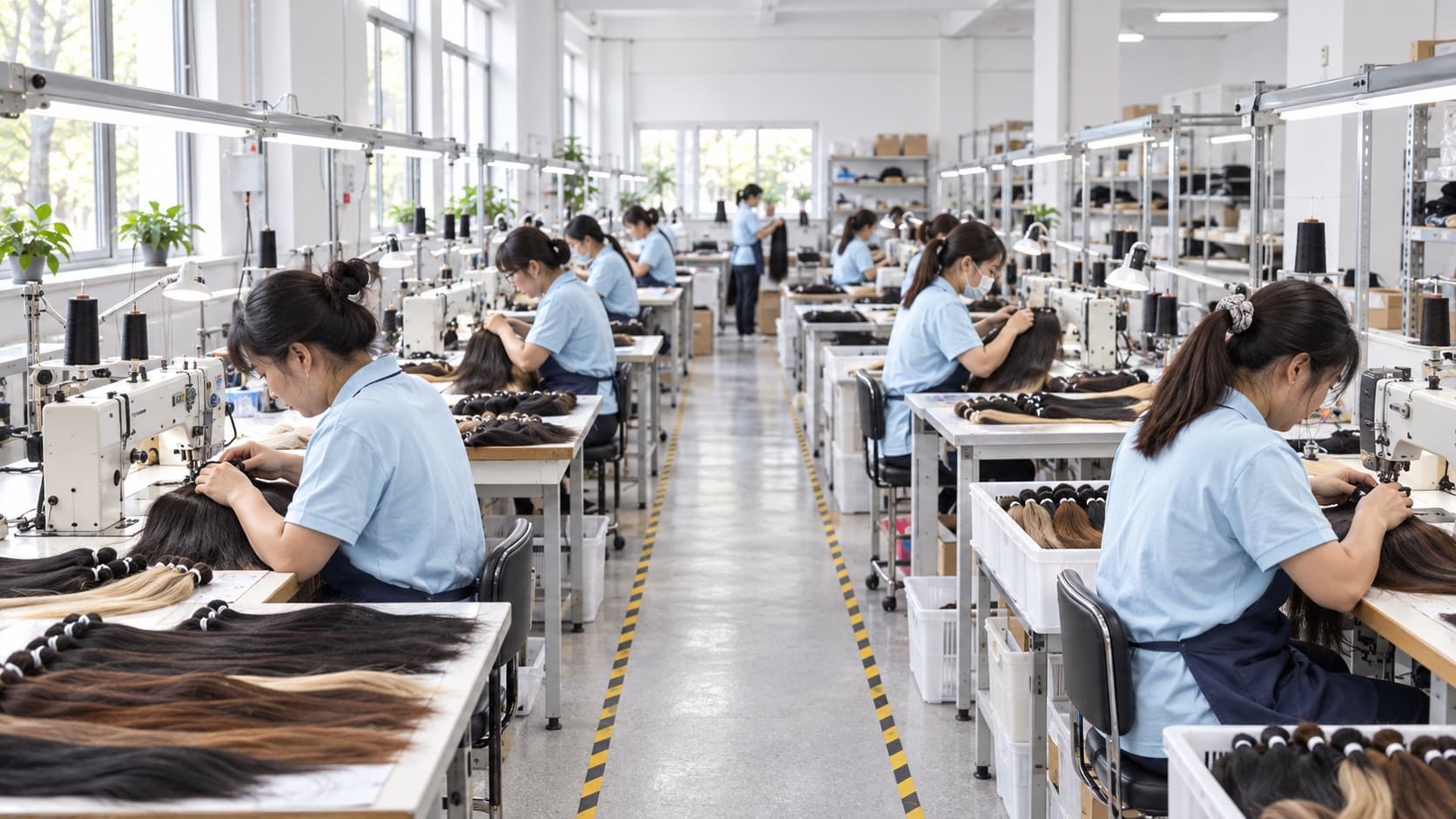
WinningWigs supports B2B buyers of human hair extensions, wigs, toppers and hair systems from Qingdao. The public hair extension range includes wefts, tape-ins, keratin-tip formats and clip-ins. The About page describes raw-hair selection and sorting, colour matching, extension production, inspection and packing. Buyers can discuss samples, product specifications, packaging and a quotation with the team. Those are relevant reasons to contact a manufacturer for a planned program.
We are not a substitute for a verified shop near your salon when your requirement is same-day pickup or an in-person fitting by a local professional. We do not claim a warehouse or branch near every searcher. Ask us to confirm availability, MOQ, dispatch timing and destination-specific shipping for your actual product brief. A buyer in North America, Europe or Australia should also plan their own import and local-service responsibilities. Being direct about these limits makes a supplier comparison more useful than claiming every search is a fit.
FAQ
How do I find a hair extensions supplier near me with stock I can collect?
Search by your city and product method, then call the business. Confirm its physical pickup address, opening hours and the exact SKU, shade, length and quantity. Ask it to reserve the stock and identify whether it is on site or elsewhere. Do not rely on a local address or online “available” label alone.
Is a human hair extensions supplier near me always better than an overseas manufacturer?
No. Local stock is valuable for urgent needs, in-person sample review and potentially easier replenishment. A manufacturer can be useful for approved specifications, development and coordinated repeat orders. Compare the complete product, service and logistics scope for your actual buying pattern; the best route may combine both.
What should I ask a supplier for hair extensions before a first wholesale order?
Ask for company identity, product construction, hair option, colour and length references, pack contents, sample process, MOQ by variant, timing, quotation scope, dispatch origin and claims terms. Record the answers in a single specification and purchase file. If any answer is not confirmed, mark it as open rather than assuming it.
Can I order private-label hair extensions from a supplier outside my country?
Potentially, yes, if the supplier offers the relevant product and can agree on the specifications, samples, packaging, quantity, payment and delivery terms. You will also need to understand import requirements in your destination market. Approve a representative sample and packaging proof before treating the line as ready for bulk purchase.
How can I judge quality before placing a larger order?
Review a physical sample against your intended use. Check shade, feel, visual condition, construction, pack identification and the relevant care or handling behaviour using a documented procedure. Ask how bulk goods will be compared with that reference at shipment. A single inspection cannot prove every future wear result, but it can make decisions and exceptions more traceable.
Does “factory direct” guarantee the lowest price or fastest delivery?
No. Direct production can reduce some intermediary steps, but sampling, custom work, freight, duties, inventory carrying and problem resolution all affect total cost. Delivery estimates depend on the specific product, approvals and destination. Compare like-for-like quotes and confirmed timelines rather than a label.
Is WinningWigs a local supplier in the United States, Europe, Canada or Australia?
No local branch or warehouse in those markets is claimed in this article. WinningWigs is based in Qingdao, China. Professional buyers can contact the team remotely about human hair products, samples and quotations; any availability or shipping arrangement should be confirmed for the exact order and destination.
Conclusion: select the supplier that can prove the right fit
Searching “hair extensions supplier near me” is useful when location matters, but proximity is only one sourcing criterion. For immediate stock, verify the product is truly local and ready for collection. For a repeatable salon or brand range, compare sample approval, written specifications, quality review, dispatch origin, total landed cost and the ability to manage exceptions. Put the exact product and responsibilities in writing before you buy.
The strongest supply arrangement may be local, overseas or a deliberate combination of both. The test is not who appears closest on a map; it is who can show that the right item will reach the right buyer, in the agreed condition and timeframe, with a clear path for the next order.
LET'S TALK ABOUT YOUR PROGRAM
Ready to turn product questions into a clearer brief?
Share your target customer, product category and requirements. Our team will help structure the next sample or quotation conversation.