
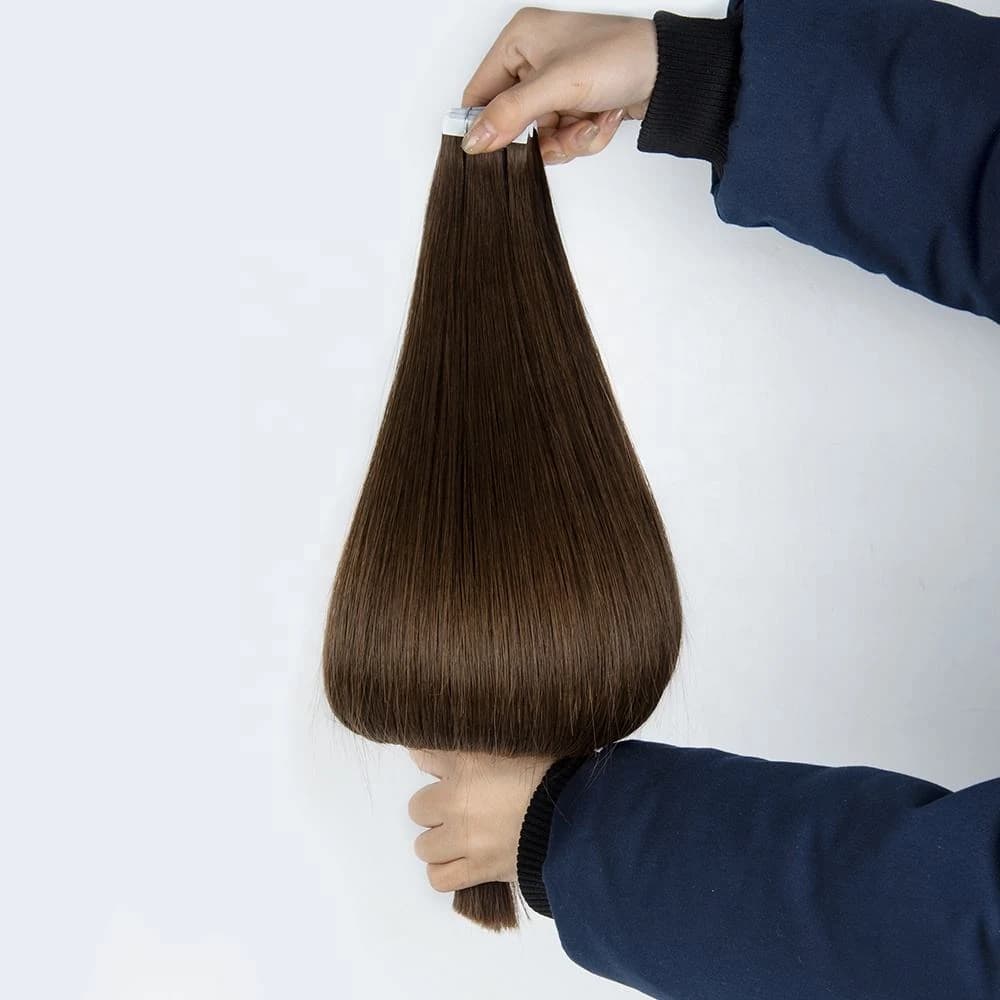
Finding hair extension suppliers with no minimum order quantity can help a salon test a new method, replace one client's shade or launch a focused retail range without buying unnecessary inventory. The challenge is understanding what a supplier actually allows you to order.
Some stockists and professional trade programs accept orders without a minimum basket value. You still buy their listed packs or sets. A manufacturer may instead require a minimum weight for each color and length, even when the total order is small.
At WinningWigs, we publish minimum quantities for our extension range; we do not advertise a blanket no-MOQ policy. This guide explains how to compare no-minimum-spend suppliers with low-MOQ manufacturing, calculate a realistic first order and check product quality before expanding.
What does “no minimum order quantity” actually mean?
For a buyer, no MOQ should mean being able to order the supplier's smallest saleable unit without committing to a larger quantity. That unit might be one pack, one weft or one complete clip-in set. It does not necessarily mean one strand, any weight you choose or a custom-made product.
Separate these five conditions before comparing quotations:
| Term | What to confirm |
|---|---|
| No minimum spend | Whether the basket has a monetary threshold, independent of pack size |
| Smallest saleable unit | The actual pack weight, piece count, weft width or set contents |
| Minimum per SKU | Whether each method, shade, length and configuration has its own minimum |
| Mixed-order permission | Whether different colors or lengths can count toward one minimum |
| Shipping threshold | Whether delivery charges change below a separate order value |
For example, SimplyHair's published trade-account information states that there is no minimum spend, while requiring professional qualifications or business evidence for account access. That illustrates why account eligibility and order minimums are separate questions. Check current product units, destination coverage and account terms directly before ordering.
The useful question is: “What is the smallest purchasable quantity of this exact product, in this shade and length, delivered to my location?”
Ask for an answer that can become an order
Send a short sourcing brief rather than asking only for the “lowest MOQ.” Identify your business type, destination, preferred attachment, shade reference, length and target quantity for each combination. Explain whether the order is for loose-hair comparison, a complete installation trial or immediate resale.
Request a written reply showing the saleable unit, minimum per combination, available stock, dispatch estimate, delivery charge and quotation validity. Ask which specifications would change the minimum. This makes competing answers comparable and gives both sides a record if the order later needs clarification.
Which supplier model fits a small order?
Ready-stock retail or professional trade supplier
A stockist can be a practical starting point when you need an existing shade and attachment quickly. Check whether trade access is required, whether the shade is physically available and whether replacement tabs or care products can ship with it.
The trade-off is limited control over the specification. An available pack may have a fixed weight, texture and attachment. Confirm reorder availability rather than treating a clearance item as the foundation of a salon service.
Distributor with mixed-SKU ordering
A distributor may let buyers combine stocked colors or methods. Ask whether the minimum applies to the basket, each brand or every individual SKU. Mixing permission is especially useful when several clients need different shades, but it should appear in the written quote.
Manufacturer with a defined low MOQ
A manufacturer becomes relevant when you need a documented specification, repeat-order control or a route toward customization. A per-SKU minimum may be workable if your first order focuses on one method and a few proven shades.
Custom color development and branded packaging can introduce separate requirements. Ask for these independently; a small hair order does not automatically qualify for a small printed-box run.
WinningWigs minimum quantities: the clear starting point
Our published extension terms distinguish standard products from Invisible Tape-In. These are minimum quantities per color and length combination, not a total weight that can automatically be divided among several shades.
| Product scope | Published minimum | First-order implication |
|---|---|---|
| Most WinningWigs hair extension types | 100 g per color and length combination | Confirm the exact method, pack configuration and current availability |
| Invisible Tape-In, solid or piano colors | 200 g per color and length combination | A typical 100 g pack is smaller than the order minimum |
| Invisible Tape-In, rooted colors | 300 g per color and length combination | Plan each rooted shade and length separately |
Review our Regular Tape-In range and Invisible Tape-In specifications before requesting a quote. If your requirement is below the published minimum, ask what is currently possible; an exception or sample arrangement needs specific confirmation and should never be assumed.
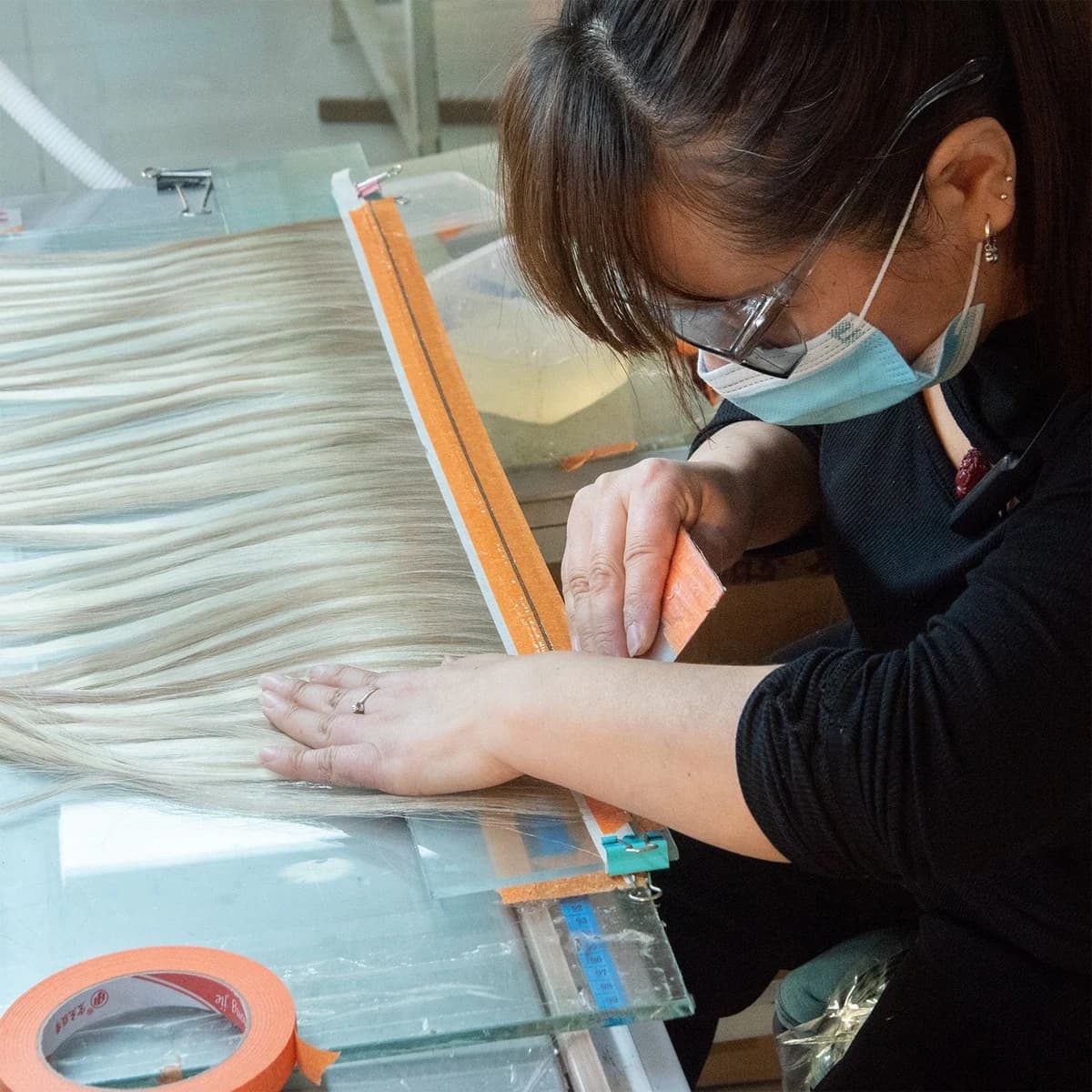
Factory testing and production photographs answer different questions from an MOQ table. A photograph can show handling or assembly, but it cannot establish wash performance, minimum-order eligibility or the condition of a future shipment.
Choose a testable product, not just the smallest pack
Tape-in extensions: verify pieces, weight and attachment
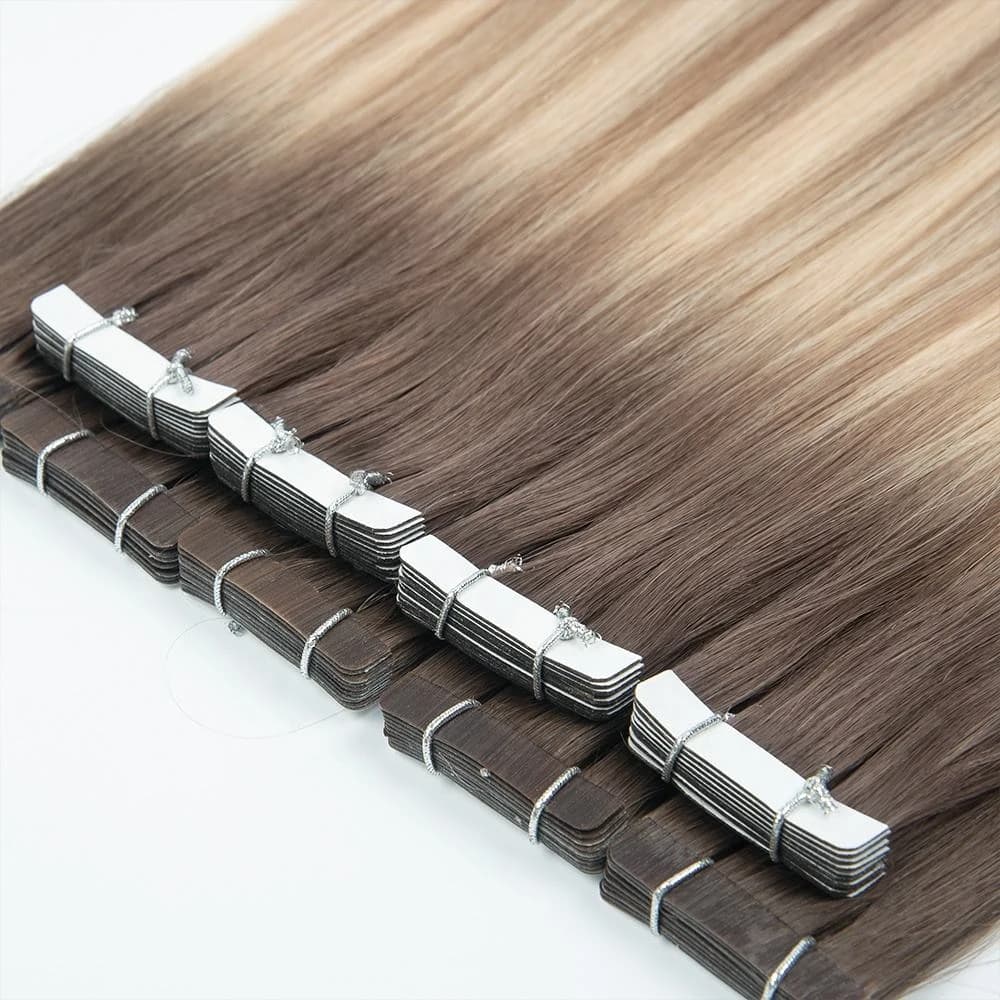
A tape-in quote should identify net hair weight, number of pieces, tab dimensions and the intended installation system. Clarify whether “pieces” refers to individual panels or paired attachments. A 40-piece pack should not be interpreted as 40 completed sandwiches without confirmation.
WinningWigs Invisible Tape-In is typically specified as 100 g per pack with 40 pieces, although confirmed custom configurations can differ. Its pack size and its 200 g or 300 g MOQ are separate specifications. Regular and Invisible Tape-In should also be evaluated as distinct constructions; do not assume identical replacement tape or installation instructions.
Wefts and clip-ins: compare the usable configuration
For Genius Weft extensions, request the supplied width and weight, seam details and cutting guidance. A small weight alone does not show whether the weft suits the intended row plan.
For Regular Clip-In extensions, confirm the number and widths of pieces, clip placement and total set weight. A single replacement piece and a complete set are different purchasing units.
Product application should guide the order. A sample for comparing softness and shade may be smaller than the quantity needed for a supervised installation trial. Agree on the purpose before judging whether an offer is sufficient.
For example, imagine a salon evaluating a new tape-in service for two different shades. One sample can help assess the first shade's handling, but it cannot confirm the second shade's match or supply enough hair for both clients. Treat this as two specification decisions, then let the stylist define the installation quantities. This is an illustrative planning scenario, not a reported customer result.
Calculate the first order by SKU and delivered cost
A small assortment can multiply the minimum
Consider an illustrative order using WinningWigs' published standard minimum: one extension method, three colors and one length creates three color-length combinations. At 100 g each, the minimum total is 300 g. Adding a second length to every color creates six combinations and 600 g.
For Invisible Tape-In, one solid color and one rooted color at the same length create two separate combinations. Their published minima total 200 g plus 300 g, or 500 g. These examples explain the calculation; they are not stock confirmations or quotations.
If the budget is tight, reduce the number of combinations before reducing the quantity below a supplier's minimum. Start with the shades and lengths supported by actual consultations, booked services or a clearly defined sample plan.
Compare the cost of an equivalent usable order
Calculate the hair price, shipping, applicable import charges, payment fees and any required installation supplies. Divide the total by equivalent usable weight or complete sets, rather than comparing an inexpensive small pack with a larger pack as if they contained the same product.
Keep net hair weight separate from packaging weight. Also ask who handles import clearance and which charges are included in the quote. A no-minimum-spend order can still be expensive to deliver, while buying extra shades merely to spread freight can leave stock unused.
Check the cost of resolving a mismatch as well. Find out whether unopened stock can be exchanged, who pays return freight and whether custom items have different conditions. Do not assume that a sample, clearance pack and made-to-order shade share one return policy. Keep a written approval record before paying.
Evaluate samples before committing to repeat orders
Record a baseline before washing
Label each sample with its product reference, shade, length, stated weight and attachment. Photograph it under consistent lighting and record the end fullness, initial combing response and visible construction. Keep the supplier's specification beside the sample so the review is repeatable.
Ask what “Virgin” or “Remy” means for the offered hair and what coloring or texture processing has occurred. Neither a label nor a smooth photograph replaces a processing disclosure and a relevant sample evaluation. Our Virgin and Remy supplier guide explains these distinctions.
Use a documented wash-and-dry comparison
Follow the supplied care instructions. Record the shampoo, conditioner, water conditions, drying method and any heat used, then compare samples under the same routine. Observe tangling, shedding, texture change and how the ends behave after drying.
Agree on useful acceptance criteria before testing. “Feels premium” is difficult to reproduce; photographs and notes showing a specific change are easier to investigate. A short sample trial cannot establish an exact lifespan for every client or every production batch.
For attachment performance, keep the fitting conditions documented and follow the system's professional instructions. Washing loose hair does not validate tape adhesion or a completed weft installation. Use our B2B sample evaluation checklist to structure the record.
Confirm dispatch, shipment inspection and installation preparation
Dispatch timing is different from arrival timing
WinningWigs lists same-day or next-business-day dispatch for available extension stock, subject to availability. Custom extensions typically require 5–13 working days from the order date. Obtain a schedule for the exact order; these dispatch estimates do not include international transit or customs clearance.
Before booking a client's appointment, confirm that the required shade, length and attachment can ship together. Ask whether partial shipment is possible, how additional freight would be handled and what happens if a quoted item becomes unavailable.
Inspect before opening every pack or installing
During shipment inspection, compare the received product codes, shades, lengths, quantities and attachment details with the approved order. Photograph labels and any visible transport damage before discarding packaging. Check the supplier's reporting deadlines and return conditions before washing, coloring or installing hair.
WinningWigs describes visual, combing, curl-consistency and color checks in its quality-process information. For your shipment, request the relevant inspection scope and supporting records rather than assuming every available test is performed on every piece. Our shipment inspection checklist helps organize that discussion.
Installation preparation should include a qualified stylist's consultation, shade and texture matching, a suitable attachment plan and the correct tools and aftercare. The supplier's minimum order is an inventory rule; the amount appropriate for a client depends on the assessed service requirements.
Build a reorder plan before expanding the range
A successful first order should produce a usable reference, not just a favorable first impression. Save the approved sample ID, product construction, shade reference, length, weight, pack contents and written care guidance. Ask how substitutions or changes will be communicated.
For a new salon range, review which shades were actually requested, whether the chosen length blended well and whether the team could fit and maintain the method consistently. Expand from those observations instead of ordering every listed shade at once.
For private-label plans, separate hair quantities from label, bag, box and care-card requirements. Confirm any design charges, packaging minimums and unused-material arrangements in writing. Our B2B services page outlines the customization conversation; a confirmed quote should define the final scope.
Pause if the supplier cannot explain how pack counts relate to weight, changes the minimum after payment without an agreed reason, or substitutes a different attachment without approval. Small orders still need a named contact and a clear problem-handling process. Order flexibility is useful only when the delivered specification remains dependable.
FAQ
Can I buy hair extensions without a minimum order?
Some ready-stock retailers and trade programs accept orders without a minimum basket spend. You still need to buy a listed pack, piece or set. Check professional-account eligibility, stock, shipping charges and whether the policy applies to your destination.
Does WinningWigs offer no-MOQ hair extensions?
We publish minimum quantities rather than a blanket no-MOQ offer. Most extension types start at 100 g per color and length combination. Invisible Tape-In starts at 200 g for solid or piano colors and 300 g for rooted colors, per color and length. Confirm the exact product before ordering.
Can different colors count toward one MOQ?
Only if the supplier explicitly permits it. WinningWigs' published extension minima apply per color and length combination. Three different colors therefore create three combinations, even if all are the same attachment method and length.
Is a sample automatically free or below the usual MOQ?
No. Request the available sample format, quantity, price and delivery cost, and ask whether normal product minimums apply. Sample availability, credit arrangements or exceptions require written confirmation; none should be assumed from the word “sample.”
Is one pack enough for a full-head installation?
Not necessarily. Pack sizes and piece counts differ, and the service depends on the client's starting hair, intended length, density and attachment plan. Have the stylist calculate the required quantity before purchasing. A supplier's saleable unit is not an installation prescription.
Does no MOQ include custom colors and packaging?
Do not assume so. A stocked-hair ordering policy may exclude custom shades, special attachments or printed packaging. Ask for the hair minimum and each customization requirement separately, including sampling costs and production timing.
Conclusion
The right small-order supplier offers a clear purchasing unit, an appropriate product and repeatable terms. Look beyond the phrase “no MOQ”: confirm per-SKU limits, pack contents, delivered cost, sample checks and reorder availability before committing.
At WinningWigs, we begin with the customer's requirements and our published minimums. Share a focused brief so we can assess whether our extension range suits your first order and explain the next step without promising quantities or stock that have not been confirmed.
LET'S TALK ABOUT YOUR PROGRAM
Ready to turn product questions into a clearer brief?
Share your target customer, product category and requirements. Our team will help structure the next sample or quotation conversation.