
Choosing between hair extension suppliers offering virgin and Remy hair starts with a clearer question: what exactly will arrive in your order? A product name alone does not explain processing history, cuticle direction, end fullness or attachment quality. Those details determine whether the hair fits your salon service, wholesale range or private-label collection.
The practical distinction is that virgin describes processing history, while Remy describes root-to-tip alignment. Hair can meet both descriptions, but a finished colour-treated extension should not be presented as completely unprocessed. Ask suppliers to define each term for the exact product, then compare representative samples and written specifications.
At WinningWigs, we encourage buyers to connect hair selection with the intended application. This guide explains how to compare options, plan useful factory testing, review a shipment and prepare a sourcing brief without relying on unsupported quality grades or lifespan promises.
Virgin vs. Remy hair: what are you actually buying?
Virgin refers to processing history
In its strict sense, virgin human hair has not undergone chemical colouring, bleaching, perming or chemical straightening. A supplier may instead use “virgin” to describe the starting material before manufacturing. These are different claims: virgin input hair can later become a processed blonde or highlighted product.
Ask whether the description applies to the original hair or the finished extensions. Also ask about texture-setting and finishing treatments. Natural-looking colour, shine and a soft feel cannot establish processing history from a photograph.
For example, if a quote describes a pale-blonde shade as virgin, request an explanation of how that finished colour was achieved. The answer should become part of your product specification rather than remain an informal sales message.
Remy refers to directional alignment
Remy generally describes human hair kept in the same root-to-tip direction. Cuticle condition also matters, so request a clear statement about both alignment and cuticle preservation. Remy hair may be coloured or otherwise processed; the term does not automatically mean unprocessed, single-donor or traceable to one country.
The industry's use of alignment is illustrated in Great Lengths' explanation of Remy hair. However, a definition is not evidence that a particular supplier's batch meets it. For procurement, connect the description to a sample reference and the order record.
| Description | Main question it addresses | What still needs confirmation |
|---|---|---|
| Virgin hair | What processing has the hair undergone? | Whether the claim covers the input material or finished product |
| Remy hair | Are fibres aligned root to tip? | Cuticle condition, processing, consistency and construction |
| Double-drawn hair | How full is the length distribution? | The supplier's measurement method and agreed end-fullness reference |
| Single-donor hair | How was the material collected? | Supporting sourcing records; appearance alone is insufficient |
Treat these as separate specification fields. A higher number in a supplier's “10A” or “12A” label does not explain how that product compares with another supplier's numbering system.
Choose hair and attachment together
The right purchasing decision combines the fibre, finished shade, attachment and customer requirements. Buying a more expensive hair description will not correct an unsuitable bond, poor colour match or incomplete installation plan.
Flat Tip for professional fusion services
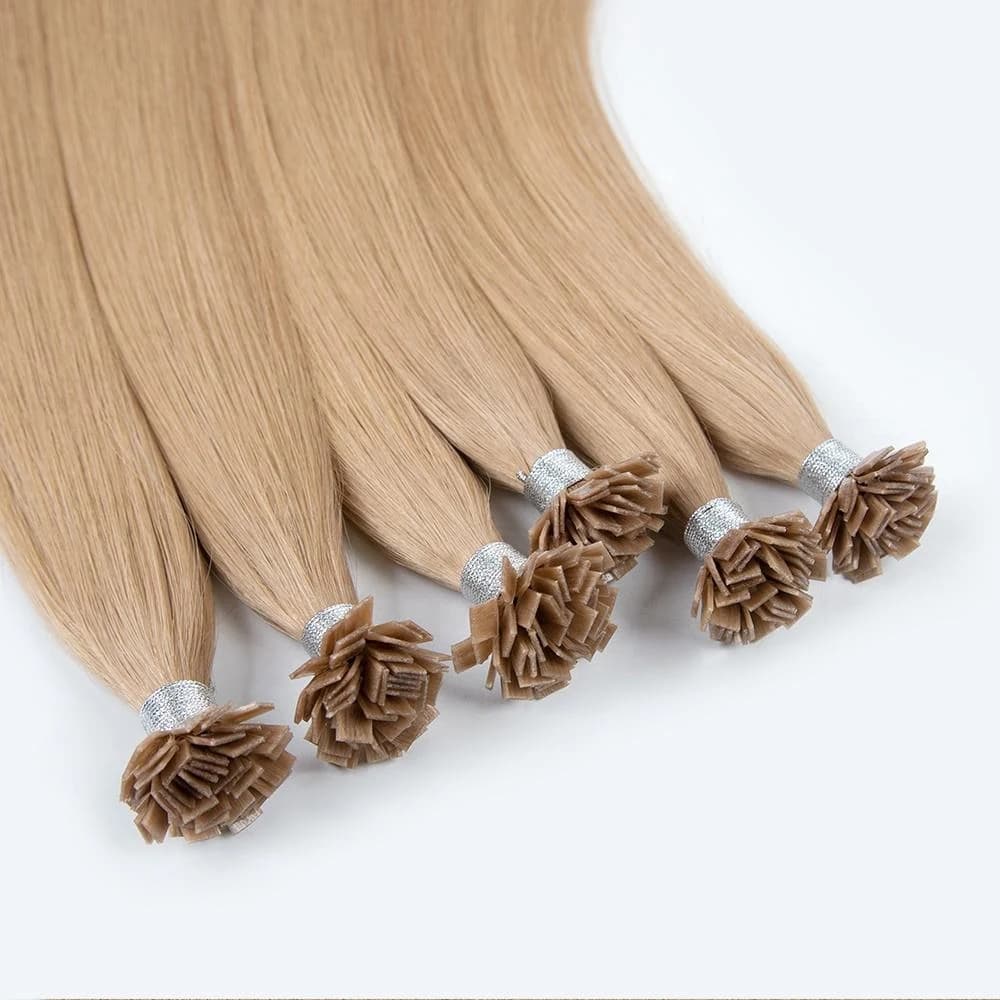
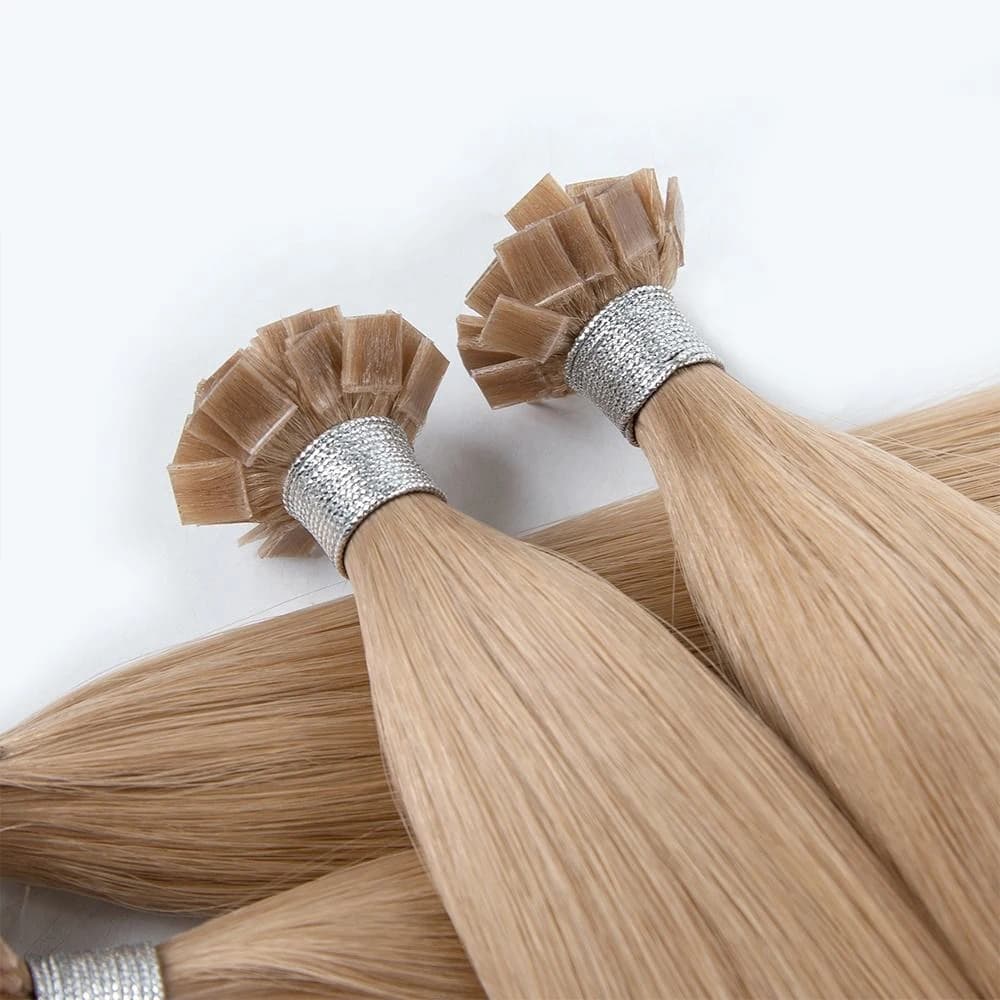
Our Flat Tip hair extensions use individual flat keratin bonds for heat-fusion programs. Buyers should assess strand weight, bond dimensions, finish and removal requirements alongside the hair itself. Keep Flat Tip separate from Flat Weft: the names sound similar, but their construction and installation workflows differ.
A salon planning discreet placement needs an installer to review sectioning and strand selection. Confirm the approved tools and method for the sampled bond rather than applying one temperature or installation rule to every bonded product.
Wefts for salon collections
For a weft program, compare seam construction, width, weight and the installer's cutting requirements. Review our Genius Weft collection when evaluating that format. The chosen hair description and shade should appear in the same specification as the seam and pack contents.
Tape-ins and temporary options
With Regular Tape-In extensions, adhesive-tab construction and replacement-tape compatibility need separate evaluation from fibre quality. For a temporary retail offering, Regular Clip-In extensions bring different questions: set layout, clip placement, total weight and customer handling.
There is no universal best attachment. Match the product to the service, wearer expectations and maintenance support your business can provide.
Compare supplier quotes using one specification
A low pack price is difficult to interpret when one supplier includes a different hair weight, length distribution or attachment configuration. Send the same brief to every shortlisted supplier and ask each to identify exceptions.
| Specification | What to record |
|---|---|
| Hair description | Human-hair composition, virgin/Remy definition and finished-product processing |
| Colour and texture | Physical shade reference, root or highlight placement, texture after washing |
| Length and fullness | Measurement method, usable length and agreed end-fullness reference |
| Weight and pack | Net hair weight or total product weight, strand count or weft dimensions |
| Attachment | Bond, seam, tape or clip specification and installation guidance |
| Order conditions | Quantity by SKU, MOQ, sample cost, packaging, dispatch basis and destination |
| Acceptance | Approved sample, check method, tolerances and issue-reporting process |
For illustration, 100 strands at a stated 1 g each total 100 g, but you still need to know whether that figure includes the bonds. This is arithmetic, not a universal pack specification. Agree on weighing conditions and tolerances before comparing prices.
Likewise, an advertised length needs a measurement method. Specify whether textured hair is measured gently extended and where measurement begins. Record end fullness separately; two packs of equal weight and nominal length can produce different finished silhouettes.
Consider the full order cost, including samples, packaging, freight and applicable destination charges. Ask which delivery terms apply and who handles the relevant charges. Dispatch timing and arrival timing should be stated separately.
Use samples to test the decisions that matter
A useful sample program checks the exact combination you expect to sell. A dark straight sample cannot establish how a pale-blonde textured product will behave. Include representative shades and constructions, especially where processing or attachment changes.
1. Record the starting condition
Assign a sample code and retain the quote, declared processing history and specification. Photograph the hair, attachment and ends under consistent lighting. Record weight, count and measured length using the agreed method. Keep an untouched reference where practical.
Assess dry handling without forcing the comb. Note where tangling occurs and distinguish full fibres released from the attachment from short broken pieces. The observations suggest different follow-up questions; neither should be diagnosed from a single photograph.
2. Repeat a documented wash-and-dry review
Follow the supplier's care instructions and record the products, water conditions, handling and drying method. Review combing, visible shedding, texture, colour and end condition after drying. A series of washes under recorded conditions gives a more useful comparison than judging initial softness alone.
Decide the review schedule before testing. Several controlled cycles can reveal handling changes, but they do not establish a guaranteed number of months of wear. Keep notes for each sample rather than summarising every outcome as “passed.”
Bleaching deserves particular attention when evaluating light colours. A microscopy study by Kim, Oh and Chang found structural damage in excessively bleached hair. It supports checking processing history and finished condition; it does not measure WinningWigs products or prove that every blonde extension has the same damage.
3. Check the attachment separately
For factory testing, agree on the method, sample size, conditioning and acceptance criteria. A photographed pull test without those details is difficult to interpret. Ask whether the check concerns fibre breakage, shedding from the attachment or bond performance.
If instrumental testing is needed, request the applicable method and report for the relevant sample. Routine combing observations are useful practical checks, but they are not laboratory tensile measurements. Our sample evaluation checklist can help organise the review.
Turn an approved sample into a repeatable order
Sample approval should create a production reference. Keep the approved hair description, processing disclosure, shade, attachment, weight, packaging version and date together. Record any revised requirement before production rather than assuming it is understood.
For example, consider a salon brand developing blonde Flat Tip extensions. This is a planning example, not a reported customer project. The buyer approves the physical shade and bond, documents the wash review and records the pack contents. A later request for fuller ends becomes a specification revision requiring confirmation; it is not an unchanged reorder.
At WinningWigs, our published quality process describes visual review, combing, curl-consistency review and colour comparison against our standard colour ring under inspection lighting. Colour checks take place during production and before dispatch. These practical checks support a shared reference, while any additional testing should be agreed for the project.
Use a reorder specification sheet to preserve those decisions. It helps purchasing and production discuss the same product when an order spans multiple lengths, shades or packaging versions.
Plan shipment inspection and installation preparation
Before dispatch: verify the agreed order
Shipment inspection should compare the goods with the approved order, not simply confirm that cartons exist. Agree on the sampling scope and the records you need before production begins.
- Match product codes, shade references, lengths and quantities to the order.
- Review hair presentation and attachment finish against approved references.
- Check pack labels, care information, packaging and carton marks.
- Record exceptions and agree on their resolution before shipment release.
- Retain available batch or order references for future questions.
Photos and video help establish what was reviewed, but they cannot independently prove cuticle alignment, donor origin or long-term wear. Our shipment inspection checklist provides a practical starting point for defining the review.
Before installation: verify the application plan
Receiving inspection is a separate checkpoint. Check the delivery against the order before mixing stock or allocating it to appointments. Isolate a questioned SKU and retain its identification so an issue can be investigated clearly.
Installation preparation should include a physical colour match, assessment by a trained installer, confirmation of the method and review of aftercare and removal instructions. Follow product-specific guidance on cleansing, drying and attachment handling. Hair quality alone does not determine a successful service.
For a salon, define the product application before scheduling: adding length, filling selected areas and creating colour effects may call for different amounts and placement. A private-label retailer also needs clear consumer instructions and a way to route technical installation questions to a qualified professional.
Questions to ask before choosing a supplier
Ask for clear written answers rather than a universal “best quality” assurance. The most useful discussion connects the exact product with evidence, commercial terms and support after delivery.
- Does “virgin” describe the starting material or finished extensions?
- How are Remy alignment, cuticle condition and processing described for this SKU?
- Can we review representative samples in the shades and attachments we intend to buy?
- Which checks are routine, and which need a separately agreed test plan?
- How are sample approval, shade references and specification changes recorded?
- What MOQ, sample charges, dispatch estimate and delivery terms apply to this order?
- What evidence is needed to report a problem, and how will it be reviewed?
Check the supplier's role and traceability
Clarify whether you are buying from a manufacturer, distributor or trading business and which party is responsible for the specification, payment and issue review. Each model can serve a buyer well, but the responsibilities should be clear. Ask whether samples come from the proposed production route and how the supplier identifies repeat orders.
If origin or collection practices are central to your brand, request the relevant sourcing explanation and supporting records. A geographic style name does not by itself establish donor origin. Agree on which statements your business can support on its own packaging and product pages; do not turn an informal description into an absolute sourcing claim.
Agree on the issue-review process
Before placing a larger order, ask how to report shortages, shade discrepancies, attachment concerns or changes noticed after washing. Record the reporting timeframe, evidence required and how any remedy will be assessed. Keep order references and handling notes so both teams can investigate the same item.
A return or replacement policy should identify its scope and conditions. Do not assume that sample approval removes the need for shipment checks, or that every later concern has the same cause. Clear records make a discussion more useful than an unsupported accusation or a blanket assurance.
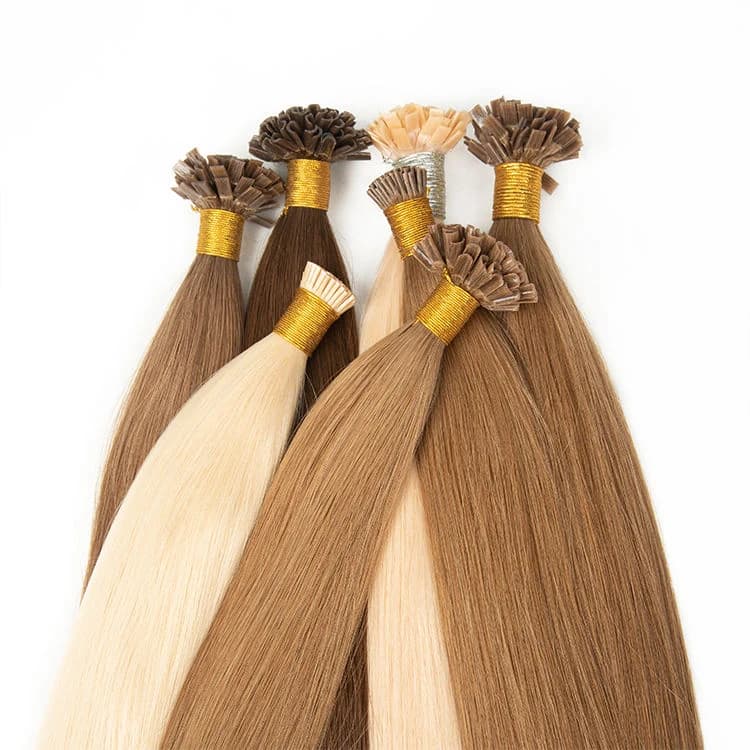
WinningWigs' hair extensions collection covers wefts, keratin-tip formats, tape-ins and clip-ins. For branded presentation, review our B2B services alongside the product brief. Confirm the exact hair option and commercial terms for your chosen SKU before ordering.
FAQ
Is virgin hair always better than Remy hair?
No. The terms describe different characteristics. A suitable processed Remy product may fit a finished blonde collection, while a buyer seeking unprocessed material needs that requirement stated explicitly. Evaluate the finished sample, construction and intended service.
Can hair extensions be both virgin and Remy?
Yes, when the hair meets both the relevant unprocessed-history and directional-alignment descriptions. Ask whether both claims apply to the delivered product. Further colouring or chemical processing changes the virgin-status question even if directional alignment is retained.
How can I verify virgin or Remy hair from photos?
Photos cannot reliably establish processing history or root-to-tip alignment. Request written disclosures, relevant records and physical samples. If specialist examination is required, agree on a suitable method and recognise that it may not establish every aspect of origin.
How long should virgin or Remy extensions last?
There is no reliable universal lifespan based only on those labels. Processing, construction, installation, maintenance and further treatment affect performance. Evaluate supplier guidance and sample observations for the exact product instead of treating a marketing duration as a guarantee.
Can I bleach or colour the extensions after purchase?
Confirm suitability for the exact finished product with the supplier and a qualified colourist. Further processing can change condition, shade and attachment performance. Obtain guidance and test an appropriate sample before committing stock or a client's installation to a colour change.
What should I send to request a wholesale quote?
Send your business details, destination, attachment method, preferred hair description, shade reference, length, texture and quantity by SKU. Include pack weight or count, sample requirements, packaging needs and desired timing. Ask the supplier to identify anything still unconfirmed.
Conclusion
Choose a supplier by how clearly it connects product claims with specifications, samples and delivery records. Virgin and Remy labels begin the discussion; they do not replace it. Approve a representative finished product, document the checks and preserve the reference for reorders.
Ready to compare options with WinningWigs? Get a Quote or Ask for Product Catalog. Share your target market, product format, shades and estimated quantity so our team can help define the next sample and sourcing conversation.
LET'S TALK ABOUT YOUR PROGRAM
Ready to turn product questions into a clearer brief?
Share your target customer, product category and requirements. Our team will help structure the next sample or quotation conversation.