
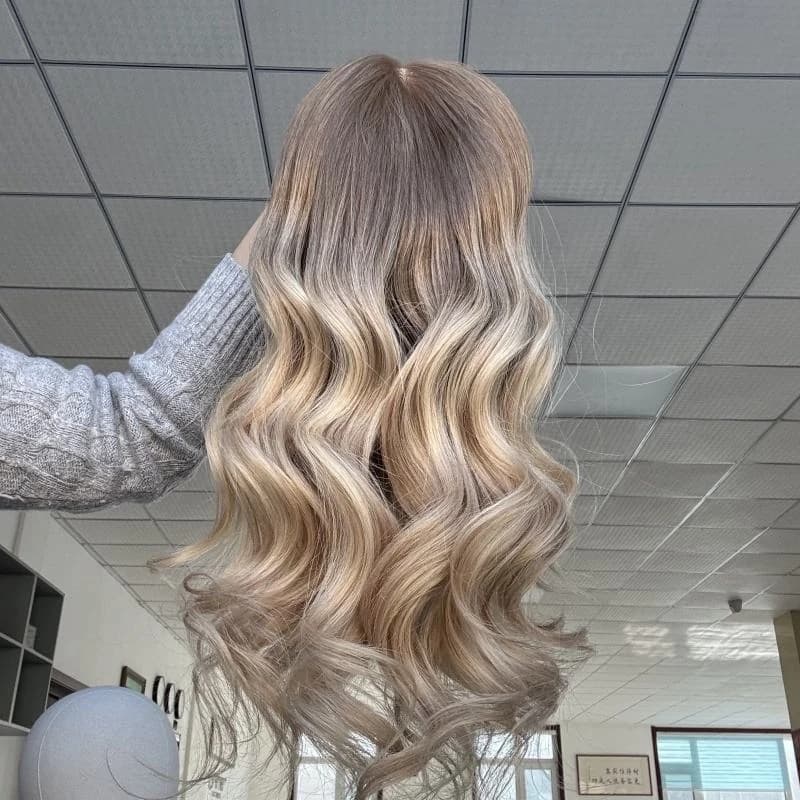
Low density wigs for white women are usually sought for one practical reason: the wearer wants believable fullness rather than a thick, unfamiliar silhouette. The right wig should resemble the volume she wants while still concealing its base and fitting securely. Less hair can help achieve that balance, but less is not always better.
The useful buying question is not simply “What is the lowest density?” It is “Where do I need coverage, and where do I want less bulk?” Hairline, crown, sides and ends can require different treatment. Cap design, hair length, texture and styling also change how full a wig appears.
This guide explains how wearers, salons and private-label buyers can compare those details. “White women” describes the search audience, not a standard head size, complexion or hair texture. Build the specification around the individual. For the broader selection process, see our human hair wig buying guide.
What does low density actually mean in a wig?
Separate density, weight and visible volume
Density describes how much hair is distributed over a given cap area. In commercial listings, “low,” “light” and percentage labels communicate a supplier's intended fullness. They do not necessarily reveal how the hair is allocated between the front, top and back.
Weight and volume answer different questions. A longer wig can weigh more without having a denser front. Waves can create a larger silhouette than straight hair. Root lift and cap construction can make two similarly weighted wigs appear different.
| Buying term | What it helps describe | What it does not establish alone |
|---|---|---|
| Density | Hair distribution and intended fullness | Fit, scalp coverage or comfort for a particular wearer |
| Finished weight | The mass of the complete item on the stated basis | How much hair is concentrated at the front |
| Volume | The visible shape after styling | A repeatable density specification |
| End fullness | The perimeter and distribution of hair lengths | Crown density or cap construction |
Jon Renau's explanation of density shows how different cap designs can change perceived fullness even when wigs have similar hair weight. Use that distinction when comparing samples rather than judging from a single curled photograph.
Who may prefer a lighter-looking wig?
Match the desired appearance and routine
A wearer used to fine hair may want a restrained crown and soft face-framing sections. Someone replacing a familiar short style may prioritize a close silhouette. Another person may prefer fuller ends but little lift at the roots. These are different customer requirements, even if everyone asks for a “natural wig.”
For professional fitting, bring photographs of the desired everyday hairstyle and explain how it will be worn: loose, tucked behind the ears, with bangs or with an exposed front. Discuss time available for washing, drying and restyling. The best product application is the one the wearer can maintain comfortably.
Recognize when reducing density will not solve the problem
A cap that sits too high, an unsuitable cut or strong root lift can create bulk without excessive hair density. Conversely, a sparse top may reveal the base under bright light. Check fit and styling before requesting a general reduction, especially where coverage is already limited.
Which density percentage should you choose?
There is no universal percentage that is correct for every white woman. Treat numbers such as 130%, 150% and 180% as options within a particular supplier's system, not measurements that make all brands equivalent. A percentage also does not state the weight, cap size or hair distribution unless those details are provided.
WinningWigs publishes those density options, or custom density, for selected lace-top wigs. That does not mean every option qualifies as low density or that a lower custom figure is available for every construction. Confirm the requested specification and approve a sample.
Ask for side-by-side references with the same length, cap dimensions, texture and cut. Review them before additional styling, then in the intended finished style. If comparing finished weights, confirm whether the figure includes the cap, clips, straps and other components.
For purchasing records, use a description such as “soft front distribution with coverage maintained at the crown, matching approved sample A.” Pair it with photographs and the supplier's stated density reference. This is more reproducible than the instruction “make it thin.”
Check coverage in zones before approving less hair
Hairline and temples
Inspect the front contour at normal viewing distance and close up. Look for a believable progression of hair rather than an abrupt wall. Then check whether the temples remain covered when the hair moves or is tucked back. A soft front should not leave the cap edge exposed during the intended style.
Part, crown and rear coverage
Review the part in diffuse daylight and ordinary indoor light. Some scalp-like visibility at the part may be desired; exposed tracks or an unintended cap seam are different issues. Ask for top and rear views while the hair is gently repositioned, without deliberately pulling sections apart to manufacture a problem.
Sides, nape and ends
Check what happens when the wearer bends, turns and brings the lengths forward. A lighter perimeter may look familiar, but it still needs adequate coverage for the selected hairstyle. Do not approve the crown from a front photograph or the nape from a top photograph.
Agree which areas should remain unchanged if a revision is needed. A supplier can evaluate a specific front-density adjustment more clearly than an instruction to remove hair everywhere.
Compare the cap beneath the hairstyle
Request an interior view and construction map
The cap photograph below shows mesh panels, horizontal bands and adjustment details. It helps begin a construction discussion, but the image alone does not confirm every material, attachment method or density. Ask the supplier to identify the front, top, sides and back on a diagram.
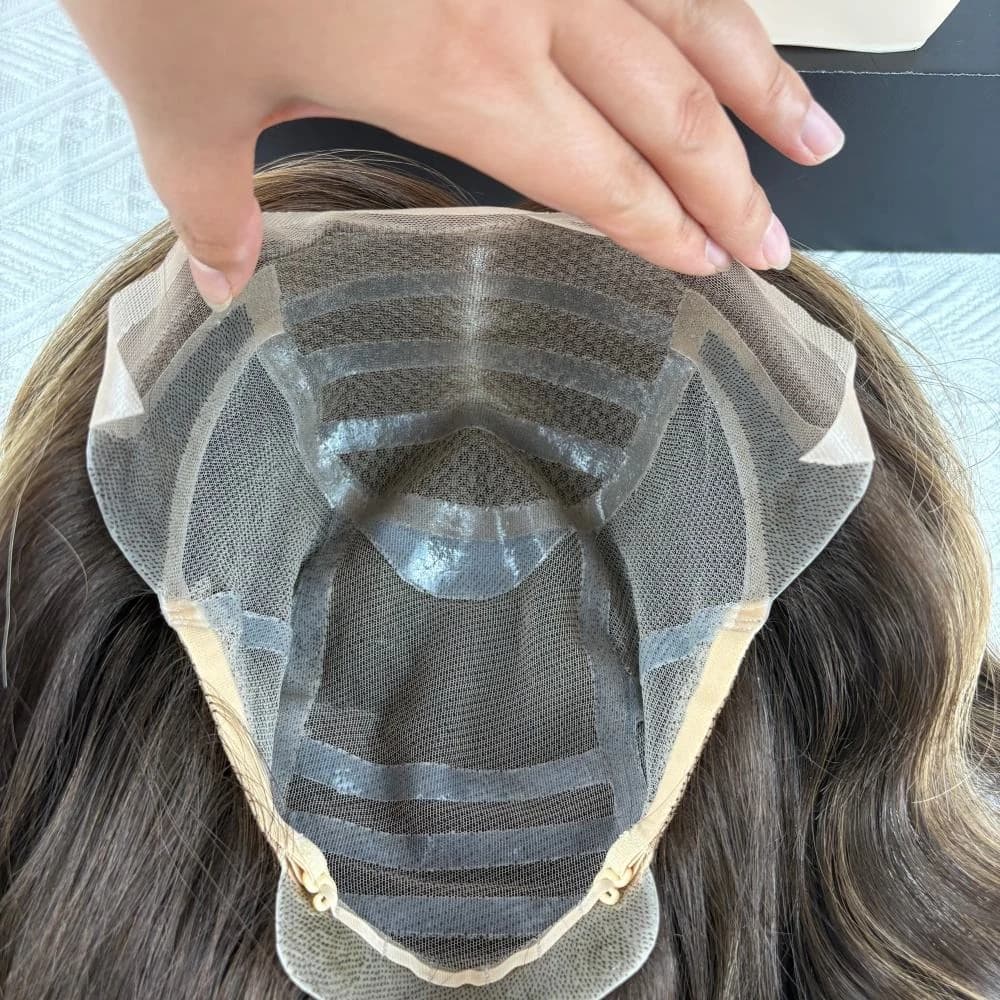
| Construction feature | Relevance to a lighter-looking result | Detail to verify |
|---|---|---|
| Lace front | Defines the exposed front and its hair distribution | Lace tone, contour, knots and handling |
| Lace or monofilament top area | Supports a specified parting appearance | Actual usable area and scalp effect |
| Wefted sections | Provide coverage through rows of attached hair | Row visibility, bulk and permitted styling |
| Hand-tied sections | Allow hair movement within the specified area | Which sections are hand tied and how they sit |
| Headband front | Covers the front perimeter with a fabric band | Intended look, band fit and adjustment |
A lace front is not the same as a full-lace cap. A headband design also creates a different front appearance from exposed lace. Compare these constructions around the desired hairstyle rather than assuming one product label makes them interchangeable.
Confirm fit before changing the density
Use the supplier's measuring method for circumference, front-to-back and ear-to-ear dimensions. Describe whether the cap will sit over existing hair, a liner or another fitting accessory. Labels such as petite and average still need checking against the actual size chart.
During installation preparation, position the cap as instructed and assess the ear tabs, nape and top. Check it with glasses and gentle movement. Excessive tightening can disguise a sizing issue without correcting the cap shape; insufficient adjustment can allow shifting.
The American Cancer Society's wig guidance recommends checking brand-specific sizing and considering fit changes as hair is lost. For treatment-related hair loss or scalp sensitivity, use an experienced fitter and discuss relevant concerns with the care team. A low-density description is not a medical suitability assessment.
Use color, texture and cut to control apparent fullness
The highlighted wig below shows a dimensional color blend and a styled outline. It does not provide a measured density. When requesting a similar appearance, specify root shade, highlight placement, length and wave finish separately from the hair quantity.
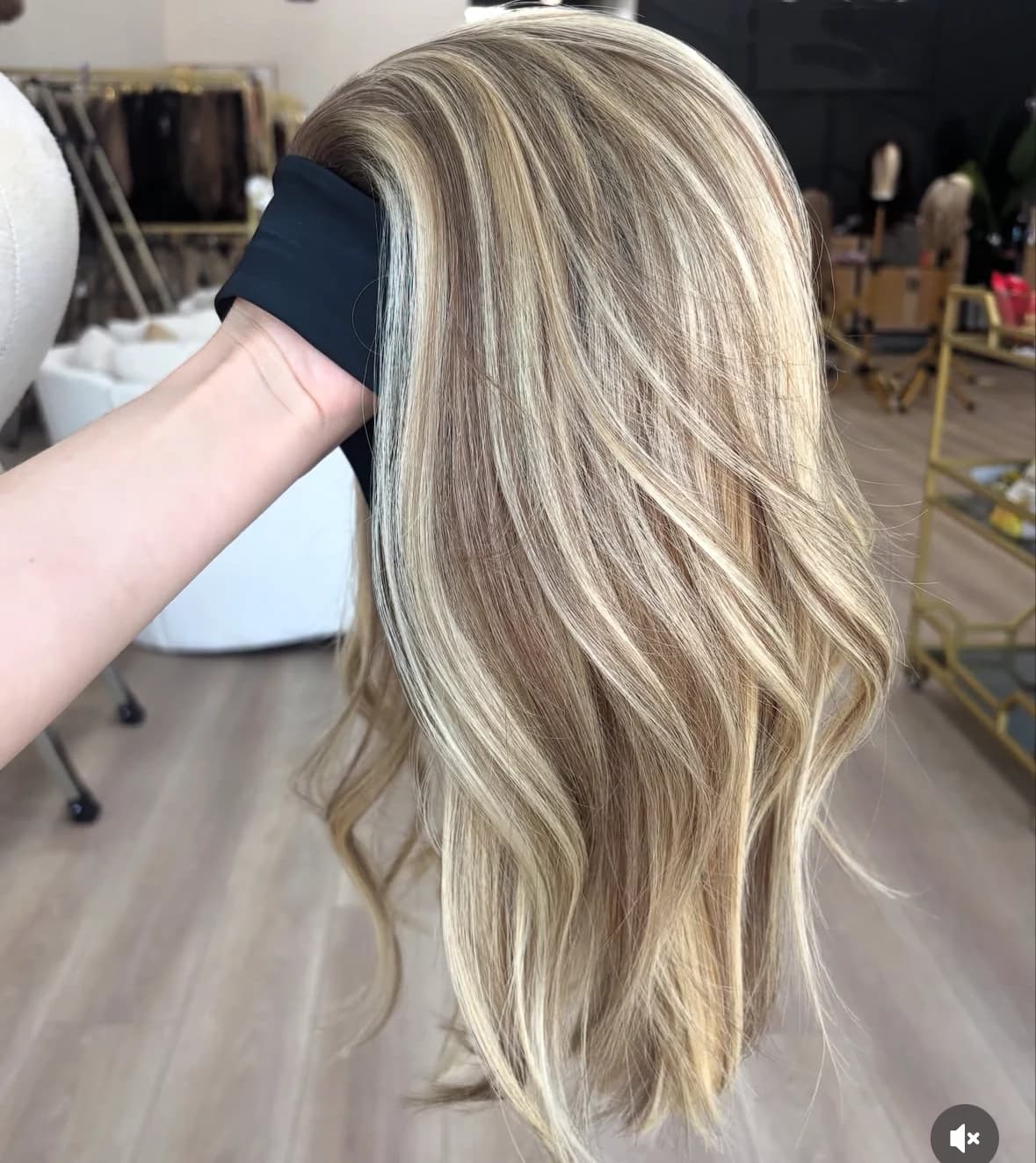
For fine-hair proportions, a fitter may assess the cut and root direction before removing hair. Layering changes the outline; it does not automatically correct the base coverage. Aggressive thinning or plucking can be difficult to reverse and may expose construction details.
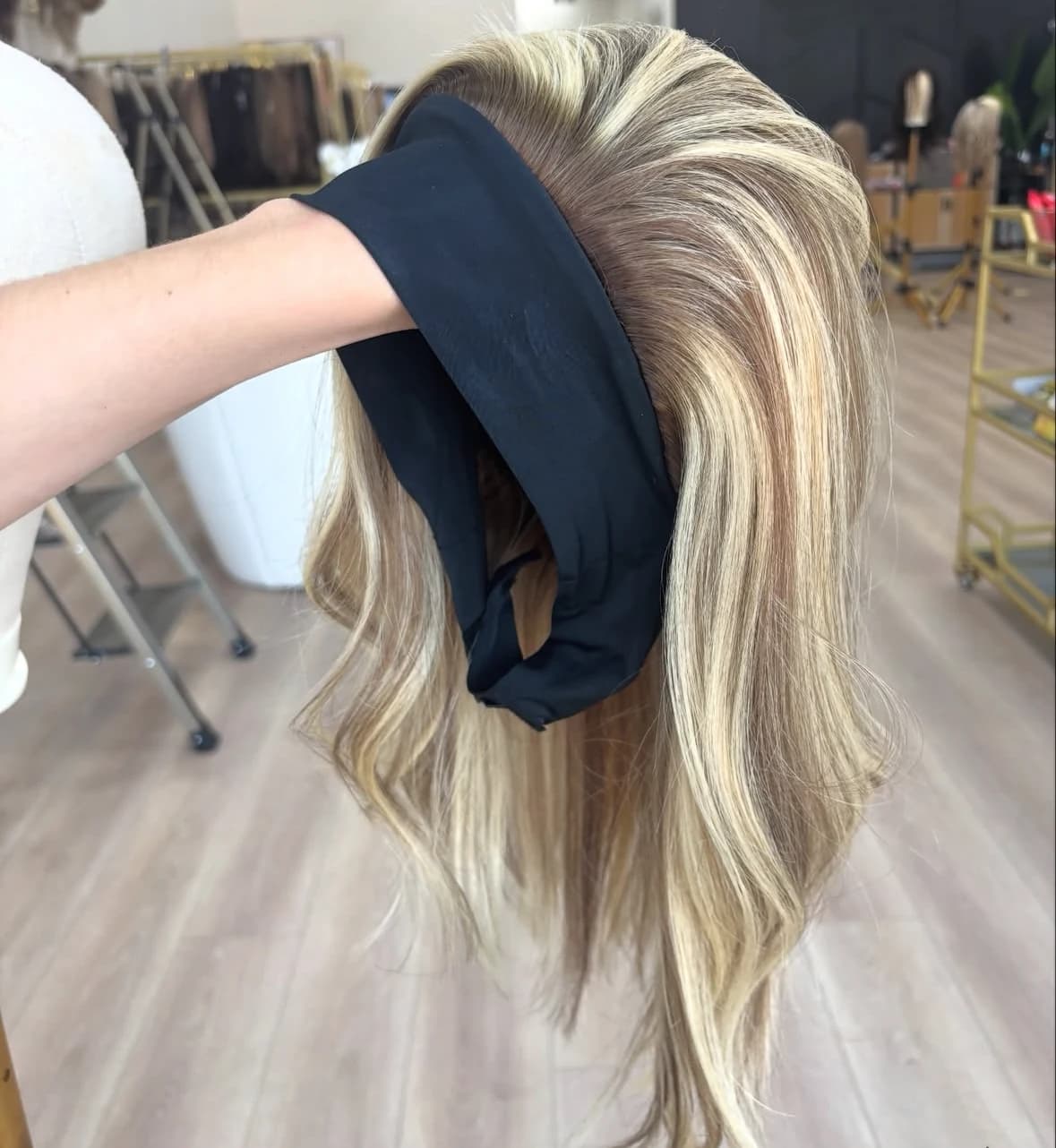
If you prefer a headband style, assess the band as part of the finished look. The photograph below illustrates that front treatment; it should not be used as proof of an exposed lace hairline. Ask for a separate lace-front reference when that is the intended application.
Evaluate a representative sample and record the conditions
Create a useful before-and-after record
Review the actual color, length and construction you intend to purchase. Label the sample and photograph the front, top, sides, rear and interior under consistent lighting. Record dimensions and finished weight on the agreed basis, without converting either into an unsupported density claim.
Trial the intended style and note cap visibility, crown bulk and perimeter coverage. If the wearer agrees to fitting photographs, use the same angles for the revision review. Keep the accepted reference and written changes together.
Follow the supplied wash and drying instructions before assessing the hair again. Record the products, handling and styling used, then observe combing, visible shedding, tangling and shape. A change after washing may involve styling, processing or handling; it is not automatically evidence that the hair quantity changed.
Define factory testing without inventing results
WinningWigs' published quality process includes visible-condition review, combing, curl-consistency checks and shade comparison under standard inspection lighting. Agree whether your project also needs documented cap measurements, weight records or a specific coverage review.
These checks should identify the sample, method and observations. Neither a smooth photograph nor one successful wash establishes fiber composition, donor origin or a guaranteed lifespan. Our sample evaluation checklist provides a framework for recording evidence before a larger order.
Example: revise one area rather than the whole wig
Imagine a salon sample with acceptable rear coverage but too much lift at the crown. This is an illustrative planning scenario, not a completed customer case. The fitter would check cap seating and styling first, then discuss a localized revision if the bulk remains. The buyer would retain the accepted back and end references and recheck the revised crown under the same conditions.
Source the specification and inspect the shipment
Match the product route to the brief
The Custom Wig program is a starting point for a specified cap, shade and density distribution. The HD Lace Top Wig offers published length and density options for comparison. For a front-focused brief, discuss the Invisible Hairline Wig and inspect the actual hairline sample.
These are product-development references, not confirmation that the photographs show those exact models or that every configuration is low density. WinningWigs' published wig minimum is one piece per color and length combination; confirm sample terms, pricing and feasible customization for the order.
Compare the complete quote and delivery plan
Match cap size, hair specification, color, length, density reference and packaging across quotations. Include customization, fitting support, shipping and applicable destination charges. Confirm return and issue-reporting conditions before trimming lace or altering the product.
HD lace-top custom dispatch typically takes 12–40 working days from the order date, depending on complexity. Invisible Hairline custom dispatch is typically 40 working days. Confirm the relevant route and availability; dispatch estimates exclude transit and customs clearance.
For shipment inspection, match the approved reference, quantities, color records and cap details before release. Photograph arrival discrepancies before modifying or distributing stock. Preserve identifiers so a later reorder requests the approved specification rather than simply “the same natural look.”
Maintain coverage through careful handling
A lighter-density design has less margin for visible gaps if hair is removed unnecessarily. Handle delicate bases gently and follow product-specific guidance for washing, drying, brushing and attachment removal. Ask a fitter before additional thinning or chemical work.
Jon Renau's human-hair care instructions explain the importance of gentle washing and keeping conditioning products away from hand-tied bases. Apply the chosen wig's own instructions rather than copying another brand's heat settings or wash schedule. If a gap develops, document its location and care history before deciding whether styling, repair or replacement is appropriate.
FAQ
What density looks most natural for white women?
There is no ethnicity-specific figure. Match the desired silhouette, cap coverage, hairstyle and fit. Compare representative samples within the supplier's range and approve front, crown and rear distribution separately rather than choosing by percentage alone.
Does low density mean a lighter or cooler wig?
Not necessarily. Length, cap materials and accessories also affect weight, while airflow and individual conditions affect comfort. Ask for the finished weight and cap details, then assess a fitting sample. Do not treat density as a temperature or comfort rating.
Will the cap show through a low-density wig?
It can if coverage is insufficient for the construction, lighting or style. Check the part, crown, sides and nape in the intended position and during gentle movement. The goal is the requested scalp effect without unintended base exposure.
Are low density human hair wigs better than synthetic wigs?
The fiber and density are separate choices. Compare styling needs, maintenance, budget and the finished appearance. Human hair is not automatically easier to maintain, and neither fiber category guarantees a natural-looking cap or the right distribution.
Can a stylist reduce density after purchase?
A qualified wig professional may be able to adjust some styles, but the construction limits the options. Check return terms first. Removing too much hair can expose the base, and a cut cannot change every attachment or cap feature.
Can salons order a custom low-density sample?
Discuss the desired distribution, cap measurements, shade, texture, length and quantity with the supplier. WinningWigs offers custom sample discussions; feasibility and terms depend on the selected construction. Use an approved sample rather than assuming a photograph establishes the specification.
Conclusion
Choose low density wigs for white women by balancing believable fullness with adequate coverage. Define where the wearer wants less bulk, assess the cap and fit, and compare the intended style before approving any density reduction. Color, length and root direction deserve separate decisions.
For salons and brands, a labeled sample, clear revision brief and shipment record make that decision easier to repeat. The best result is not the smallest percentage; it is the approved appearance and coverage for the individual wearer.
LET'S TALK ABOUT YOUR PROGRAM
Ready to turn product questions into a clearer brief?
Share your target customer, product category and requirements. Our team will help structure the next sample or quotation conversation.