
Buying 100% human hair extensions wholesale involves more than choosing a length and negotiating a pack price. A salon needs hair that suits its installation method and client base. A distributor needs identifiable stock and dependable reorders. A private-label brand needs a specification it can explain accurately to customers.
The starting point is simple: “100% human hair” is a statement about the hair fibers. It does not, by itself, confirm virgin processing history, Remy alignment, donor origin, end fullness or attachment performance. Tape, bonds, clips and rings are separate components of a finished extension.
At WinningWigs, we recommend comparing the material declaration, finished construction, representative samples and written order terms together. This guide shows how to build that comparison, choose a useful first assortment and turn customer requirements into a repeatable wholesale order.
What does 100% human hair mean in a wholesale quote?
Separate the hair fibers from the complete product
Ask the supplier to state whether the hair fibers are entirely human hair, with no synthetic or animal-hair blend. Then request a separate description of the attachment and any relevant finishing or processing. A product can use human hair while still containing adhesive, a keratin-type bond, thread or metal hardware.
Do not treat gross pack weight as net hair weight. A quoted 100 g may refer to hair alone or to hair plus attachments, depending on the supplier's convention. Agree on what is included, how the product is weighed and any acceptable variation before comparing offers.
A written declaration is a commercial starting point, not independent verification. Where composition is critical to your purchasing decision, agree on the evidence required and whether a qualified laboratory should evaluate representative samples. Define the question, sample identification and reporting scope before commissioning work.
Keep material, processing and alignment as separate questions
Human hair identifies the fiber category. Virgin generally addresses processing history, while Remy addresses root-to-tip direction. These descriptions should be defined for the particular finished product, including any coloring or texture setting.
For industry context, Great Lengths' published FAQ explains Remy in terms of consistent root-to-end direction. That definition does not validate another supplier's batch. Our Virgin and Remy supplier guide covers the additional questions to ask about processing and cuticle claims.
Choose the extension format around the service
Wholesale product application should begin with the service you intend to offer, the installer's training and the maintenance support available. Different attachments create different specification and stock-control needs; a material claim does not make every method interchangeable.
| Format | Typical sourcing use | Details to approve |
|---|---|---|
| Tape-in panels | A defined professional tape-in service | Tab geometry, panel count, weight, adhesive system and replacement guidance |
| Flat Tip strands | Individual heat-fusion attachment programs | Bond shape, strand weight, count and compatible application guidance |
| Nano Ring strands | Individual ring-based installation programs | Tip or loop construction, ring compatibility, strand count and fitting guidance |
| Wefts | Professional services planned around rows | Width, seam construction, weight and cutting restrictions |
| Clip-in sets | Removable retail or occasion-wear ranges | Piece widths, clip placement, total set contents and care guidance |
Tape-ins: specify the panel, not just the name
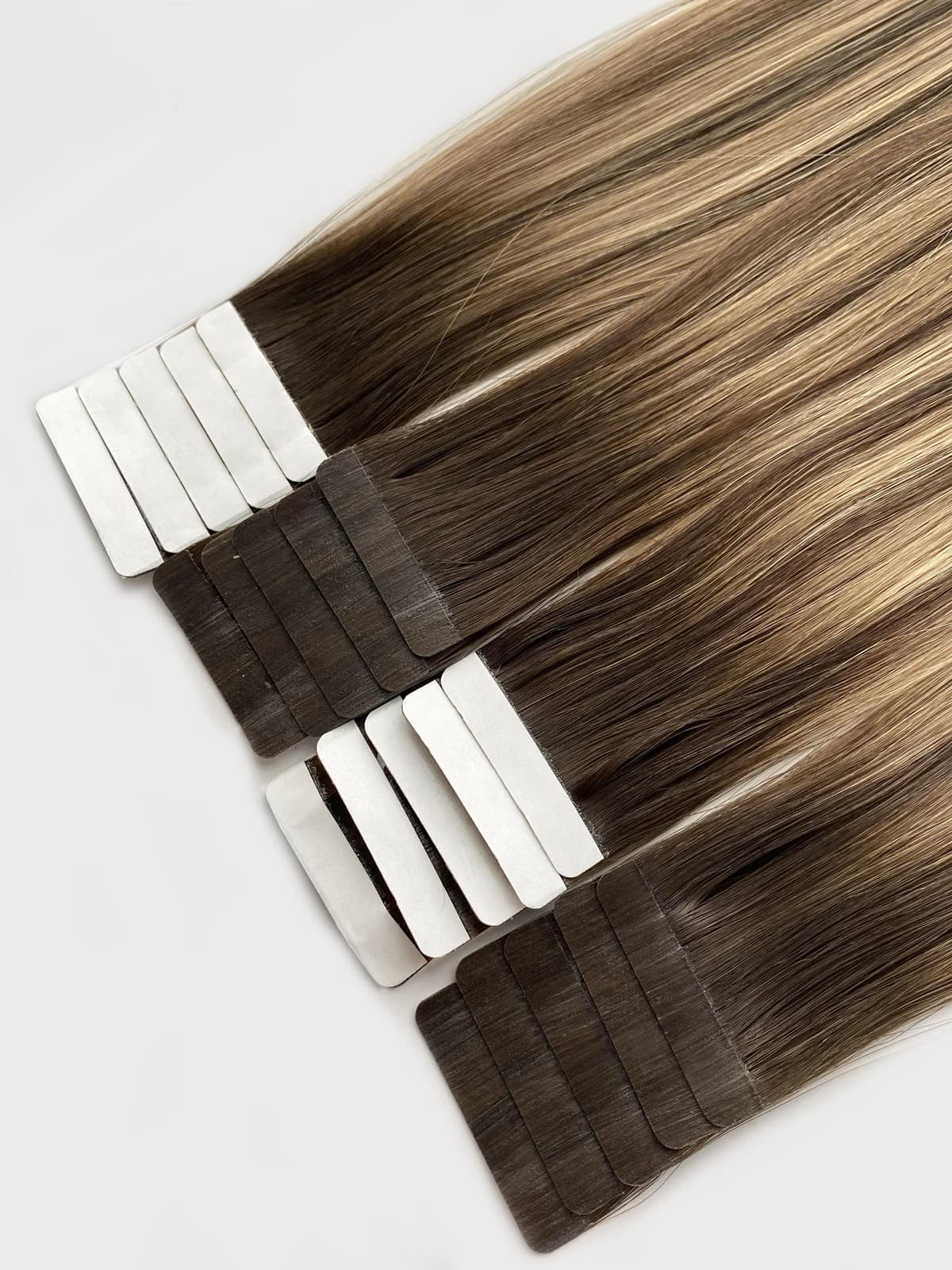
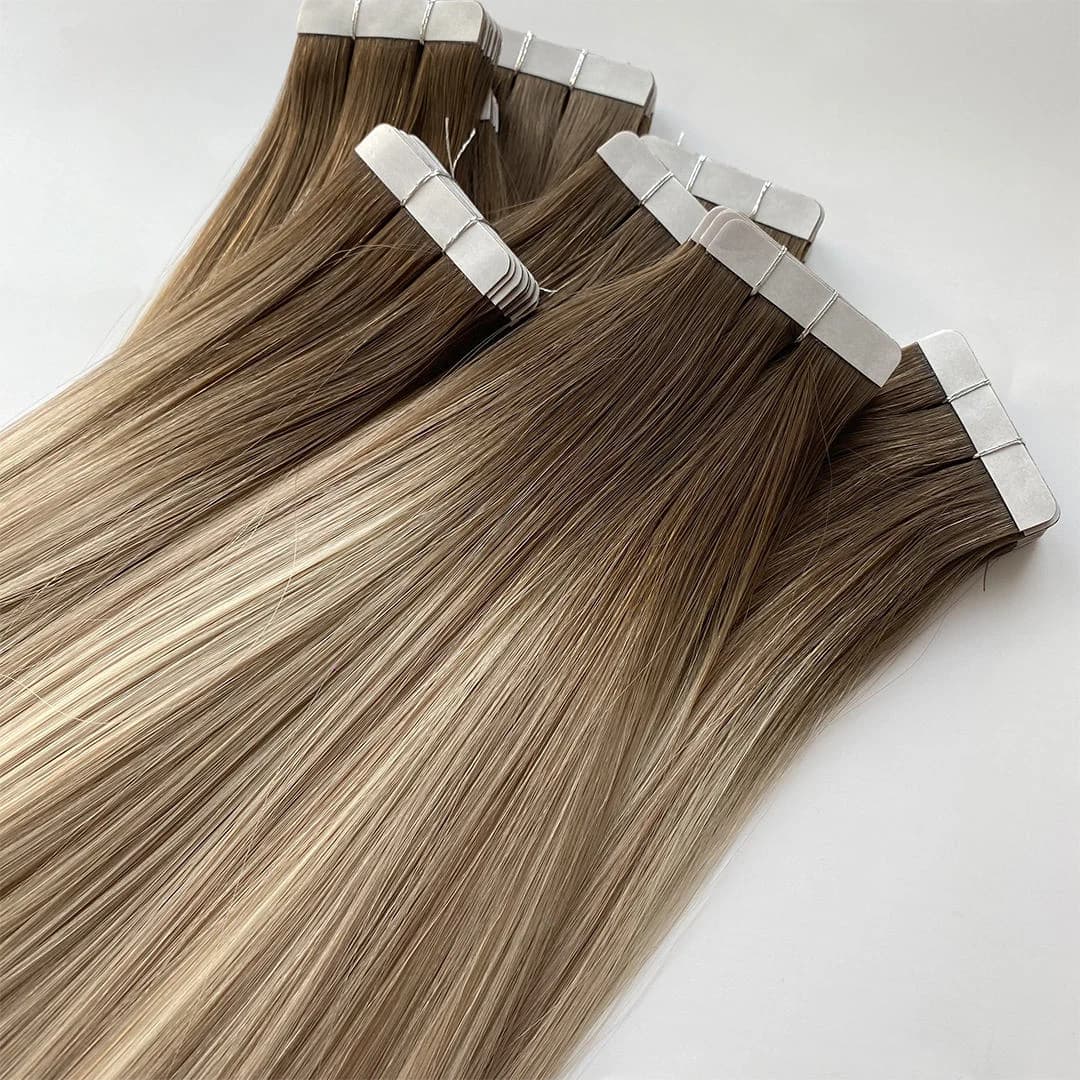
Review Regular Tape-In extensions against the intended service, then compare Invisible Tape-In as a separate construction. Ask for a close view of the exact attachment, dimensions, pack contents and the supplier's installation and removal guidance.
Clarify whether the stated piece count means individual panels or completed paired attachments. A description such as “40 pieces” is incomplete if the buyer assumes forty installed pairs and the supplier means forty individual panels. Record the counting convention in the quote.
Strand methods: approve the attachment and hair together
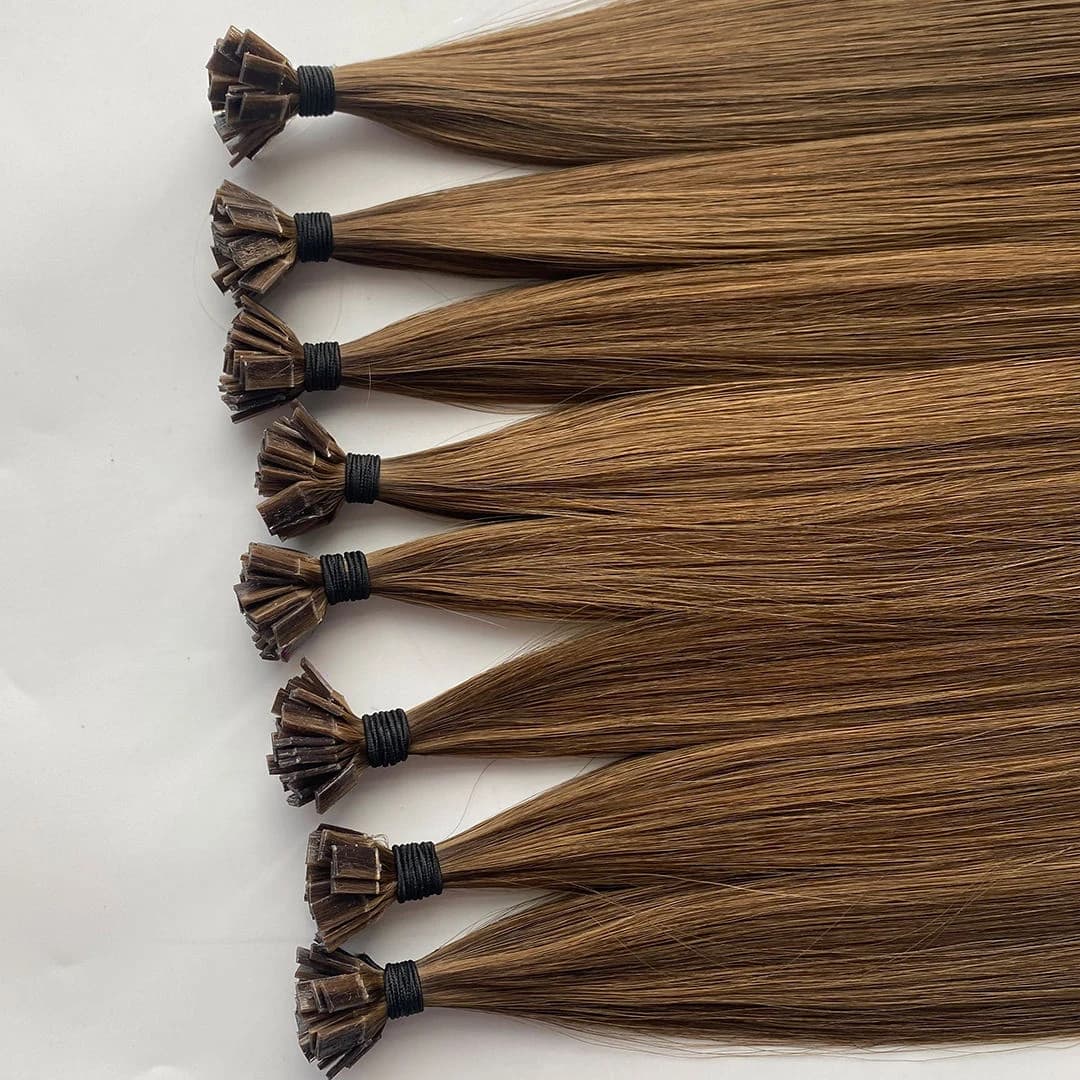
Our Flat Tip extensions use individual flat keratin bonds for heat-fusion programs. Ask about the supplied bond geometry and the required equipment, preparation and removal process. Do not assume a generic tool or temperature setting suits every bond.
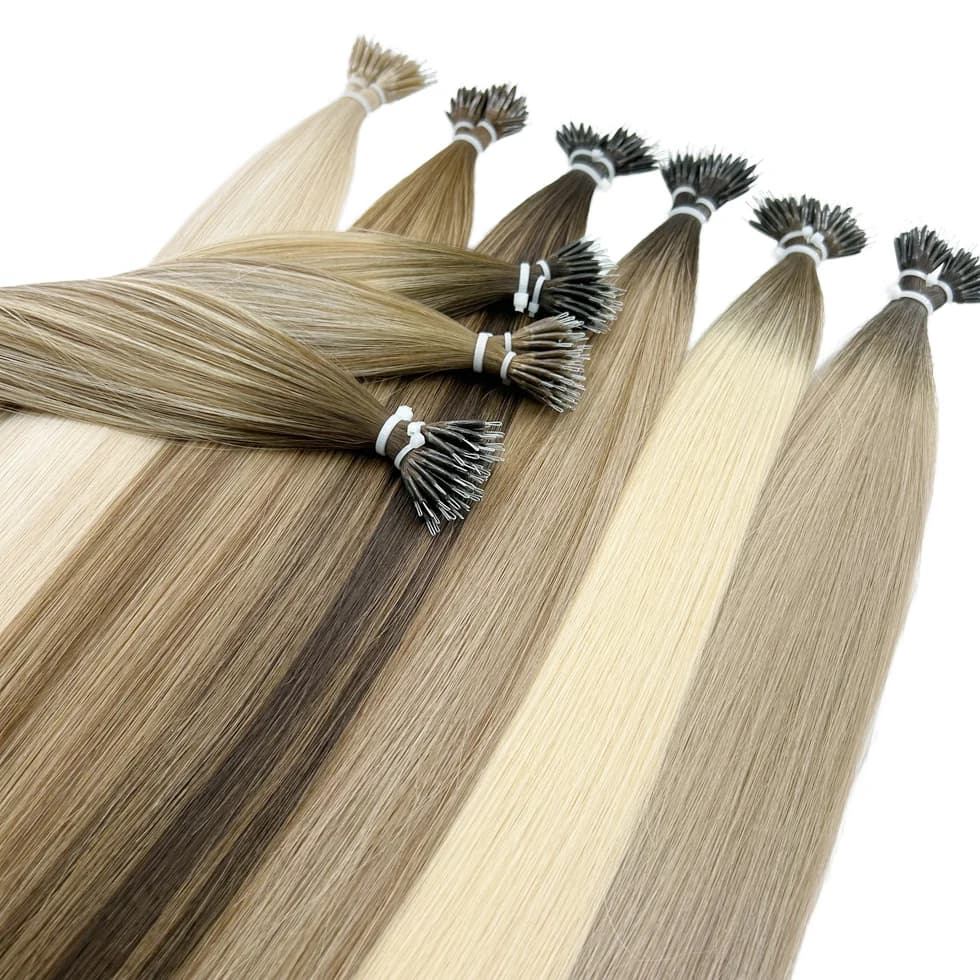
For Nano Ring extensions, compare the actual tip or loop with the proposed ring system. Confirm which components are included in the order and which must be sourced separately. A small attachment still needs a compatible fitting plan.
If your range uses wefts, Genius Weft specifications provide another comparison route. Choose a method because it serves the planned service, rather than because its pack photograph looks similar to an existing product.
Build a specification buyers and production can both use
Define measurable details and physical references
Send one purchasing brief to each supplier so differences become visible. Include the hair declaration, processing disclosure, attachment, texture, shade reference, length, weight, count and packaging. Ask the supplier to mark anything it cannot match.
Specify how length is measured, particularly for textured hair. Agree whether the measurement is taken with the hair gently extended and where it begins. Discuss end fullness using a retained sample or another agreed reference instead of relying only on terms such as “double drawn” or an unexplained grade number.
For color, combine a physical reference with clear photographs under consistent lighting. A rooted or highlighted product needs more detail than a single color code: root depth, transition position, tone and distribution can all affect the finished appearance. Screen images should support the conversation rather than replace sample approval.
Use a specification table in the quotation
| Order field | What the written record should contain |
|---|---|
| Product identity | Method, SKU and sample reference |
| Material and processing | Human-hair declaration, stated processing and relevant supporting evidence |
| Color and texture | Approved reference, root or highlight details, texture after the agreed care routine |
| Quantity | Grams, panels, strands, widths or complete sets, with the counting basis |
| Acceptance | Agreed check method, reference sample, tolerances and issue-reporting terms |
| Commercial scope | Minimums, packaging, price basis, dispatch estimate and destination |
For illustration, a 100-strand pack at a stated 1 g per strand totals 100 g on that stated basis. If the weight includes bonds, it should not automatically be presented as 100 g of hair fibers alone. This is an arithmetic example, not a universal product specification.
Plan a first wholesale order without overbuilding stock
Calculate MOQ by color and length
WinningWigs' published minimum for most extension types is 100 g per color and length combination. Invisible Tape-In differs: 200 g for solid or piano colors and 300 g for rooted colors, per color and length. Confirm the applicable product terms in your quote.
A three-color range in two lengths creates six color-length combinations before additional methods or textures are considered. Under a 100 g minimum for each combination, that illustrative assortment totals 600 g. Reducing the number of unproven combinations can be more useful than negotiating a larger mixed order without a sales plan.
Start with the methods your team can support and shades indicated by actual client consultations or existing sales. Our small-order and no-MOQ buying guide explains why a saleable pack, a sample arrangement and a per-SKU minimum are different purchasing conditions.
Compare the delivered order, not unequal packs
Normalize quotations to the same method, color, length, fullness reference and usable quantity. Add shipping, packaging charges, payment costs and applicable destination charges. Clarify who handles import clearance and which costs are included.
Keep introductory samples, routine reorders and custom development separate in the comparison. They may involve different pricing and production work. Request quotation validity, payment milestones and the process for approving changes before paying for the order.
Test representative samples and document what happened
Keep a baseline and a comparison record
A useful sample review begins before washing. Label the sample with its SKU, shade, length, pack contents and supplier reference. Photograph the attachment, mid-lengths and ends under consistent lighting. Record the starting weight and dimensions using the agreed measurement basis.
Use representative finished products rather than assuming one dark straight sample covers every blonde, rooted or textured option. If the first assortment includes different attachments, review each construction. Retain an untouched reference when practical so later observations can be compared with the starting condition.
Our human hair sample evaluation checklist helps structure those records. The aim is to make purchasing decisions reproducible, not to create a favorable photograph without context.
Separate routine handling checks from composition evidence
Follow the supplied care instructions and record products, washing conditions, drying method and heat use. Observe combing response, visible shedding, tangling, texture change and end condition after drying. Keep comparable samples under the same routine.
Factory testing should identify what was checked, which sample or batch was involved and what the result means. Washing and combing observations assess behavior under those conditions; they do not independently prove that every fiber is human hair or establish a guaranteed lifespan.
WinningWigs' published quality process describes visual review, combing, curl-consistency checks and shade comparison under standard inspection lighting. These practical checks support product review. Any additional test method, acceptance threshold or independent composition assessment should be agreed for the specific project.
Review attachment performance under the intended conditions
Have a trained installer assess fitting, blending, removal and the relevant care routine using the product-specific instructions. Document the tools, attachment components and preparation used. A loose-hair wash review does not validate a tape adhesive, fusion bond or ring installation.
Where a concern appears, record when it started and preserve the sample identity. Photographs, care notes and an intact reference are more useful for investigation than an unsupported conclusion that all products from a batch behave identically.
Connect shipment inspection with installation preparation
Check the shipment against the approved order
Before dispatch, agree on the shipment inspection scope and the records needed. Match product codes, color references, lengths, quantities, attachment details and labels to the purchasing brief. Record any substitutions or exceptions and resolve them before shipment release.
On arrival, inspect packaging and compare the received goods with the order before mixing stock or allocating it to appointments. Keep labels and photograph discrepancies promptly. Check reporting deadlines and the conditions for returns or investigation before washing, coloring or installing the hair.
Our shipment inspection checklist can help define the evidence to request. Inspection should connect the approved sample with the received product, not merely confirm that the carton has arrived.
Confirm timing and service readiness separately
Selected WinningWigs ready-stock extensions can dispatch the same day or next business day, subject to availability. Custom extensions typically dispatch in 5–13 working days from the order date; confirm timing for the exact specification. Dispatch estimates exclude transit and customs clearance.
Installation preparation includes shade matching, confirming the required quantity and checking that the attachment system and aftercare instructions fit the planned service. A manufacturer's minimum quantity is not a prescription for one client's installation. Have the stylist assess the service before ordering for a booked appointment.
Make private-label claims and reorders traceable
Keep the approved sample, material statement, processing disclosure, shade reference, attachment specification and packaging version together. Agree how changes in components or production specifications will be communicated. A reorder should identify an approved reference rather than ask for “the same quality” without a product code.
For branded bags, boxes and care cards, confirm packaging quantities, design approvals and any separate costs. Use our B2B services page to start that discussion. Avoid printing claims about origin, testing, processing or lifespan unless the evidence supports the wording for the product being sold.
Check the scope of any certificate or report supplied with the quotation. A document covering particular tested samples or restricted substances is not automatically evidence of fiber composition, donor traceability or every future production run. Ask what the document actually establishes and retain it with the order record.
An illustrative approval workflow for a salon range
Consider a salon preparing a rooted tape-in range in two shades. This is a planning scenario, not a reported customer result. The buyer first approves the actual tab construction and receives a material declaration tied to the sample references. The stylist then reviews both shades against client requirements and records the agreed care and fitting conditions.
If the root transition needs changing, the buyer requests a revised sample instead of treating the color change as already approved. Purchasing keeps the revision beside the quotation, confirms quantity per shade and length, and checks the dispatch plan before scheduling services. On receipt, the team compares labels and product details with those records.
This sequence gives each decision an owner and an identifiable reference. The same record can support a later reorder or a specific quality investigation without relying on memory or a loose collection of sales messages.
FAQ
Does 100% human hair automatically mean virgin or Remy?
No. The material category, processing history and directional alignment are different questions. Ask for a finished-product explanation and supporting references for the particular shade and construction. Do not infer virgin processing from a human-hair declaration.
How can a wholesale buyer verify the material claim?
Request a written fiber declaration tied to the SKU and order, then agree on suitable supporting evidence. If independent verification is necessary, discuss representative sampling and the assessment scope with a qualified laboratory. Appearance, softness and a wash test alone cannot establish a complete composition claim.
What is WinningWigs' minimum order quantity?
Most extension types start at 100 g per color and length combination. Invisible Tape-In starts at 200 g for solid or piano colors and 300 g for rooted colors, per color and length. Confirm sample arrangements, pack contents and the exact minimum in the quote.
Can I color or heat-style wholesale human hair extensions?
Obtain guidance for the finished product and its attachment. Processing history, shade and construction affect the options. Have a qualified professional evaluate and test an appropriate sample before further processing; the human-hair label does not guarantee unrestricted bleaching or heat use.
How long should the extensions last?
There is no single lifespan established by the words “100% human hair.” Condition, processing, attachment, installation and care all matter. Ask for product-specific guidance, document sample observations and distinguish a maintenance or removal schedule from the useful life of the hair.
What should I send for an accurate wholesale quotation?
Send your business details, destination, extension method, material requirement, shade references, lengths and quantities per combination. Include pack weight or piece count, sample needs, packaging and target timing. Ask the supplier to identify any unconfirmed requirement.
Conclusion
Choose 100% human hair extensions wholesale through a documented specification, not a material label alone. Compare the fiber declaration, processing disclosure, attachment, pack contents and representative sample results before judging the price. Connect those approvals to shipment inspection and future reorders.
At WinningWigs, clear customer requirements give the sourcing conversation a useful starting point. Share the method and assortment you intend to support so we can discuss the appropriate product references and confirm the order terms.
LET'S TALK ABOUT YOUR PROGRAM
Ready to turn product questions into a clearer brief?
Share your target customer, product category and requirements. Our team will help structure the next sample or quotation conversation.