
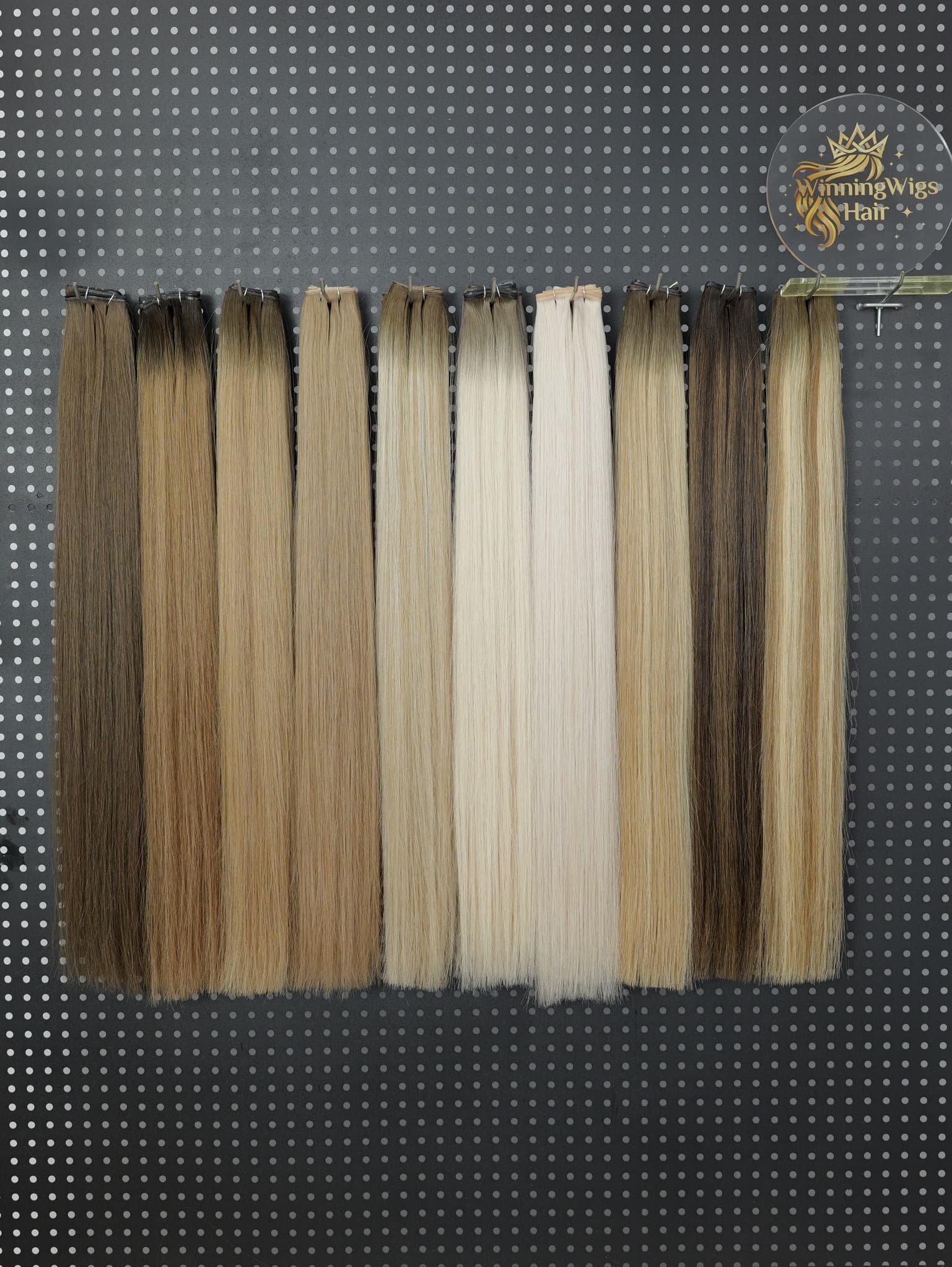
Introduction: daily care begins with the exact product and method
Human hair extensions are not maintained in exactly the same way as natural hair. The correct routine depends on whether the hair is a removable clip-in set, tape-in, weft, bonded system, topper or another construction. It also depends on the installer’s instructions, the wearer’s routine, chemical services, heat styling and the condition of the natural hair and scalp.
For that reason, the first daily-care rule is simple: identify the product and follow the product-specific and installer-specific instructions first. This guide gives a practical framework for buyers, salon teams and retailers. It does not promise a fixed lifespan, a universal wash schedule or identical results. Persistent pain, irritation, breakage concerns or scalp symptoms are reasons to stop treating the issue as ordinary care and contact an appropriate qualified professional.
Build a simple daily routine
Morning: inspect before styling
Before brushing or styling, check for tangles, displaced attachments, unusual tightness and product build-up. Start at the lower lengths and work upward with a tool suitable for the extension construction. Support the hair near the attachment area rather than pulling through resistance. The aim is to remove small tangles before they become a difficult removal problem.
For salon-installed systems, do not force a brush through an attachment, seam, tape tab, ring or bond. If the client cannot comfortably maintain the area, the next step is not more force: ask the installing professional for method-specific guidance. Clip-in wearers should also check each clip, seam and weft before placing the set; see our clip-in extension comparison guide for product-selection details.
During the day: reduce avoidable friction
Hair extensions can be affected by repeated rubbing, high heat, swimming, exercise, weather and product residue. The right response is not to avoid normal life; it is to plan for the selected product application. Keep loose hair from catching on bags, collars and accessories. Use a gentle, low-tension style when the product instructions recommend it. Carry a small suitable brush if the wearer will be away from home for a long day.
Avoid treating a product as indestructible because it is described as human hair. Hair can vary in response to handling, heat, colouring and washing. A brand, salon or retailer should give clear care boundaries rather than promising that a product is maintenance-free.
Evening: detangle and prepare for rest
Detangle before sleep. For removable extensions, remove and store them according to the brand’s instructions; do not sleep in a product that is intended to be taken out. For professionally installed extensions, follow the installer’s advice on keeping hair smooth and contained for sleep. Do not use an overnight style that creates discomfort or additional pull at the attachment area.
Daily handling is also the best time to notice a change. A new tangle, discomfort, visible attachment issue or shade concern should be recorded clearly, with the product identification and the relevant use context, before anyone assumes the cause.
Washing and drying: protect the attachment as well as the hair
Get a QuoteDo not copy a generic wash frequency from a social post. Ask the supplier or installer what applies to the exact construction and the wearer’s scalp, lifestyle and product use. Before washing, detangle gently and confirm whether the method has any restrictions around attachment areas, oils, conditioners or products.
When washing is appropriate, use water flow and hand movement that do not bunch, rub or twist the hair into a knot. Cleanse the scalp and lengths as instructed, then rinse thoroughly. Keep products and conditioner use consistent with the brand’s method-specific advice, especially near tape tabs, bonds, rings or seams. Product residue can make later inspection and care more difficult. Buyers comparing a tape-in option can also review our tape-in value and product guide.
After washing, press excess water out with a towel rather than aggressively rubbing. Follow the required drying method before sleeping, exercising or applying heat. If the extension is professionally installed, incomplete drying around an attachment is not a minor detail to guess about; the installer should explain the correct routine for that system.
Use heat and styling with a clear purpose
Heat tools, colouring and chemical services are not interchangeable with a basic daily routine. Check the supplier and salon guidance for the exact hair and construction. Use only the level of heat and styling process the product instructions support. Test a discreet section where appropriate and stop if the hair responds unexpectedly.
For a salon team, record what was done to the extension hair separately from what was done to natural hair. This protects the client record and helps investigate a later question about texture, dryness, colour or handling. For a retailer, do not write “heat safe” or “colour safe” unless the product specification genuinely supports the claim and its limits are stated.
Care differences by product application
| Product application | Daily focus | Question to ask |
|---|---|---|
| Clip-ins | Detangle, inspect clips, remove and store as directed | Is the set intended for same-day removal? |
| Tape-ins | Keep care around tabs consistent with installer guidance | What products or handling should stay away from the tabs? |
| Wefts | Keep the seam and installation area accessible for inspection | How should the hair be brushed around the foundation? |
| Bonds or links | Avoid force around individual attachment points | Who should inspect, maintain and remove the system? |
| Retail/private-label range | Give customers product-specific care information | Does the care card match the exact SKU and application? |
The table does not determine suitability or replace professional assessment. It helps a buyer ask practical questions before treatment, installation or purchase.
Know when daily care is not enough
Get a QuoteDaily maintenance cannot solve every issue. Do not ignore persistent pain, scalp irritation, a feeling of excessive tension, noticeable breakage, attachment slippage, unusual matting or an installation that feels wrong. The American Academy of Dermatology advises that hairstyles which hurt are too tight and should be loosened or changed. Read the guidance. For the practical selection and comfort questions that sit alongside this medical boundary, see our hair extension safety guide.
For a customer concern, collect useful facts before reaching a conclusion: product code or order reference, construction, installation date where applicable, photographs in good light, description of the issue, care products used and any relevant salon service history. This supports a fair conversation with the installer, retailer or supplier. It does not prove a cause by itself.
A weekly review keeps daily care from becoming guesswork
Daily handling is about small, repeatable actions. A short weekly review adds the context that a rushed morning routine can miss. It should not become a home inspection program or replace a maintenance appointment, but it can help the wearer decide whether the current routine is working and whether professional guidance is needed.
Review the product reference and visible condition
For removable extensions, inspect the clips, seams, wefts and ends in good light before the next use. Look for a change that affects handling: a damaged clip, a seam that no longer lies as expected, a persistent tangle, product residue or a shade issue that was not visible at first. Store the set cleanly and in the orientation recommended by the brand so the next application starts from an organised condition.
For installed extensions, do not try to repair, tighten, remove or reposition an attachment at home unless the method-specific professional instruction explicitly permits it. Instead, make a concise note of what feels or looks different. The purpose is to give the installer a useful description, not to diagnose a technical issue from a single observation.
Review the care products and routine
List the shampoo, conditioner, leave-in product, heat tools and styling products used during the week. This is particularly useful when a client changes products at the same time that they notice dryness, build-up or tangling. A record does not prove that one product caused a problem, but it prevents the follow-up conversation from relying only on memory.
Ask whether each product is being used where the manufacturer or installer intended. A conditioner that is helpful on lengths may not be appropriate at a specific attachment area; conversely, an aggressive cleansing routine may not be appropriate for the selected hair and method. When in doubt, return to the written product guidance or ask the person responsible for the installation.
Review comfort and lifestyle fit
The product should fit the wearer’s real week: work, sleep, exercise, travel, styling habits and ability to attend a maintenance appointment. If someone repeatedly avoids brushing, cannot dry the hair as instructed, experiences discomfort during ordinary activity or feels anxious about attachment points, the current method or service plan deserves review. Choosing a simpler routine can be a better decision than forcing a product into an unsuitable lifestyle.
For salons, this is also a useful consultation question at the next visit: what part of daily care was easy, and what part was unclear? The answer can improve staff guidance, care cards and product selection without inventing a customer-success story.
Review what to communicate to a supplier
A B2B buyer should distinguish a product question from a general complaint. If a range is being evaluated, record the exact SKU, shade, length, texture, construction, packaging version and approved sample reference. Add photographs and a neutral description of the visible issue. If the concern is about delivery, include the shipment record and carton/pack condition. If it is about product application, include the installation preparation and care context without making a conclusion about cause.
This type of record makes factory testing and shipment inspection useful in their proper role. They can show what product reference was checked and how it was packed; they do not convert a later client-care observation into a confirmed factory result. A credible supplier discussion separates those questions and resolves each with the evidence available.
Travel, exercise, swimming and seasonal care
Plan before the activity, not after a tangle appears
Travel, workouts, swimming and changing weather do not automatically rule out human hair extensions. They do, however, make a method-specific care plan more important. Before a trip or activity, ask whether the selected construction should be removed, protected, rinsed, dried or checked afterward. A removable set should be stored in its intended case rather than left loose in a bag. An installed system needs the routine confirmed by the person who installed it; the wearer should not assume that advice for clip-ins also applies to tape-ins, wefts, bonds or links.
For travel, bring the brush and products that already suit the product, rather than trying unfamiliar products for the first time away from home. Keep a note of the product name, construction and installer contact details if the trip is long or involves a scheduled maintenance appointment. This is a practical preparation step, not a claim that a product is suitable for every climate or itinerary.
After exercise, swimming or heavy perspiration
The useful questions are whether the hair has become tangled, whether the attachment area feels different and whether the product can be dried and checked according to its instructions. Do not leave damp hair compressed under a hat, in a bun or against a pillow for convenience. Rinse, cleanse, dry or book professional advice only as the exact product and installation guidance requires. If the wearer notices looseness, persistent discomfort, unexpected matting or an attachment change, document it and contact the installer rather than attempting a repair.
Salon teams can improve this experience by asking about regular exercise, water activities and travel during the initial consultation. A retailer can do the same through a concise care card: state the product construction, the customer-service route and the fact that method-specific instructions take precedence over generic online advice. This is more credible than claiming a product is universally “gym-proof” or “swim-proof.”
Adjust handling when weather and routines change
Seasonal changes can alter how often a wearer uses heat tools, wears hats, spends time outdoors or washes their hair. The response should be observation and gentle handling, not automatic over-treatment. Review the condition of the lengths, the accessibility of the attachment areas and whether the existing routine still fits the wearer’s schedule. If a routine becomes difficult to maintain, discuss a revised service plan or a different product application at the next professional review.
For B2B programs, these recurring questions are useful customer-research signals. Track them without inventing a trend: record the method, product reference and question asked, then update a care card or FAQ only after the product team and relevant professional users have confirmed the answer. This keeps customer education accurate as the range and target market develop.
How a salon or retailer can make daily care easier
Care guidance should be part of the product program, not an afterthought. Before a salon stocks or installs a new range, confirm the intended product application, construction, packaging, care-card content and route for customer questions. Installation preparation should include clear product identification, shade/length confirmation and a discussion of the home routine. Review the available human hair extension options before creating a method-specific care card.
For B2B buyers, an approved sample should connect to the care information provided to customers. Factory testing and shipment inspection can check product reference, visible construction, shade grouping and packing against an approved brief. They do not certify an individual’s home-care outcome. Keep that boundary clear in marketing and staff training.
A useful care card can state the product name or SKU, attachment type, basic daily handling, washing and drying instructions supplied for that method, storage direction if removable, and when to contact a professional. It should avoid unsupported phrases such as “no shedding,” “damage-free,” or “suitable for everyone.”
FAQ
How often should I wash human hair extensions?
There is no reliable universal interval. Follow the exact product and installer instructions, then adjust the care conversation to the wearer’s scalp, activity, product use and extension method.
Can I brush human hair extensions every day?
Gentle detangling is commonly part of daily care, but the brush type and technique must suit the construction. Support the hair near the attachment and do not pull through tangles or attachment points.
Can I sleep with human hair extensions?
Only if the product is designed and professionally installed for wear during sleep. Removable sets should be removed and stored as directed. For installed systems, follow the installer’s specific night routine.
What should I do if extensions feel painful or too tight?
Do not treat pain as normal adjustment. Contact the professional who installed the product promptly, and seek appropriate medical guidance for persistent symptoms or scalp concerns.
What should a retailer include with an extension order?
Include product identification, care information matched to the construction, stated pack contents, a route for customer questions and any method-specific boundaries confirmed for that SKU.
Conclusion: daily maintenance is a product-and-service responsibility
The best daily maintenance routine is specific, gentle and realistic. Identify the construction, inspect and detangle carefully, wash and dry according to method-specific guidance, and act early when the product feels uncomfortable or unsuitable. For brands and salon teams, the same discipline means connecting samples, customer requirements, care cards and product records so that customers receive accurate information after purchase.
LET'S TALK ABOUT YOUR PROGRAM
Ready to turn product questions into a clearer brief?
Share your target customer, product category and requirements. Our team will help structure the next sample or quotation conversation.