
To make a wig look natural, start with a correctly fitted cap and believable placement. Then assess how the lace meets the skin, where the part sits, how the hair is distributed and whether the color suits the intended look. Finish with a suitable cut and product-specific styling. More glue, less hair or a higher price will not correct every problem.
A convincing result comes from these details working together. An attractive wig on a mannequin can still need fitting, while a close-up of lace on a white backing cannot show how it will blend on a wearer. Evaluate the finished appearance in ordinary lighting and during gentle movement.
This guide provides a practical sequence for wearers, wig salons and brands. WinningWigs' product photographs illustrate details to review; they are not before-and-after evidence or a guarantee of an identical result for every customer.
The quickest way to improve a wig's natural appearance
Work through the following sequence before making permanent alterations:
- Check the cap size and arrange existing hair without concentrated bumps.
- Position the front and ear tabs according to the selected construction.
- Compare the lace and any liner against the area they will cover.
- Choose a part within the cap's usable parting space.
- Balance front, crown, side and rear coverage.
- Review color and root contrast in daylight and indoor light.
- Refine the cut and styling with appropriate professional support.
- Check the result at normal viewing distance and during movement.
This order helps distinguish a fitting problem from a hair or color problem. If an adjustment solves the issue, reassess the whole appearance before adding another change. Keep the return conditions in mind before cutting lace or altering the hair.
Start with cap fit and a smooth foundation
Check size before tightening the straps
Measure circumference, front-to-back and ear-to-ear dimensions using the supplier's method. Compare them with the exact cap rather than assuming that “average” means the same size across brands. Explain whether the wig will be worn over existing hair, a liner or a grip.
A cap that is too large can create folds or lift. A cap that is too small may pull away from its intended position. Excessive strap tension can mask a sizing problem without correcting the shape. Check the top, temples and nape, including how the cap sits with glasses.
The American Cancer Society's wig guide recommends checking the brand's sizing and taking fit changes into account when hair is lost. For treatment-related hair loss or scalp sensitivity, seek an experienced fitter and relevant care-team guidance.
Distribute existing hair without creating a mound
Installation preparation should suit the amount and texture of the wearer's own hair. Arrange it evenly using a comfortable method compatible with the selected cap. A bulky knot beneath the crown can raise the silhouette even when the wig's density is appropriate.
Choose a liner for the actual fitting plan. Its color or edge may be visible through some top constructions, so inspect it with the wig in place. Do not tighten hair preparation or accessories excessively just to flatten the outline.
Make the hairline believable before trimming the lace
Place the front for the individual wearer
Use the wearer's familiar hairline or an agreed fitting reference as the starting point. Assess the front contour, temples and ear tabs together. Moving the wig too far forward can change facial proportions; pushing it back to hide an unsuitable lace edge can create a different mismatch.
There is no universal forehead measurement that makes every wig look realistic. Have a fitter assess the position while the wearer is upright and facing forward. Check it again when the hair is tucked back or directed away from the face.
Judge lace against skin, not its display backing
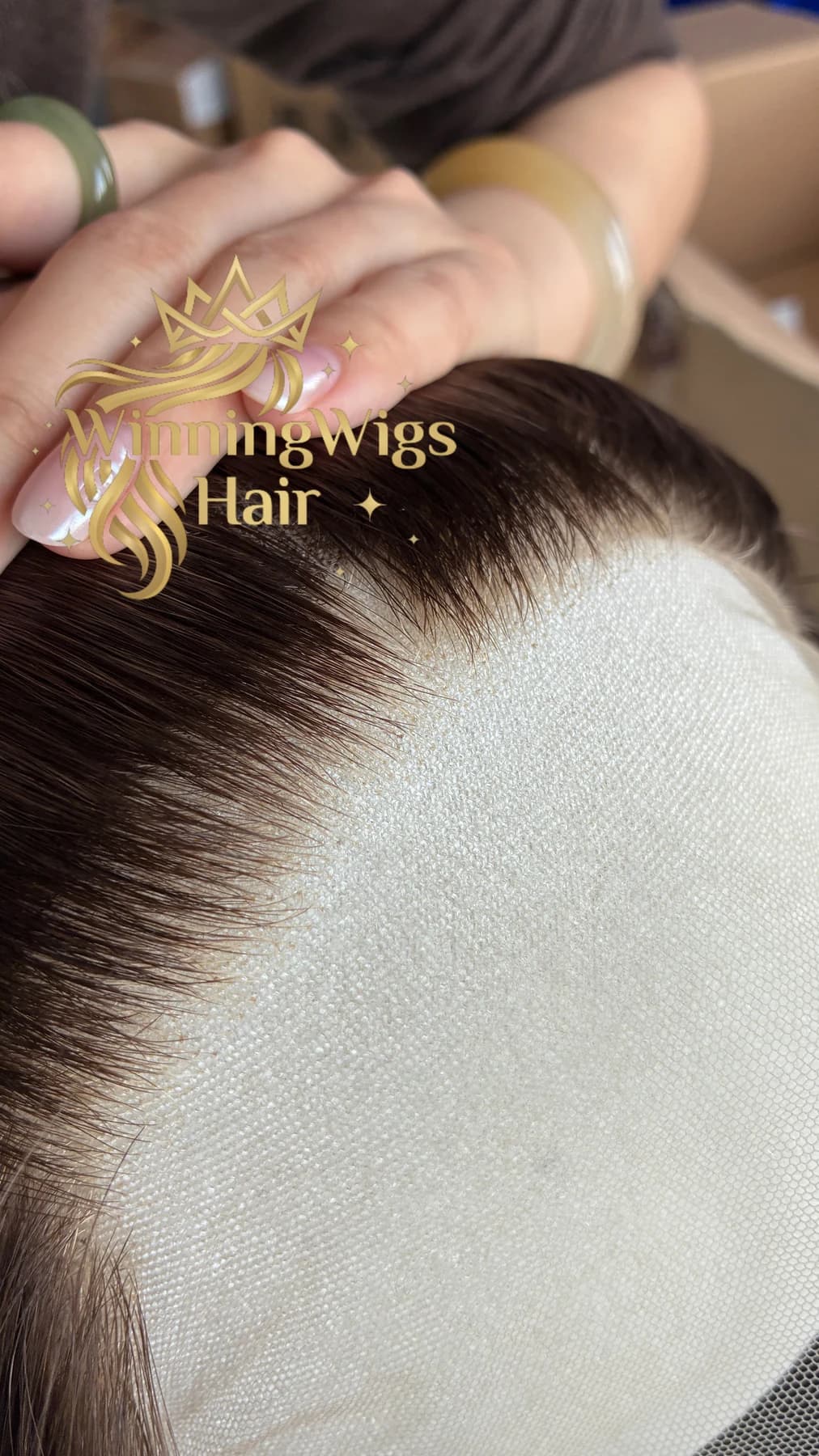
The lead photograph shows brown hair and lace held over a white textured surface. That helps reveal the lace and front distribution, but the backing changes what is visible through the mesh. It does not establish an invisible edge or a particular match on skin.
Ask to see the actual lace against the relevant skin area during fitting where possible. Compare its tone, edge and knot appearance in diffuse daylight and ordinary indoor lighting. “HD” or “transparent” describes an offering; it does not guarantee the same blend for every complexion, liner or application.
Separate customization from routine preparation
Check whether the supplied lace is pre-cut or requires trimming, and follow the product-specific instructions. A trained wig professional can assess the contour before cutting. Do not automatically copy a tutorial's cutting line, plucking pattern or bleaching process onto a different construction.
Bleached knots, a carefully distributed front and a suitable lace tone address different visual details. Further processing is not always needed and can change the product. Confirm what is already supplied and which alterations affect returns before proceeding.
Create a part that suits the cap and hairstyle
Find the usable parting area
A lace front does not automatically provide unrestricted parting across the top. Ask whether the wig has a fixed part, a defined lace panel, a monofilament area or another construction. Review an interior photograph and confirm the actual usable dimensions.
Choose a center or side part that works within that space and suits the intended hairstyle. Moving beyond the supported area can reveal a seam or weft even if the front looks convincing. A wider-looking part is not automatically more natural.
Adjust direction before removing hair
Gently arrange the hair in the intended direction using the supplied care and styling guidance. Check the view at normal distance before deciding that the part needs widening. Strong root lift or a sharply set direction may be a styling issue rather than excessive density.
Avoid pulling out hairs to imitate a different cap. For concerns about knot visibility, ask the fitter to compare the base, liner, hair color and lighting together. Cosmetic blending products, if considered, should be compatible with the base and removable under the recommended care routine.
Balance density without exposing the base
Assess the hairline, crown, sides, nape and ends separately. Someone may want a restrained front with fuller ends, while another wearer prefers an even, modest silhouette. A single density percentage does not describe all those choices.
Compare similar cap sizes, lengths, cuts and textures. Waves, root direction and layering affect apparent volume, while end fullness is a separate characteristic. Do not assume reducing hair everywhere will improve the result.
If the wig looks too full, check cap seating and the cut first. If a density revision is appropriate, identify the specific area and retain adequate coverage elsewhere. Our low-density wig guide explains how to assess distribution without relying on percentage labels alone.
Choose color and roots for the intended look
Compare more than the blonde or brunette label
Specify the base shade, warm or cool direction, root depth, root length and placement of lighter sections. A rooted finish can create the desired dimension, but a root that is too dark or extended may not match the wearer's reference.
The two blonde wigs below show different color and root treatments on mannequins. Neither represents a universally better choice. Their visible front lace also indicates that final trimming and fitting still need separate assessment.
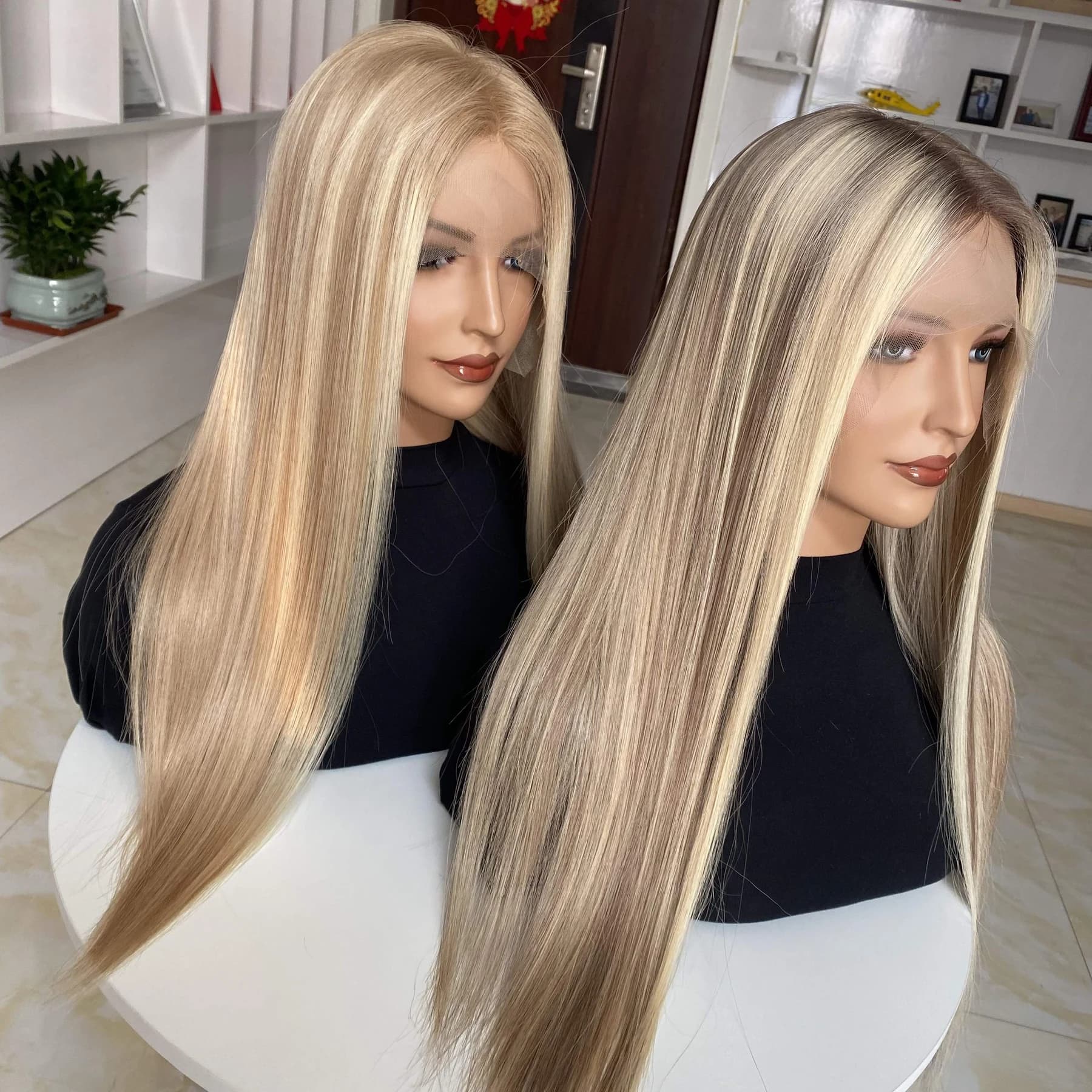
Use a physical swatch or approved sample when possible. Compare it under the same lighting as the wearer's reference. Screen settings, camera exposure and showroom lighting can change apparent tone, so a single photograph should support rather than replace color approval.
Check the texture after the intended care routine
A polished showroom finish may not be the everyday style the wearer wants. Ask whether waves, straightness or root lift in a photograph are temporary styling or the supplied texture. Review a sample after the recommended wash, drying and styling routine before approving a repeat-order reference.
For general product selection alongside these fitting details, use our human hair wig buying guide. A familiar-looking shade and manageable texture usually provide a more useful brief than requesting the same appearance as an unrelated model photograph.
Refine the cut and styling around the wearer
Assess face-framing sections, bangs, perimeter and how the hair falls behind the ears with the wig in its intended position. A cut made only on a display head may sit differently on the wearer. Agree what should remain unchanged before removing length or fullness.
Use heat only where the finished product's instructions allow it. Human hair and different synthetic fibers do not share one universal temperature limit. Confirm the tool, setting and base-handling instructions rather than assuming a hot comb or steam treatment suits every wig.
For excessive shine or an overly rigid finish, ask about compatible care and styling products. Unverified household treatments can leave residue or alter the fiber. A natural appearance does not require every strand to sit identically; aim for the intended movement without covering a fit problem with heavy product.
Troubleshoot the detail that looks unnatural
| What you notice | What to check first | A practical next step |
|---|---|---|
| The crown looks raised | Cap seating, existing hair and root direction | Smooth the foundation and reassess before reducing density |
| The lace edge is obvious | Lace tone, position, liner and attachment | Have the actual combination reviewed during fitting |
| The part looks too dark or abrupt | Base, liner, knots and parting limits | Compare the top under consistent light before changing hair |
| The wig looks unusually thick | Cut, distribution and cap construction | Identify the specific area for a professional adjustment |
| The color looks wrong near the face | Undertone, root contrast and highlight placement | Check a physical reference in daylight and indoor light |
| The cap appears when hair moves | Coverage, size and permitted styling | Return to the intended style and assess the exposed area |
| The style shifts during ordinary movement | Fit, adjustment and intended attachment | Review security before styling or adding more product |
Change one variable at a time and keep a brief record. A clear photograph showing the concern and the cap position is more useful for a supplier discussion than “it looks fake.” Avoid further alterations while an unresolved return or quality concern is being assessed.
Keep the natural finish through maintenance
Follow the finished wig's care instructions. Detangle gently, avoid unnecessary rubbing, support delicate lace and dry the cap as recommended. Residue, tangles and changes in styling can affect appearance without indicating a change in the original density specification.
Jon Renau's human-hair care guidance explains why careful handling and keeping conditioning products away from hand-tied bases matter. Those principles provide context, but the chosen product's own instructions should determine its washing, drying and heat routine.
If the design uses adhesive, follow the adhesive and base manufacturer's application and removal instructions. Do not increase product quantity to compensate for an unsuitable fit. Seek professional help with persistent fit or scalp concerns rather than continuing an uncomfortable application.
For longer-term condition checks and replacement decisions, see how long human hair wigs last. The guide separates changes in the hair from wear in the cap and attachment components.
Turn the desired result into a sample and inspection brief
Record the appearance and construction together
For salons and brands, translate customer requirements into a repeatable brief: cap measurements, existing-hair preparation, front contour, parting position and area, density distribution, color reference, cut and maintenance expectations. Include photographs of the actual concerns and the desired everyday style.
WinningWigs' Invisible Hairline Wig is a construction reference for a hairline-focused discussion. The HD Lace Top Wig provides another top-construction reference, while the Custom Wig program supports a more specific development brief. These links do not identify the exact models or specifications in the supplied photographs.
Define testing and delivery checks honestly
Our published quality process covers visible-condition review, combing, curl consistency and color comparison under standard inspection lighting. Agree what factory testing and sample review should cover for the particular project, including any cap, hairline or parting records required.
During sample approval, record fit and styling conditions and photograph the front, top, sides and back. Mark requested changes clearly. For shipment inspection, compare the product identifiers, cap details, shades, quantities and finish with the approved reference before release and again on receipt.
An illustrative revision might keep an accepted cap and color while changing the front distribution. That is a planning example, not a reported customer outcome. Recheck the revised sample under the same conditions; do not infer a guaranteed wear result from a photograph or one handling check.
FAQ
How can I make a wig look natural without glue?
Choose a construction intended for the attachment method, confirm the fit and use its adjustments as instructed. Refine the position, parting, color and styling. A glueless label does not guarantee that every cap fits securely or needs no preparation.
How do I make the part look more realistic?
Work within the cap's intended parting area and assess hair direction, base appearance and liner together. Check ordinary viewing distance before widening the part. Ask a qualified fitter before removing hair or chemically altering the knots.
Should I pluck or bleach every lace-front wig?
No. Establish what customization the finished product already includes. Further plucking or bleaching may be unnecessary and can expose or affect the base and hair. Have the actual construction assessed before making changes that cannot easily be reversed.
Can a synthetic wig look natural?
Yes, a suitable synthetic wig can provide a convincing appearance. Fit, construction, cut, color and styling all matter. Check the specific fiber's care and heat restrictions; a routine suitable for a human-hair wig may be unsuitable for synthetic hair.
Is lower density always the answer?
No. Excessive crown height can come from cap fit, preparation or styling. Reducing density indiscriminately may reveal the base. Identify the area causing the concern and preserve the coverage required for the intended hairstyle.
What should I send for a professional recommendation?
Send measurements, the cap and attachment type if known, front and interior photographs, the preferred style, shade, length and the concern you want to address. Business buyers should add sample needs, quantities and destination for a focused discussion.
Conclusion
Making a wig look natural is a sequence of fitting and appearance decisions. Establish the foundation and position, then refine lace blending, parting, density, color and styling. Check the result in everyday conditions before making further alterations.
For wearers, that sequence creates a clearer route to a manageable finish. For salons and brands, recording the approved construction, sample and preparation helps turn an appearance preference into a specification that can be reviewed and reordered.
LET'S TALK ABOUT YOUR PROGRAM
Ready to turn product questions into a clearer brief?
Share your target customer, product category and requirements. Our team will help structure the next sample or quotation conversation.