
Introduction
Lace top wigs use lace across a defined area of the upper cap, with hair attached through that material to support a scalp-like parting and hair movement. The term describes the top construction. It does not, by itself, confirm a lace front, an entirely lace cap, human hair, a glueless fit or unrestricted styling.
For a wearer, the decision is whether the selected construction provides the appearance, fit and routine they want. For salons and brands, the task is to turn those preferences into a clear specification that can be sampled, inspected and reordered.
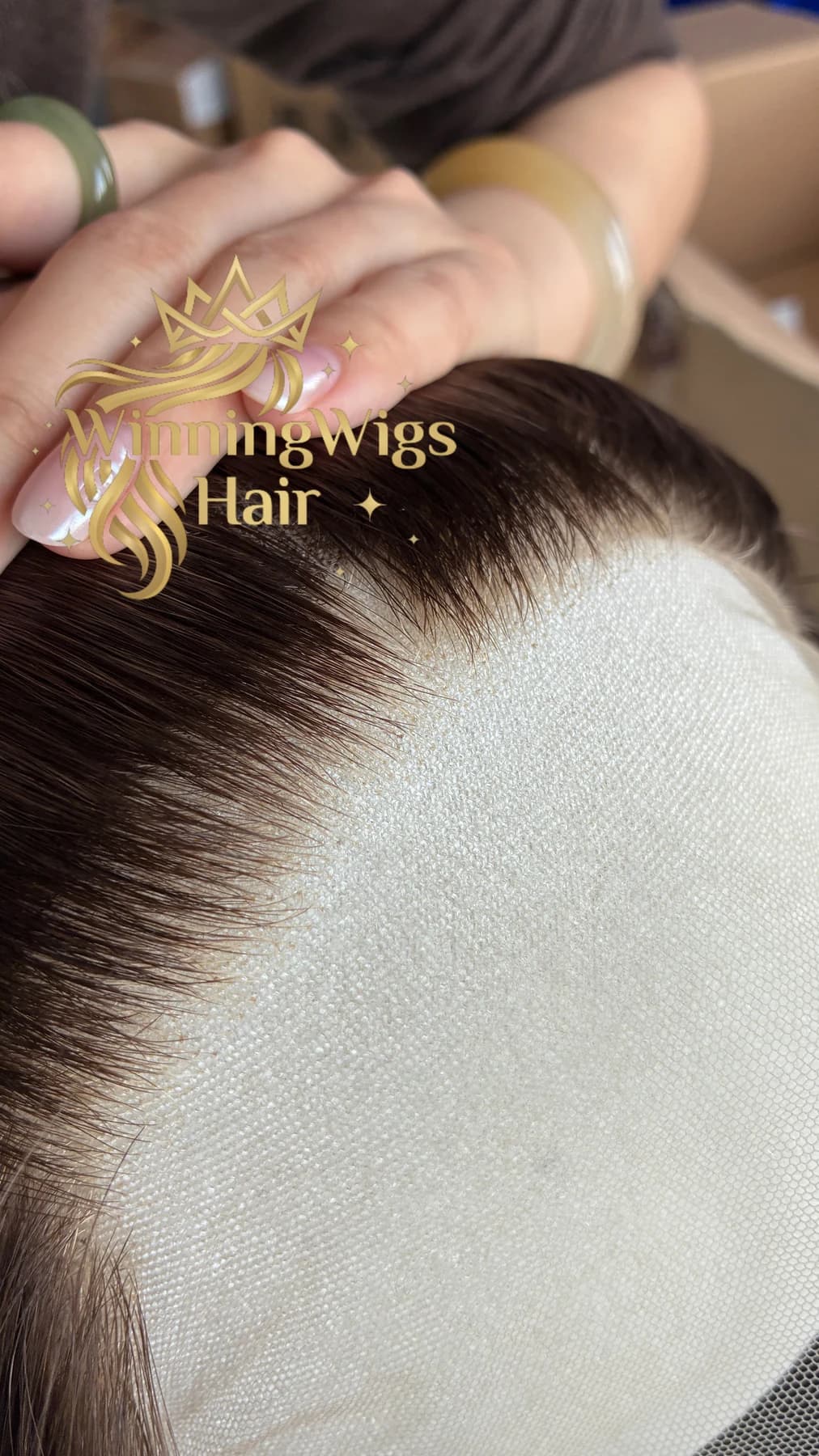
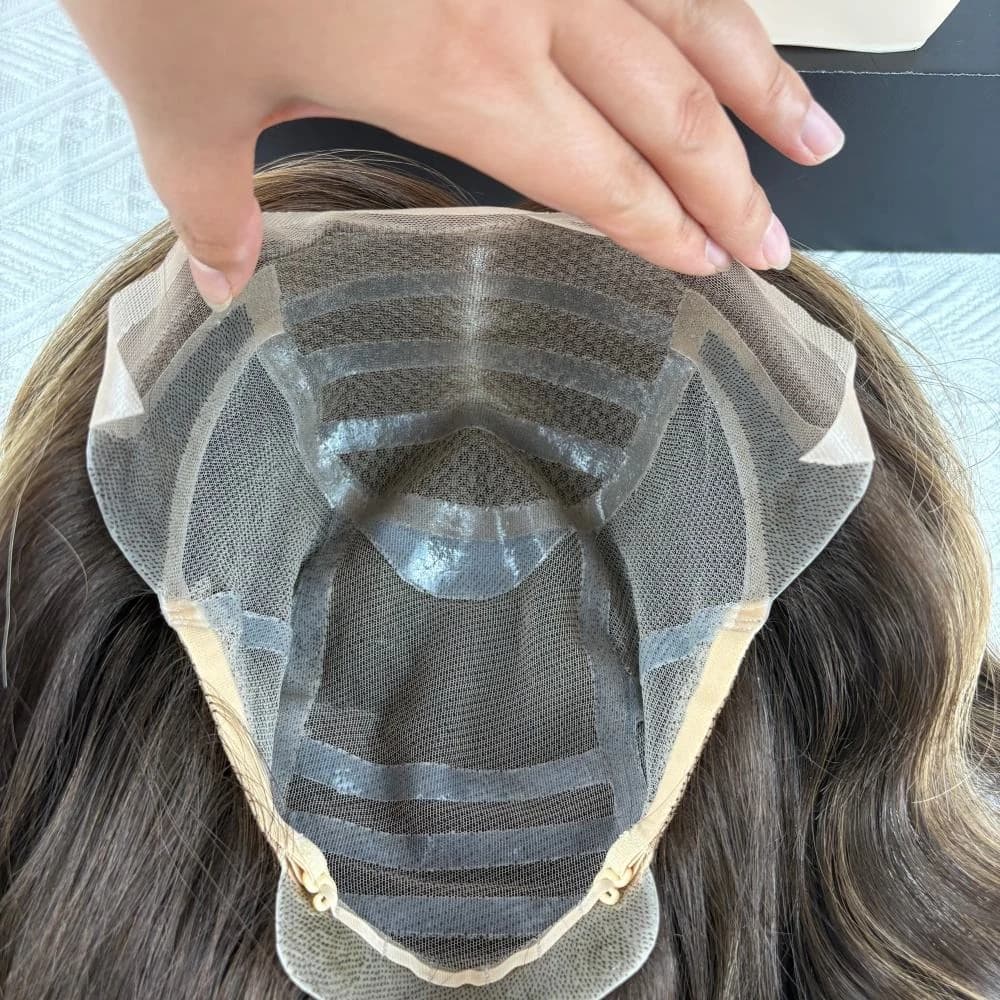
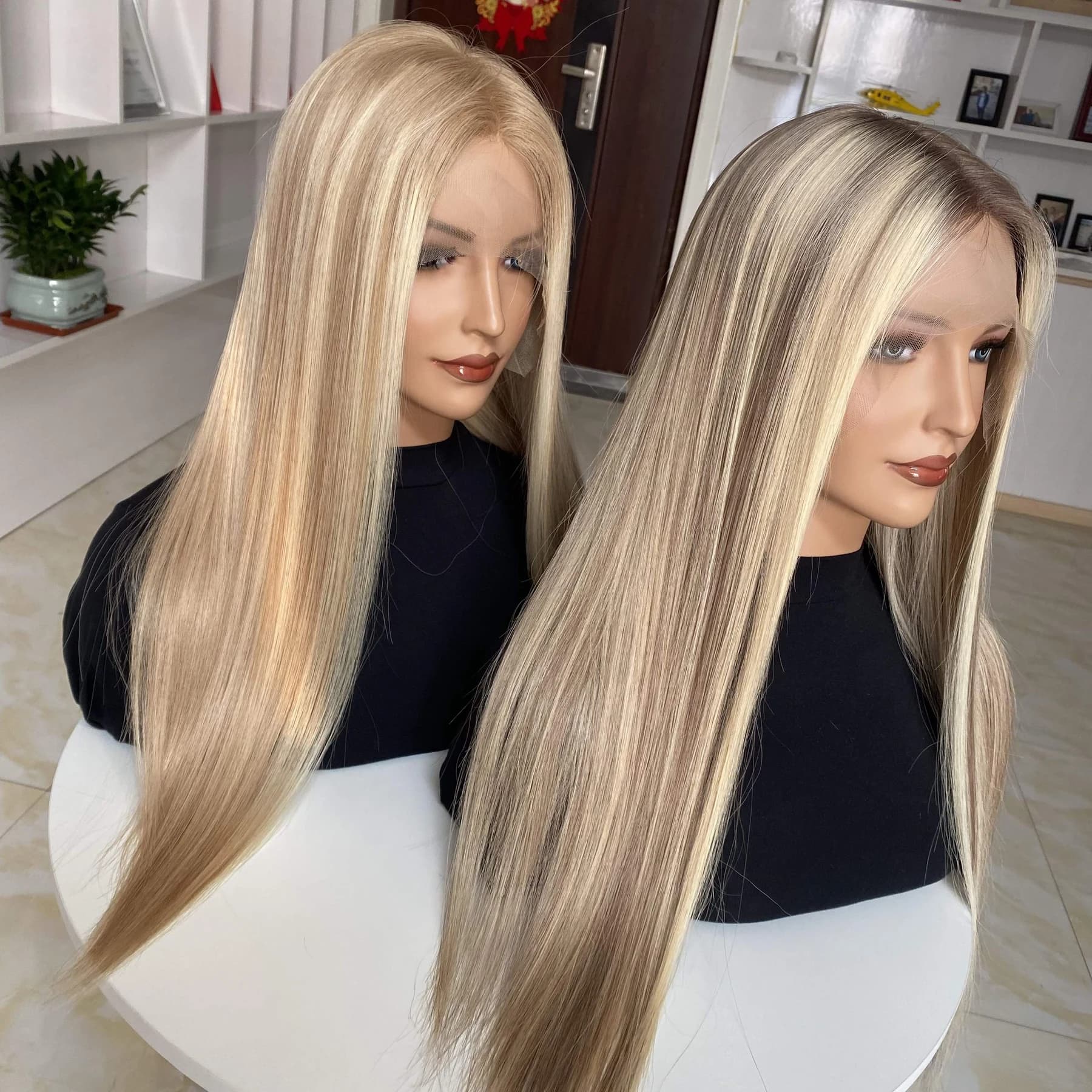
This guide explains the main structural differences, what lace can and cannot do for the finished appearance, and what to check before placing an order. The supplied photographs illustrate front lace, interior inspection and styling references; they do not identify one catalog model or certify its top material.
What does lace top mean on a wig?
A top panel is one part of the cap
A lace top normally refers to a lace area over part of the crown or upper cap where individual hairs are ventilated, or tied, into the material. The size, shape and position of that area determine where the wearer can create the intended parting. Ask for a drawing with dimensions and an interior photograph of the actual design.
Integrity Wigs' construction guide distinguishes a lace panel at the front from lace over the top, and separates both from monofilament and silk-top construction. The practical point is to identify the material and coverage area rather than treating every mesh-looking top as the same product.
The front, back and adjustment areas need separate descriptions
After identifying the top, ask about the front edge, sides, back, nape and adjustment components. A lace top may be combined with a wefted back or a hand-tied mesh cap. Loss 2 Lace's construction descriptions provide examples of both approaches within its own range.
This is why a photograph of the hairstyle is insufficient for an order specification. Two pieces can have similar visible partings while using different back construction, lining or attachment components. Those differences can affect handling and how the cap fits.
Lace top vs. lace front, full lace and silk top
| Term | What it describes | What it does not establish |
|---|---|---|
| Lace top | A lace area in the upper cap for hair attachment and parting | The construction of the entire cap or the front edge |
| Lace front | Lace along the front hairline | A lace top or free parting throughout the crown |
| Full lace | Lace extending through the cap design | Every hairstyle, attachment method or fit being suitable |
| Silk top | A top construction intended to conceal knots beneath a scalp-like surface | A lace-free front or a universally flatter finish |
| Monofilament top or part | Hair attached in a specified fine-mesh top or parting area | The exact same material, panel size or finish as another vendor's lace top |
These terms can overlap in one wig. A silk-top design may still have a lace front, as shown in Lusta's comparison of its lace-top and silk-top ranges. Compare the actual combination rather than asking which single label is best.
For a lace-versus-silk decision, assess the visible part, knot appearance, top profile and feel together. A silk-style concealing layer and a sheer lace top create their scalp effect differently. Neither label guarantees the best result for every wearer, and a brand's comparison of two models should not be treated as a universal durability ranking.
Features to assess on the finished wig
Parting flexibility depends on the usable panel
Ask where the part may begin and end, and whether the desired center or side part sits entirely within the intended area. Check the transition between the top panel and the rest of the cap. A photograph with one attractive part does not demonstrate every alternative parting position.
If you want hair brushed back or a ponytail, review the front, sides and nape as well as the top. A flexible top does not automatically conceal the perimeter or back construction in a raised hairstyle. Request a view of the actual style you plan to wear.
Knot visibility and lace blending are separate checks
Knots secure hair to the base. Their appearance can vary with the hair shade, knotting and any treatment already supplied. Lace visibility also depends on its tone, the surface beneath it, lighting and fit. A pale display backing can therefore produce a different impression from a fitting on the wearer.
Ask what the manufacturer has already done to the hairline and knots. Pre-plucked, bleached knots and pre-trimmed lace describe different preparation steps. Do not assume one includes the others, or begin further alteration before checking the construction and return conditions.
Weight, airflow and a flat profile need a whole-cap review
A sheer top can be attractive to buyers seeking a less built-up feel. Lusta describes that characteristic in its lace-top range, while also noting the need for gentle handling. Actual comfort and airflow depend on the rest of the cap, lining, hair quantity, fit and any layer worn underneath.
Check how the top sits after correct preparation. Apparent bulk can come from underlying hair, cap shape, hair direction or styling as well as density. Reducing hair before identifying the cause may create a new coverage problem.
How to choose lace top wigs for the intended wearer
Start with fit, coverage and attachment
Record the measurements requested by the supplier, with units and the intended existing-hair preparation. Compare them with that product's size chart. The American Cancer Society's wig guide notes that sizing varies between brands, which makes an average or small label insufficient on its own.
Clarify how the wig is intended to stay in place. Glueless describes an attachment approach under suitable fitting conditions; it does not identify the top material. Confirm adjustment, grip, clip or other approved options with the fitter rather than adding tension or adhesive to compensate for a mismatch.
Match density, length and hair direction
Specify coverage at the front, along the part, over the crown and through the lengths. A supplier's density percentage should be reviewed on the selected construction and hairstyle. Longer hair, curl, strand thickness and ventilation direction can change perceived fullness without changing the stated percentage.
Our low-density wig guide explains the tradeoff between a lighter silhouette and adequate coverage. For lace tops, examine the part and surrounding coverage in ordinary light and during gentle movement, rather than deciding from an extreme close-up alone.
Confirm fiber, color and supplied preparation
Lace describes the base, not the hair fiber. Request the material specification for the selected shade, any processing information relevant to further styling, and the corresponding care instructions. A product name or blonde photograph does not establish that additional chemical treatment is appropriate.
Compare the root, middle and ends with a physical shade reference when possible. Ask whether the piece arrives styled, whether the front lace remains untrimmed and which fitting steps are left for the salon. The preparation level affects both the quotation and the time required before wear.
Review a sample before approving repeat orders
Use the same review sequence for each candidate:
- Compare the interior construction with the agreed cap drawing.
- Confirm the usable top-panel and parting area.
- Review the hairline and knots under consistent lighting.
- Assess coverage with the hair resting and moving gently.
- Check measurements, adjustment and the intended attachment.
- Record the shade, length, texture and supplied finish.
- Review combing and any agreed care test using a documented method.
- List the fitting or preparation still required before wear.
WinningWigs' published quality process describes visible-condition review, combing performance, curl consistency and color comparison under standard inspection lighting. For additional factory testing, agree the sample, procedure, photographs and acceptance points in advance. A wash check or an attractive sample photograph is not proof of years of wear or every customer's comfort.
As a hypothetical sample review, a salon requests a deep side part but finds that it reaches the edge of the selected top panel. The relevant revision is to confirm the panel area and hair direction for that style, rather than increasing overall density. This illustrates a specification decision; it is not a reported customer result.
Compare quotations at the same preparation level
Two quotations can both describe a human-hair lace top while including different work. Compare the same cap size, panel area, shade, length, density and finish. Ask whether cutting, hairline preparation, final styling, accessories and care information are included. If one piece needs further salon preparation, include that work when comparing the delivered cost and launch date.
Clarify the support available after delivery: who reviews a reported concern, which photographs or records are needed, and whether alteration or repair services are offered. Obtain the applicable terms before relying on a general quality statement. A service-life estimate and an order warranty describe different things.
Keep the approved cap drawing, shade reference, knot preparation and fitting notes together as one sample version. This gives a repeat order a defined starting point. It also helps staff distinguish an intended construction change from an unexpected difference in a later delivery.
WinningWigs specifications and order planning
The HD Lace Top Wig page provides a starting reference for professional sourcing. Its listed options include:
| Item | Listed reference |
|---|---|
| Hair option | Double-drawn virgin-hair option; confirm the selected shade and processing |
| Length | 8–30 inches |
| Density | 130%, 150%, 180% or custom |
| Colors | Solid, piano/highlight, balayage and custom shades |
| Minimum quantity | One piece per color and length combination |
| Semi-finished dispatch | Typically 1–4 working days from the order date, subject to availability |
| Custom dispatch | Typically 12–40 working days from the order date, depending on complexity |
These are product references, not a universal definition of lace top wigs. Confirm cap measurements, panel dimensions, hairline, knot treatment and preparation in the quotation and approved sample. The density options do not establish a standardized appearance across other suppliers.
The Invisible Hairline Wig offers another HD-lace-top reference with a bleached-knot option. The Custom Wig program supports a more specific cap and appearance brief. Neither link identifies the exact models in this article's photographs.
Dispatch time is separate from shipping time. Semi-finished availability should not be read as a promise of a completed fitting or ready-to-wear delivery. Confirm what remains to be finished, the destination, packaging and any required sample approval before scheduling a launch or client appointment.
Installation preparation and care
Establish the fit before trimming lace, adding adhesive or altering the hairline. Arrange existing hair and any suitable liner as instructed, then assess positioning and security. A fitter can help distinguish a base or fit concern from a styling issue. Our natural-looking wig guide explains that sequence.
Handle fine lace without pulling at the edge, and use the tools recommended for the selected fiber and cap. Jon Renau's human-hair care guide explains gentle directional washing and avoiding conditioner at the base because it can weaken knots. The chosen product's instructions should determine its cleaning, drying and heat routine.
Ask about repair support and the process for unexpected shedding, a tear or an early change in fit. Keep photographs and care records before attempting further correction. Our wig lifespan guide separates cap condition from hair condition when considering maintenance or replacement.
Keep shipment inspection tied to the approved sample
During shipment inspection, compare the delivered model, shade, length, cap construction, preparation, labels and care information with the order. Check visible seams, adjustment components and the condition of the front lace without stretching it unnecessarily.
Keep a reference to the approved sample and record an unexpected difference before washing, coloring, cutting or bonding the piece. Confirm the relevant return and problem-review terms in advance. A clear delivery baseline makes later discussion more useful than trying to reconstruct the original condition after several alterations.
FAQ
Are lace top wigs the same as lace front wigs?
No. Lace top refers to an upper-cap area, while lace front refers to the front hairline. A wig may include both, or combine a lace front with another type of top. Ask for the complete cap description rather than relying on either name alone.
Is a lace top better than a silk top?
It depends on the selected models and the wearer's priorities. Compare the visible part, knot concealment, profile, handling, fit and care. A lace top may appeal for its sheer construction, while a silk-style top creates the scalp effect differently. Neither label settles every buying decision.
Can I part the hair anywhere?
Only within the usable area and styling options supported by the actual cap. Ask for panel dimensions and a demonstration of the intended part. A top with a center-part photograph does not automatically support a deep side part or a high ponytail.
Do all lace top wigs need glue?
No. The top material does not determine the attachment method. Some designs are intended for glueless wear when properly fitted; others have different requirements. Confirm the actual adjustment and security system, and use adhesive only where appropriate to that product and wearer.
What does HD lace tell me?
It is a supplier description that needs supporting detail. Ask about the actual material, tone, panel area, edge finish and handling instructions. The label alone does not demonstrate a skin match, knot appearance, strength or a ready-to-wear preparation level.
Are lace top wigs suitable for beginners?
They can be, if the fit, preparation and care workload are understood. Ask what arrives finished and whether a professional should complete the remaining steps. Our wigs for beginners guide provides a first-purchase checklist covering fiber, cap size, attachment and returns.
Should every lace top have bleached knots?
No universal treatment should be assumed. Ask what knot preparation is already supplied and assess it with the actual hair color, base and lighting. Further chemical alteration may be unsuitable. Have the manufacturer or a qualified fitter review the concern before changing the product.
Conclusion
Choosing lace top wigs starts with understanding the complete cap, not just the name of its upper panel. Confirm the front, top area, back, adjustment, fiber and preparation, then evaluate the intended hairstyle on the actual sample.
For wearers, that makes fit and appearance easier to assess. For salons and brands, a clear specification, sample review and delivery record create a stronger basis for quotation, production and repeat orders.
LET'S TALK ABOUT YOUR PROGRAM
Ready to turn product questions into a clearer brief?
Share your target customer, product category and requirements. Our team will help structure the next sample or quotation conversation.